
Free tools Windows power users keep installed
One-click scans. No signup required.
A shared autonomous vehicle (SAV) is an automated vehicle made available to multiple users through a shared-mobility service. People may use the same vehicle on separate trips at different times, or share a trip with other passengers. The term describes a service arrangement combined with a vehicle’s driving-automation capability—not one specific vehicle, ownership model, or level of automation.
What does “shared autonomous vehicle” mean?
It helps to separate the phrase into two parts: “shared” describes how people access or use the vehicle, while “autonomous” describes its driving automation. Together, they describe a family of possible mobility services rather than a single fixed design. SAE’s shared-mobility taxonomy defines various shared modes, but it does not establish one formal definition for the combined phrase “shared autonomous vehicle.” The definition above is therefore a practical working definition, not an official SAE definition.

“Shared” describes access or a ride
Sharing can mean that different users take turns using a vehicle, or that multiple passengers travel together. It does not, by itself, mean the passengers ride together or jointly own the vehicle. SAE J3163 covers shared-mobility modes such as carsharing and ridesourcing, as well as services including transit, rental cars, shuttles, taxis, paratransit, carpooling, vanpooling, and pedicabs. SAE J3163
“Autonomous” describes driving automation
The automation term concerns the vehicle’s driving capability, not how the service is booked or who uses it. SAE J3016 provides a taxonomy for driving-automation levels. The word “autonomous” alone does not identify a level, the conditions in which the system operates, or what responsibility remains with a human user. For precise descriptions, name the relevant automation capability or level when it is known. SAE J3016
The Tool Desk
Outbyte Driver Updater FREEScan for outdated or missing drivers - takes under a minuteDriver Scan →Outbyte PC Repair FREEClear out junk files and repair common Windows errorsFree Scan →#1 Best Overall
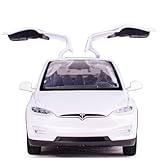
- Made of zinc alloy with ABS plastic parts
- 5.9 inch x 2.2 inch x 1.8 inch(size)
- The two sides of doors could be opened,front and back covercould be opened too
- You can pull back the car,then it can move forwards with Lights and Sound
- Very suitable as children 4 years and up toys for birthday,Christmas gift, new year. Also it can be a gift for your boyfriend
Does “shared” mean passengers ride together?
No. A shared vehicle may serve one person or party at a time, with different users taking separate trips over the course of a day. A pooled ride is a more specific arrangement in which multiple passengers share the same trip. To avoid confusion, describe whether a service offers sequential vehicle use, pooled trips, or both.
Are shared autonomous vehicles the same as robotaxis?
Not necessarily. “Robotaxi” commonly suggests a taxi-like service using an automated vehicle, but “shared autonomous vehicle” is broader: it can describe different access arrangements, including taxi-like dispatch, carsharing, or pooled rides. The exact meaning depends on the service being discussed; neither label alone tells you the vehicle’s automation level or operating limits.
Rank #2
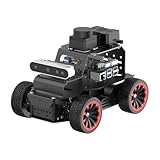
- For Raspberry Pi 5 & ROS2 Robot Car. MentorPi A1 smart AI robot car is powered by Raspberry Pi 5, compatible with ROS2, and programmed in Python, making it an ideal platform for AI robot development.
- High-Performance Hardware. Equipped with Ackerman chassis, closed-loop encoder motors, TOF lidar, depth camera, AI voice interaction box, and other advanced components to ensure optimal performance and efficiency.
- Advanced AI Capabilities. Supports SLAM mapping, path planning, multi-robot coordination, vision recognition, target tracking, and more, covering a wide range of AI applications.
- Autonomous Driving with Deep Learning. Utilizes YOLO model training to enable road sign and traffic light recognition, along with other autonomous driving features, helping users explore and develop autonomous driving technologies.
- Empowered by Large AI Model, Human-Robot Interaction Redefined. MentorPi AI robot car deploys multimodal models with ChatGPT at its core, integrating 3D vision and Al voice interaction box. This synergy enhances its perception, reasoning, and actuation capabilities, enabling advanced embodied AI applications and delivering natural, context-aware human-robot interaction.
What an SAV definition does—and does not—tell you
- It identifies a service concept: an automated vehicle is made available through a shared-mobility arrangement.
- It does not specify ownership: the vehicle may be part of a service without being jointly owned by users.
- It does not specify occupancy: users might travel separately or share a ride.
- It does not establish an automation level: check the vehicle or service’s stated capability, operating conditions, and human fallback arrangements.
- It does not specify the operating model: booking, dispatch, fleet operations, coverage, and integration with public transport can vary.
For a concrete service, useful points to check include who can book it, whether unrelated passengers may be matched on a trip, where and under what conditions automated driving is available, and what happens when the automation system cannot continue.
How SAVs differ from cooperative driving automation
Cooperative driving automation (CDA) is about vehicles using sensing and communications to coordinate vehicle control or traffic movement. The Federal Highway Administration discusses CDA in that coordination context. It is distinct from shared access: a vehicle can coordinate with other vehicles without being offered to multiple users, and an SAV does not have to use cooperative driving automation. FHWA, Mitigating Oversaturation With Cooperative Automated Driving Systems (2018)
Quick wins for a faster PC:
Fix the driver behind crashes, sound loss and screen glitchesFind Drivers →Repair Windows errors before they cause bigger problemsFix Now →Rank #3

- OpenMV Smart Robotic AGV Car Kit: Contains AGV car kit for OpenMV cameras
- Auto Tracking Color Balls: Includes color balls for automatic tracking
- Following Lines: Features pre-programmed lines for simple navigation
- Compatible with OpenMV Cam H7 Plus: Works with OpenMV Cam H7 Plus models
- Compatible with OpenMV Cam H7: Works with OpenMV Cam H7 models
Why the term covers different service models
Shared mobility and driving automation are separate dimensions that can be combined in different ways. The OECD’s 2017 report examines how increasing automation could affect shared-mobility operations and their relationship with other transport modes; it is useful historical context, not evidence of current service availability. OECD, Shared Automated Vehicles (2017)
Terminology has also required clarification within the shared-mobility field. SAE’s J3163 page lists the 2022 revision of its taxonomy, while SAE’s 2018 paper by Susan Shaheen, Adam Cohen, and Annie Chang discusses inconsistent terminology as a reason for the taxonomy work. SAE WP-0010
Rank #4
For agency terminology, NHTSA says, “When discussing types of vehicles where a traditional driver would no longer be needed, NHTSA refers to them as automated driving systems.” The agency’s wording is a reminder to be specific about automation rather than treating “self-driving” or “autonomous” as an exact capability label. NHTSA, Automated Vehicle Safety
Quick Recap
Product prices and availability are accurate as of the date/time indicated and are subject to change. Any price and availability information displayed on Amazon at the time of purchase will apply.
Do these 3 things before closing this tab:
1Clear out junk files and repair common Windows errors2Scan for outdated or missing drivers - takes under a minute3Repair Windows errors before they cause bigger problems
