
Do these 3 things before closing this tab:
1Scan for outdated or missing drivers - takes under a minute2Clear out junk files and repair common Windows errors3Fix the driver behind crashes, sound loss and screen glitchesA Class AB output stage can reduce the crossover distortion associated with Class B, but “Class AB” does not mean an op amp is automatically low-power or that it will sound better in every circuit. Quiescent current (Iq) is the op amp’s no-signal supply current; it is one selection factor alongside noise, distortion, supply range, output drive and package. Texas Instruments’ OPA167x family is a concrete example, with a manufacturer-specified typical Iq of 2 mA per channel.
What Class AB means inside an op amp
Class AB describes how an output stage’s complementary devices are biased and conduct around the signal’s zero crossing. In an ideal Class B stage, each side conducts on a different half of the waveform. As the signal crosses zero, neither side may conduct smoothly through the transition, creating crossover nonlinearity.
Class AB applies a small standing bias so both sides conduct slightly at idle and overlap around zero. That overlap mitigates the Class B crossover artifact, but it also means the output stage draws some current with no signal present. It does not eliminate all distortion.
An op amp’s internal output stage is not the same thing as a discrete, high-power Class AB speaker amplifier. The underlying bias tradeoff is related, but component values and design recommendations for a power-amplifier output stage should not be transferred to an integrated op amp.
#1 Best Overall
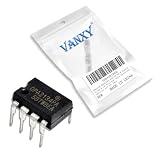
- OPA2134PA is a high-performance dual audio operational amplifier with low noise
- Professional audio applications requiring dual channels with high performance
- Excellent channel separation and low noise for high-quality audio applications
- Dual audio op-amp with low noise and excellent channel matching
- Stereo audio equipment professional consoles and dual-channel audio systems
What Iq measures—and what it does not
Quiescent current is the device-level supply current under no-signal conditions, reported according to the datasheet’s test setup. It is not synonymous with the output stage’s bias current, nor does it equal the idle power of an entire audio product. Other circuitry, supply voltage and the number of devices also affect system consumption.
Iq should therefore be compared under relevant supply-voltage and temperature conditions, and per channel where the specification is given that way. A low figure can be useful in a power-constrained design, but “low-Iq” has no universal threshold in the cited specifications.
Rank #2

- OP Amps TL072CP
- Supply Voltage: Min 7V,Max 36V
- Operating Supply Current: 1.4 mA
- Number of Channels: 2 Channel; Input Type: Rail-to-Rail
- Package Quantity: 10 PCS
OPA167x: a documented low-Iq audio example
Texas Instruments describes the OPA1677 (single), OPA1678 (dual) and OPA1679 (quad) as low-distortion audio op amps. The manufacturer’s revision E datasheet, dated January 2017 and revised December 2022, specifies 2 mA typical quiescent current per channel. This is a manufacturer-published typical value, not an independent measurement or a maximum-current guarantee.
| OPA167x specification | Published value |
|---|---|
| Typical quiescent current | 2 mA per channel |
| Input voltage noise density | 4.5 nV/√Hz at 1 kHz |
| Distortion | 0.0001% at 1 kHz |
| Open-loop gain | 114 dB |
| Slew rate | 9 V/µs |
| Gain bandwidth | 16 MHz |
| Output and stability | Rail-to-rail output; unity-gain stable |
| Supply range | 4.5 V to 36 V, or ±2.25 V to ±18 V |
These are specifications published by TI in the OPA167x datasheet; they do not predict the performance or audible quality of a complete circuit on their own. TI lists applications including professional microphones and wireless systems, audio mixers and control surfaces, guitar and other musical-instrument amplifiers, A/V receivers, and automotive external amplifiers.
Rank #3

- Low power consumption
- Low input bias and offset current
- Output short-circuit protection
- High input impedance J-FET input stage
- Internal frequency compensation
How to compare low-Iq audio op amps
Iq is only one axis of selection. A useful comparison starts with the circuit’s actual supply, source, signal bandwidth and load, then checks whether each candidate meets those needs.
- Current: Compare typical and maximum Iq per channel at the supply voltage and temperature relevant to the design. Account for the number of channels.
- Noise: Noise density at one frequency is not total circuit noise. Consider the source impedance and integrated noise across the circuit’s operating bandwidth.
- Distortion: Check the frequency, gain, load and measurement conditions behind each published figure; unlike-for-like numbers are not necessarily a controlled comparison.
- Voltage compatibility: Confirm supply range as well as input common-mode and output-swing limits for the intended signal levels.
- Drive and stability: Check output current, load impedance and capacitive-load stability rather than assuming the op amp can drive any downstream load directly.
- Dynamic performance and fit: Match bandwidth and slew rate to the signal, and verify channel count, package, temperature grade and footprint.
OPA167x and OPA1656 figures are not a head-to-head test
TI’s OPA1656 product information lists typical Iq of 3.9 mA per channel, noise density of 4.3 nV/√Hz at 1 kHz, THD+N of 0.000029% at 1 kHz, gain bandwidth of 53 MHz and slew rate of 24 V/µs. These are manufacturer-published specifications for a different device, not results from a controlled comparison with the OPA167x. Architecture, test conditions and the circuit application matter when interpreting the differences. See TI’s OPA1656 product page.
Rank #4
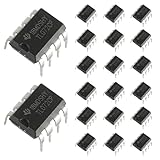
- Low power consumption, OP Amps TL072CP
- Low input bias and offset current
- High input impedance J-FET input stage,bipolar output stage integrated
- DIP8 package with eight pins, allowing for easy integration into electronic circuits.
- Widely used: Can be used in UPS, mixer, solar inverter, oscilloscope, AC inverter, etc.
Why more Class AB bias is not automatically better
In an output stage, increasing standing bias can reduce crossover distortion, but it also increases idle dissipation. TI’s LME49830TB high-power amplifier reference design describes the goal as minimizing crossover distortion while keeping quiescent dissipation low, with diminishing returns as bias rises. That is a general output-stage design tradeoff—not a bias-setting recipe for an integrated op amp. The relevant op-amp specifications and the actual circuit remain the basis for selection.
Analog Devices summarizes the intended benefit of the small bias: “The small dc bias current is sufficient to prevent crossover distortion, enabling good sound quality.” This describes the Class AB bias principle; it is not a guarantee that any Class AB op amp will deliver a particular audible result.
Quick Recap
Best Value

- IC Assortment contains: LM324, LM358, LM386, LM393, UA741, NE5532,NE555,PC817,ULN2003,ULN2803
- Including 10 pcs DIP4 socket, 60 pcs DIP8 socket, 5 pcs DIP14 socket, 5 pcs DIP16 socket,5 pcs DIP18 socket
- We have chosen a variety of useful IC types for daily assembly, such as: precision timers, dual operational amplifiers, audio amplifiers, Darlington arrays, quad operational amplifiers, etc.
- Anti-static plastic box, store commonly used IC kits according to label instructions
- ULN2003,ULN2803:ULN2003, ULN2803: 10 pcs Darlington array
Product prices and availability are accurate as of the date/time indicated and are subject to change. Any price and availability information displayed on Amazon at the time of purchase will apply.

