
To make paper invoices searchable, scan each invoice into a legible PDF, run OCR to add selectable text, check the recognized text against the page image, then name, index, and store the file so it remains connected to its accounting entry. A PDF made from a scan may contain only an image; the PDF extension alone does not make it searchable.
What makes a scanned invoice searchable?
A scanner can create a PDF that is just a picture of each page. Optical character recognition (OCR) analyzes the image and adds a text layer that you can search, select, and copy. Adobe explains both scanning with OCR and applying text recognition afterward in its Acrobat scanning instructions and OCR guidance.
Keep the page image with the searchable layer. OCR helps you find information; it does not replace checking the invoice itself.
Choose a capture method that fits your volume
For occasional invoices, a phone scanning app or an existing all-in-one printer may be enough if it produces complete, legible PDFs. For recurring batches, a document scanner with an automatic document feeder can reduce manual page handling, but buying one is optional.
#1 Best Overall

- PORTABLE SCANNER FOR USE ON-THE-GO — The fastest and lightest mobile single-sheet-fed compact document scanner in its class¹
- QUICK DOCUMENT SCANNING ― This Epson ultra-fast scanner scans a single page as quickly as 5.5 seconds²; Windows and Mac compatible
- VERSATILE PAPER HANDLING ― Portable scanner scans documents up to 8.5 x 72 in; Also easily digitizes receipts and ID cards to make accounting, bookkeeping, and organizing simpler
- INTUITIVE, HIGH-SPEED SOFTWARE — Epson ScanSmart Software³ is a smart tool allowing you to easily scan, review, and save; Stay organized easily with the help of this Epson scanner
- EASY SETUP — USB-powered connect to your computer for quick and simple scanning; No batteries or external power supply required to operate portable document scanner; Standard Connectivity: USB 2.0
When comparing equipment or a capture workflow, check feeder capacity, duplex support for two-sided invoices, image clarity, PDF output, and how easily you can review the resulting files. Adobe’s instructions describe choosing a connected scanner, adjusting quality, scanning one or both sides when supported, creating a PDF or appending pages to one, and optionally adding metadata.
Prepare and scan the invoices
- Sort and prepare. Arrange invoices in manageable batches and keep each invoice’s pages in order. Remove clips or staples when safe, flatten folded pages, and set aside fragile originals rather than risking damage in a feeder.
- Choose suitable capture settings. Use a color mode and quality setting that preserve faint text, colored marks, stamps, and handwriting. Capture both sides when an invoice has relevant information on the reverse and the equipment supports duplex scanning. There is no single resolution or color setting established here for every invoice.
- Create the PDF. Keep the pages of each invoice together. Avoid combining unrelated invoices in a way that makes it unclear which pages belong together. Confirm the PDF contains every page and that pages are right-side up and readable.
Apply OCR to the PDF
Run text recognition for the language used on the invoice. If your scanning workflow offers OCR, you can apply it while scanning; if the PDF already exists, use OCR-capable software to recognize text on the relevant pages. Adobe documents both approaches in its scanning workflow and OCR instructions.
Rank #2

- FAST SPEEDS - Scans color and black and white documents a blazing speed up to 16ppm (1). Color scanning won’t slow you down as the color scan speed is the same as the black and white scan speed.
- ULTRA COMPACT – At less than 1 foot in length and only about 1. 5lbs in weight you can fit this device virtually anywhere (a bag, a purse, even a pocket).
- READY WHENEVER YOU ARE – The DS-640 mobile scanner is powered via an included micro USB 3. 0 cable allowing you to use it even where there is no outlet available. Plug it into you PC or laptop and you are ready to scan.
- WORKS YOUR WAY – Use the Brother free iPrint&Scan desktop app for scanning to multiple “Scan-to” destinations like PC, Network, cloud services, Email and OCR. (2) Supports Windows, Mac and Linux and TWAIN/WIA for PC/ICA for Mac/SANE drivers. (3)
- OPTIMIZE IMAGES AND TEXT – Automatic color detection/adjustment, image rotation (PC only), bleed through prevention/background removal, text enhancement, color drop to enhance scans. Software suite includes document management and OCR software. (4)
After recognition, search for a known supplier name or invoice number. Select or copy a passage to confirm that the PDF has a text layer. If you cannot find or select text, the file may still be image-only or recognition may not have run successfully.
Check OCR and page quality before filing
Review every page visually against the paper invoice. Check that the correct invoice was scanned, all pages are present, and the images are legible and correctly oriented. Compare recognized text in important fields against the page image, especially supplier name, invoice number, date, totals, tax, decimal points, currency symbols, and tax identifiers. Similar supplier names and easily confused digits deserve particular care.
Recommended Free Tools
Rank #3
- STAY ORGANIZED – Easily convert your paper documents into digital formats like searchable PDF files, JPEGs, and more.Power Consumption : 2.5W or less (Energy Saving Mode: 0.7W). Suggested Daily Volume : 500 scans..Does it contain liquid: no
- CONVENIENT AND PORTABLE –lightweight and small in size, you can take the scanner anywhere from home offices, classrooms, remote offices, and anywhere in between
- HANDLES VARIOUS MEDIA TYPES – Digitize receipts, business cards, plastic or embossed cards, reports, legal documents, and more
- FAST AND EFFICIENT – No technical hurdles or complicated setups here; easily scan both sides of a document at the same time, in color or black-and-white, at up to 12 pages-per-minute, and with a 20 sheet automatic feeder
- BROAD COMPATIBILITY – Works with both Windows and Mac devices, be it laptop or computer
Adobe advises reviewing OCR for accuracy and completeness, then correcting errors or running recognition again where needed. Keep the scanned page image as the visual record alongside its text layer. For its covered permanent electronic records, the National Archives says OCR text must not change the source document’s content or appearance; that is archival guidance for those records, not a universal business rule. See its transfer guidance.
Name and index files for retrieval
Adopt one filename convention and use it consistently. A practical pattern is YYYY-MM-DD_supplier_invoice-number.pdf. Decide whether the date means the invoice date or another defined date, and apply that convention consistently. Use the actual values on the invoice; do not treat this example as an IRS-mandated format.
Rank #4

- IRIScan Express, portable scanner : scans color and black and white documents a blazing speed up to 8ppm simplex. Color scanning won’t slow you down as the color scan speed is the same as the black and white scan speed.
- IRIScan Express mobile scanner is powered via an included micro USB 2. 0 cable allowing you to use it even where there is no outlet available. Plug it into you PC or laptop and you are ready to scan. USB cable provided. AC Adapter not provided and not needed.
- IRIScan flatbed scanner uses a simplex scanning mode allows for quick and straightforward scanning of single-sided documents. IRIScan with its full portable features is the ideal document scanners for computers.
- IRIScan document scanner : Versatile scanning capabilities, including scanning to Word, PDF, and Excel formats with companion software provided Readiris OCR
- Receipt scanner and card scanner with Additional features include scanning business cards directly to Outlook, photo scanning, and receipt scanning for efficient document management
Where useful, record index or metadata fields such as supplier, invoice number, date, amount, currency, and accounting category. Adobe’s scanning workflow supports adding metadata, but the IRS does not require this particular filename or index scheme.
Attach the PDF to its transaction in your accounting system when practical, or maintain another clear link from the ledger entry to the invoice. In the electronic-record situations covered by IRS Revenue Procedure 98-25, records must provide sufficient transaction-level detail to identify underlying source documents and support audit-trail relationships between electronic records, books, and returns. The procedure also addresses process documentation and controls for record accuracy and integrity.
Do these 3 things before closing this tab:
1Clear out junk files and repair common Windows errors2Scan for outdated or missing drivers - takes under a minute3Repair Windows errors before they cause bigger problemsBest Value

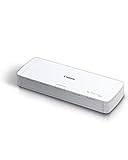
- Scanner type: Document
- Connectivity technology: USB
- With Auto Scan Mode, the scanner automatically detects what you're scanning
- Digitize documents and images
Store, protect, and back up the records
- Keep the master files in a managed business repository rather than relying on an individual device or an unorganized folder.
- Limit access to people who need the invoices, taking their sensitivity and your business practices into account.
- Maintain backups sufficiently separate from the primary device or account to remain useful if it becomes unavailable.
- Periodically check that files open and that a sample invoice can be found through your chosen search and index fields. Set restoration and integrity checks to suit your organization’s needs.
These are prudent operating practices, not a single prescribed storage setup. IRS Revenue Procedure 98-25 describes documentation and controls for the electronic recordkeeping situations it covers.
Can you throw away paper invoices after scanning?
Do not assume that scanning automatically means you can discard every original. The IRS says a business may choose a recordkeeping system that clearly shows income and expenses, and that retention depends on the action, expense, or event recorded. Keep records as long as needed to substantiate relevant income or deductions; employment-tax records have a stated minimum retention period of four years. See the IRS small-business recordkeeping guidance.
Revenue Procedure 98-25 addresses specified electronic recordkeeping situations, including sufficient detail, access, and audit trails. It does not support a blanket rule that any scan replaces every paper original. State, local, non-U.S., industry-specific, contractual, or litigation-related requirements may also affect retention. Confirm the rules for the particular records and jurisdiction before disposing of paper.
Quick Recap
Product prices and availability are accurate as of the date/time indicated and are subject to change. Any price and availability information displayed on Amazon at the time of purchase will apply.
Free tools Windows power users keep installed
One-click scans. No signup required.

