
A phosphogypsum stack and a lined wastewater pond are different kinds of containment systems, so they do not share one monitoring checklist. A stack stores a solid fertilizer-production byproduct along with process water and can present both water-quality and radiological concerns. A lined pond contains a liquid wastewater stream; its central concern is whether the liner and related systems prevent or reveal escape of that liquid. The right monitoring for any specific pond depends on its contents, design, permits, and location.
What is the difference between a phosphogypsum stack and a lined wastewater pond?
The main difference is what each system contains and which release pathways matter. The U.S. Environmental Protection Agency (EPA) describes phosphogypsum as a solid byproduct of processing phosphate ore to make phosphoric acid for fertilizer. It is typically placed as slurry in engineered stacks, where solids settle and water drains. A lined wastewater pond, by contrast, is a containment unit for liquid wastewater; without knowing the stream, its contaminants cannot be assumed.
| Comparison | Phosphogypsum stack | Lined wastewater pond |
|---|---|---|
| What it contains | Phosphogypsum and associated process water, often initially placed as slurry. | Liquid wastewater; composition depends on the facility and stream. |
| Main risk question | Whether water, leachate, or runoff affects groundwater or surface water, and whether radon is released from an inactive stack. | Whether liquid constituents escape through a defect or failure in the liner or related containment system. |
| Monitoring focus | Groundwater, runoff and leachate management, and radon emissions from inactive stacks. | Liner and system performance, with groundwater and any relevant under-liner drainage or pumping systems. |
| What determines requirements | Applicable water permits and requirements, plus the rules governing radon emissions from phosphogypsum stacks. | Unit classification, location, contents, design, permit conditions, and applicable jurisdiction; no universal schedule can be inferred for an unspecified pond. |
What risks does a phosphogypsum stack present?
Phosphate ore contains radium, which can remain in phosphogypsum and decay to radon. EPA also identifies low-pH process water and heavy metals associated with wet-acid fertilizer production. Those characteristics make it important to distinguish potential water releases from air emissions: the monitoring for one pathway does not substitute for monitoring another.
Water pathways
As a stack dewaters, effluent is captured, treated, tested, and discharged under applicable Clean Water Act requirements and permit conditions, according to EPA. Stack-system requirements also address groundwater monitoring and reporting, surface runoff control, and collecting, routing, or treating leachate as needed to meet applicable water-quality standards. EPA’s stack-system document says: “The facility shall perform groundwater monitoring and reporting as prescribed in the Groundwater and Zone of Discharge Requirements (Attachment B).” That statement belongs to the document’s specific regulatory context, not a universal specification for every stack.
#1 Best Overall

- 17 IMPORTANT PARAMETERS: The Varify Premium Drinking Water Test Kit offers an unrivaled, complete analysis of your drinking water by testing for 17 essential parameters. This includes crucial tests for chlorine, fluoride, lead, iron, bacteria, and more, ensuring that you're fully informed about the quality of your water. With this extensive range of testing capabilities, you can detect contaminants and imbalances that could affect your health, providing a holistic view of your water's safety.
- PREMIUM QUALITY: Varify stands out with its professional-grade quality, ensuring that every test strip in the kit meets the standards of precision and reliability. Crafted with meticulous attention to detail, this kit is designed to provide you with a dependable and thorough analysis of your water's composition.
- EASY TO USE: Varify's water test strips and Bacteria Test kits feature a user-friendly, color-coded system for quick and precise water quality assessments. With clear color changes indicating various parameters, these strips make complex data easily understandable, ensuring you can evaluate your water's safety effortlessly in just minutes.
- ACCURATE AND RELIABLE: Varify's water test kit comes with 100 strips in 5 separately sealed pouches (20 strips each), preserving freshness and extending shelf life for dependable testing. It also includes 2 easy-to-use bacteria tests that deliver results in 48 hours, ensuring thorough and accurate assessment of your water's safety and cleanliness. This design ensures precision and convenience in monitoring your water quality.
- WATER TESTING KITS THAT GIVE BACK: With every Varify test kit, not only do you secure the safety of your drinking water with our precise and easy-to-use testing solutions, but you also contribute to a global cause. A portion of proceeds goes to Water For Good, fighting water poverty in Central Africa. This means each test not only brings peace of mind to you but also supports #CleanWaterWorldwide, making a real difference in communities in need.
Radon pathway
EPA regulates radon emissions from inactive phosphogypsum stacks under Clean Air Act 40 CFR Part 61, Subpart R. EPA’s current Subpart R page, accessed in 2026, cites a maximum radon-222 flux of 20 pCi/(m²·s) (0.74 Bq/(m²·s)) for inactive stacks. This is an air-emissions measure, not a groundwater sampling value or a standard for wastewater ponds. See EPA’s Subpart R requirements.
Are phosphogypsum stacks lined?
Not necessarily. EPA says, “Newer stacks contain a liner to help prevent the effluent from being released directly into the soil and groundwater; older stacks may not.” A liner is therefore a design feature found on newer stacks, not evidence that every stack is lined or that leakage is impossible. Inactive stacks are typically covered to reduce further water infiltration, according to EPA’s phosphogypsum overview.
Rank #2

- Clear Range: This house water testing kit offers clear, easy to read results and acceptable ranges for all substances. The water contaminant tester delivers clear results on any type of water
- Easy to Use: The water hardness test kit for water softener is as easy as adding the water, setting a timer, and reading the results. The pH strips for water testing come with an easy-to-read results guide
- Easy to Understand: The water tester for drinking water comes with a clear guide on the outside of the bottle that lines up with each strip, from alkaline level to soft characteristic readings
- Data Sheet Included: These water testing kits for drinking water include a data sheet to record readings for later analysis. The complete water tester for chemicals has it all
- Peace of Mind: This well water test kit comes with a 17-in-1 test strip and 2 separate bacteria tests to check for coliform and e coli. Knowing what’s in the water for peace of mind is easy
How does monitoring differ for a lined wastewater pond?
For a pond, monitoring is aimed at understanding whether the liner and the broader containment system are performing as intended and whether any escape could be detected. EPA’s historical technical guidance for lined waste impoundments discusses protecting the liner and impoundment and monitoring liner-system performance. Its examples include groundwater, drainage below the liner, piping, pumps, and liner condition. These are useful monitoring concepts, not a current, universally binding checklist for every pond.
Whether a particular pond uses under-liner drainage, leak-detection equipment, monitoring wells, or other measures depends on its design and regulatory obligations. If a leak-detection system is absent or its configuration is unknown, the title alone cannot establish how a release would be detected. The pond’s permit and design documents, rather than a generic schedule, determine the applicable approach. The historical guidance is available in EPA’s technical report on lining waste impoundments and disposal facilities.
Free tools Windows power users keep installed
One-click scans. No signup required.
Rank #3
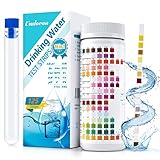
- 🌍 【16-in-1 Water Test Kit】- With Umlecoa water quality test kit, you may know level of Water Hardness, Free Chlorine, Iron, Copper, Lead, Nitrate, Nitrite, Mps, Total Chlorine, Fluoride, Cyanuric Acid, Ammonia Chloride, Bromine, Total Alkalinity, Carbonate, pH easily. Covers main influencing factors which pollute your swimming pool ,hot tub or drinking water quality.
- 🌍【Fast & Accurate Results】- Get accurate results in minutes in just 3 steps. ①Dip an testing strip into water for 2 sec. ②Remove it and hold horizontally for 30-60 sec (Please don't shake excess water off). ③Compare to color chart with up to 99% accuracy. It’s never been this easy to take a drinking water testing, even a child can do it, save your time and money from long trip to laboratory.
- 🌍 【Wide Applicability】- Umlecoa 16 in 1 water test strips can be applied to a wide range of water inspection, including drinking water, pool, hot tub, spa, pond, aquarium and industrial waste water and more water quality test, it is ideal for water testing at home, laboratory or school. For the health of you and your family, please use the professional water test strips to detect water quality standards.
- 🌍 【Home Test Kit】- Package includes: 125 test strips, test tube with cap (help with testing). Ready to use, for your convenience. All kits have safety measures to ensure the quality of your test strips. Economical 125pcs test strips for water in a handy bottle with color card, easy to carry to test anywhere according to your own needs (Tip: Be sure to tighten the cap after taking out the test strip).
- 🌍【Healthy Water & Happy Life】- We promise, we follow a strict quality control on each package and each batch, so you never need to worry about inconsistent or faulty readings on these test strips. If you have any concerns about our water test kit, please contact us now! Umlecoa after-sales service team is online 7*24 hours. Our expert team will provide an efficient and satisfactory solution.
What to check for a real facility
A meaningful site-specific comparison requires records for both the unit and its operating context. Start with the facility permit and design basis, then check:
- Contents and status: the wastewater chemistry or stack material, and whether the unit is active, inactive, or in closure or post-closure.
- Containment design: liner type and condition, drainage or leak-detection infrastructure, and any pumps or piping that support collection.
- Water setting: local geology, groundwater flow, monitoring-well locations, discharge conditions, and runoff or leachate controls.
- Applicable requirements: the unit’s classification and the state and federal rules and permit conditions governing it.
EPA’s phosphogypsum stack-system requirements document describes requirements within its regulatory framework. For inactive-stack radon testing and reporting, EPA’s workbook reproduces a requirement to test within 60 days after a stack becomes inactive under 40 CFR 61.203; because that is a compliance deadline, consult the current regulation and applicable facility requirements to confirm operative details. See EPA’s workbook for petitions under 40 CFR 61.206.
Quick Recap
Best Value

- The Earth Force Low Cost Water Monitoring Kit can be used to test fresh, brackish, or saline aquatic environments.
- This complete kit includes a manual with step-by-step, diagrammed instructions; an easy-to-use laminated color chart, and all the necessary apparatus and non-hazardous TesTabs to test ten water samples (three samples for coliform).
- A popular, economical tool for learning the basics of water quality.
- Students will have fun analyzing sample water for eight different test factors.
Rank #4

- Every test counts: Water insecurity can cause health problems, and having suffered from it myself, I am keenly aware that I do not want to see any more families affected. HEVEIS is committed to encouraging families in the United States to be aware of water quality issues and to take steps to test water quality regularly and resolve problems in a timely manner. To eliminate the physical effects of water quality. Small actions add up to a big difference, so take action now for the health of you and your family
- Complete and comprehensive: Water testing kits for drinking water offers the most extensive and comprehensive drinking water test kit, so if you want to test your drinking water quality quickly and comprehensively, it's all you need! Once you have it, you'll have peace of mind for the whole family
- Easy to use for everyone: No need to be a specialist, even a child can do it independently; results are obtained in 3 simple steps and the home water test kit is accompanied by clear graphic instructions
- Easy-to-read, real-time record: Still worried about the bottle's colorimetric difficulties and indicator results you can't remember? The water quality test kit is equipped with an independent color comparison chart and record card; by comparing the test strip with the color comparison chart, the results are instantly available and can be recorded on the record card immediately. The record card is also convenient for later analysis of water quality
- In-depth understanding of water quality: Based on actual test results and compared to the EPA standards book, you can clearly understand the meaning and implications of each indicator to help protect your and your family's health. The drinking water testing kit includes EPA standards and detailed descriptions of each indicator. Please contact us if you require a numerical description
Product prices and availability are accurate as of the date/time indicated and are subject to change. Any price and availability information displayed on Amazon at the time of purchase will apply.

