
Compare Loan Estimates from multiple lenders using the same loan and property details, then weigh the interest rate, lender fees, lender credits and five-year borrowing-cost estimate together. Separately compare eligible service-provider quotes, reconcile taxes and escrow assumptions, and check the final Closing Disclosure before signing.
Start with Loan Estimates based on the same scenario
Request a Loan Estimate from more than one lender using the same loan amount, mortgage type, property, down payment and borrower details. The standardized form makes offers easier to compare. You do not need a signed purchase agreement to request one, according to the Consumer Financial Protection Bureau (CFPB).
Compare estimates issued around the same time when possible. Interest rates can change from day to day, so a difference between estimates may reflect timing as well as lender pricing. Ask the lender to explain the difference before treating it as a fee advantage.
Compare the loan’s cost, not just its upfront fees
A low-cost estimate is not necessarily the best offer if it comes with a higher rate. Review the rate and points alongside the monthly payment and costs over time. The CFPB’s loan comparison guidance highlights the “In 5 years” figure, which estimates interest and fees paid during that period. It is a comparison tool, not a prediction that you will keep the mortgage for exactly five years.
What’s actually slowing this PC down?
Pick the symptom - the matching free tool is one click away.
#1 Best Overall

- ENTER DIMENSIONS JUST LIKE YOU SAY THEM: Input measurements directly in feet, inches, building fractions, decimals, yards and meters, including square areas and cubic volumes; one key instantly converts your measurements into all standard Imperial or metric math dimensions that work best for you and the project you are working on
- DEDICATED BUILDING FUNCTION KEYS: Make determining your project needs easy; just input project measurements, select material type like wallpaper, paint or tile; then calculate the quantity needed and total costs to avoid surprises at the homecenter checkout
- ACCURATE MATERIAL ESTIMATION: Helps you estimate material quantities and costs for your projects, ensuring you never buy too much or too little material; simplifies your home improvement and decorating jobs and cuts down on the number of trips to the hardware store
- PRECISE PAINT CALCULATIONS: Calculate exactly how much paint you need to ensure you finish the job without finding yourself with a half-painted room at night with a wet paint roller, and avoid storing or disposing of excess paint
- 11 BUILT-IN TILE SIZES: Make it easy to estimate the quantity needed to complete your project; simply calculate your square footage, then determine the tile required based on tile size and compare tile usage and costs by size; comes complete with hard cover, easy-to-follow user's guide, long-life battery and 1-year warranty
- Interest rate and payment: Compare the rate, principal-and-interest payment, total monthly payment and mortgage insurance, if applicable.
- Discount points: These are upfront fees paid in exchange for a lower interest rate. Consider the upfront cost alongside the expected time you will keep the loan.
- Lender credits: These reduce closing costs and are typically associated with a higher interest rate. Compare the credit and rate as a package.
- Five-year cost: Use the Loan Estimate’s “In 5 years” comparison as one way to see how interest and fees accumulate beyond closing.
“No closing costs” does not mean the costs disappear. A lender may offset them with a credit tied to a higher rate or add costs to the loan balance. Compare the interest and fees over time as well as the cash needed at closing; the CFPB puts it plainly: “Loans with ‘no closing costs’ aren’t free.” See its explanation of Loan Estimates.
Find the charges most useful for comparing lenders
On each Loan Estimate, focus first on lender-related charges and credits. Compare the totals rather than assuming similarly named line items mean the same thing: lenders may itemize origination charges differently.
Rank #2
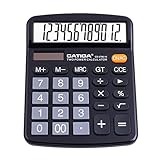
- [LARGE DISPLAY] - The huge LCD screen that clearly displays big numbers makes it easy to read from afar, and it’s aesthetically pleasing.
- [SENSITIVE AND BIG BUTTONS] - Your calculation process will be faster and smoother with this calculator’s responsive buttons. Once pressed, the buttons quickly register and display the corresponding number on the screen. The big size of the buttons prevents you from hitting the wrong button.
- [DUAL POWER DESIGN] - This calculator utilizes both the solar power and battery power (battery included). The solar panel, as long as you use it in a lit environment, will power up the calculator thoroughly.
- [VERSATILE PURPOSES] -This calculator is designed for many occasions: business, office, home, basic budgeting, school, and more. Use it to assist your personal finance or just a quick calculation session.
- [FUNCTIONALITIES] - Add, subtract, multiply, divide, backspace, grand total, CE, %, M+/M-/MRC, On/AC Button, and Auto Power-Off. The calculator will turn itself off after about 6 minutes of being idle.
| Loan Estimate section | What to compare | How to interpret it |
|---|---|---|
| Section A: Origination Charges | Total origination charges | Compare the section total; lenders may use different labels or itemization. |
| Section B: Services You Cannot Shop For | Required service charges | These are services for which the lender does not let you choose the provider. |
| Section C: Services You Can Shop For | Estimated charges and provider options | Ask which providers you may choose and compare itemized quotes. |
| Section J: Lender Credits | Credit amount and associated rate | A credit reduces closing costs; assess it together with the interest rate. |
Shop for services you are allowed to choose
Ask the lender which closing-service providers you may select and review its provider list. Title services can include title insurance, a title search and closing-agent charges, though local practice affects which professionals are required and how charges appear. Get itemized quotes and compare the combined total for the relevant services, not just one line.
Paperwork from a title company may present charges differently from the Loan Estimate or Closing Disclosure because state requirements and local practices vary. Compare the underlying services and total rather than treating a difference in formatting alone as proof of an overcharge.
Rank #3
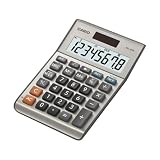
- LARGE EIGHT-DIGIT DISPLAY – Clear and easy-to-read 8-digit display, perfect for everyday calculations and ensuring accurate results in home or office settings.
- TAX & CURRENCY EXCHANGE FUNCTIONS – Effortlessly handle tax calculations and convert home currency to other currencies for easy financial management.
- GENERAL PURPOSE CALCULATOR – Ideal for a wide range of applications, from basic math to business and personal use, with memory keys for quick storage and recall.
- USER-FRIENDLY KEYBOARD – Easy-to-use layout, featuring square root, percent calculation, and simple functions that make it perfect for everyday tasks.
- COMPACT & PORTABLE DESIGN – Space-saving design that fits easily on any desk or in a briefcase, making it ideal for both home and office use.
The CFPB says borrowers who shop around could save “as much as $500 on title services.” That is a possible saving cited by the agency, not a typical or guaranteed result for an individual buyer. Its guidance is available at Loan Estimate: shop for services.
Reconcile taxes, prepaids and escrow instead of ranking them blindly
Taxes and government fees, prepaid interest or insurance, and initial escrow deposits can vary with the property’s location, timing and the assumptions used in an estimate. They do not all reflect lender pricing. If estimates differ, ask what assumptions produced the numbers and whether the services, dates or property details match. A lower estimate is not automatically a better offer.
Rank #4
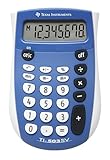
- Easy-to-read 8 digit display
- Large 7-millimeter display height
- Three key memory
- Switch key +/-
- Power saving LCD
Keep closing costs separate from cash to close
Total closing costs are upfront loan and transaction costs, excluding the down payment. Cash to close is the amount you need to bring after accounting for the down payment, deposits already paid, seller credits and other adjustments. Use closing costs to compare transaction expenses; use cash to close to plan the funds needed for closing. The CFPB explains the distinction in its Loan Estimate guide.
Independent reader supportYour contribution helps us test, update, and keep practical guides available for everyone.Check the Closing Disclosure against the latest estimate
Before closing, compare the Closing Disclosure with the most recent Loan Estimate. Confirm that services you selected show the providers and prices agreed, review changes to total costs and cash to close, and ask the lender to explain significant differences. The CFPB’s Closing Disclosure guidance says the official disclosure should generally arrive at least three days before closing.
Free tools Windows power users keep installed
One-click scans. No signup required.
Best Value

- 【Essential Cute Calculator for School and Study】The CATIGA 12-digit desk calculator is a cute calculator designed for students and daily users. Its lightweight, colorful build makes math tasks fun and easy. Perfect as a desktop calculator for school, home, or office, it delivers reliable performance with vibrant style.
- 【BIG, ROUND, AND RESPONSIVE BUTTONS】The large, round buttons ensure quick and accurate data entry, making your calculations faster and smoother; their size prevents hitting the wrong button, enhancing efficiency and reducing errors in fast-paced environments
- 【LARGE, ANGLED 12-DIGIT DISPLAY】Featuring a large, angled LCD screen, this calculator ensures clear visibility and comfortable viewing, reducing eye strain and enhancing readability for efficient, prolonged calculations in any environment.
- 【DUAL POWER SOURCES】Combines solar power with a battery backup, providing reliable and uninterrupted use, ideal for extended periods at the office, home, or school
Use competing offers to negotiate—without risking the closing date
Loan Estimates from other lenders give you concrete charges and terms to discuss. Ask a lender to match an offer or explain a difference, and do so promptly after signing a purchase contract. Before switching lenders late in the process, confirm the new lender can still meet your closing date.
Know when these disclosures may not apply
This comparison method is based on CFPB guidance for most U.S. mortgages. Some products—including reverse mortgages, HELOCs, certain manufactured-housing loans and some subordinate homebuyer-assistance loans—may use different disclosures. State-specific title rules and practices also affect how services and charges are handled.
Quick Recap
Product prices and availability are accurate as of the date/time indicated and are subject to change. Any price and availability information displayed on Amazon at the time of purchase will apply.

