
To evaluate whether a stablecoin is “fully backed,” check more than its stated reserve total: match assets to token liabilities on the same reporting date, assess the assets and their custody, read the assurance report’s actual scope, and confirm that you—not just an exchange or another intermediary—can redeem under terms you can meet. A token trading near $1, a reserve claim, or a regulator’s involvement does not by itself prove that you can get dollars promptly at par.
How do I know if a stablecoin is fully backed?
Start by identifying the exact arrangement, then compare a dated reserve report with the outstanding token amount reported for that same date. A reserve figure without a matching liability figure—or a liability figure without a clear definition of what it counts—cannot establish that assets cover all relevant tokens.
- Identify the token and issuer. Record the token name and ticker, the legal entity responsible for issuing it, its reference currency, the blockchain and contract, and your location. Also note whether you hold tokens directly or through an exchange, broker, wallet provider, or other intermediary; that route can add its own custody, withdrawal, compliance, and insolvency risks.
- Match assets and liabilities. Use the report’s balance date. Find the value and valuation basis for reserve assets and the amount of outstanding tokens used for the same date. Read explanations of exclusions, reconciliations, or differences in the entities and networks covered.
- Look past the headline reserve total. Check each asset class, currency, maturity, liquidity, and exposure to banks or other counterparties. Ask which institutions hold the assets, whether accounts are segregated, whether assets can be pledged or otherwise encumbered, and what happens to them if the issuer becomes insolvent. The Financial Stability Board (FSB) identifies reserve composition, investment mandate, custody, and segregation as material information for users.
- Read the assurance report itself. Establish whether it is an audit, examination, attestation, or management report; who performed it; what criteria were used; which entity and assets were in scope; what dates were tested; and whether it contains qualifications or exceptions. These labels do not mean the same thing, and a report about a stated date or a limited set of assertions is not proof of continuous asset availability or future redemption capacity.
For example, New York State Department of Financial Services (NYDFS) guidance describes an attestation that includes reserve market value by asset class, outstanding units, and whether reserves were adequate at specified observation points. That illustrates the value of reading the details behind a total; it is a jurisdiction-specific example, not a universal reporting rule.
Circle says Deloitte examines certain monthly management assertions concerning the amount of USDC in circulation. That description is scoped: it does not establish every aspect of reserve availability, issuer solvency, or an individual holder’s right and ability to redeem.
Windows Errors? Fix Them Before They Spread
Repair common Windows errors and clear accumulated junk for a smoother, more stable PC - no reinstall needed.Free scan · no reinstallOutdated Drivers Are Slowing You Down
One free scan finds every outdated or missing driver and matches the right update for your exact hardware.Free scan · exact hardware match#1 Best Overall

- Effortlessly build your crypto portfolio via the all in one Ledger Wallet app: buy, sell, send, receive, swap, stake and more across popular blockchains. 15,000+ coins & tokens in a single dashboard. Keep a close eye on the market. Compare service providers. Track performance. Get timely alerts. Build your portfolio with confidence.
- Effortlessly build your crypto portfolio via the all in one Ledger Wallet app: buy, sell, send, receive, swap, stake and more across popular blockchains. 15,000+ coins & tokens in a single dashboard. Keep a close eye on the market. Compare service providers. Track performance. Get timely alerts. Build your portfolio with confidence.
- Enjoy Bluetooth connectivity, iOS access, and hours of battery use with this mobile-first, secure backup signer. Freedom you can depend on.
- Genuine Check: confirm your signer is authentic during setup with the Ledger Wallet app.
- Protect your signer: keep it in mint condition at all times with a bespoke Pod or Case to avoid scratches and everyday wear and tear.
What does a stablecoin reserve attestation prove?
An assurance document supports only the conclusion its procedures, subject matter, criteria, and reporting date allow. Read the document to see what the practitioner actually examined rather than treating a firm name or the word “attestation” as a general guarantee.
- Date: Is the work about a point in time, a period, or recurring monthly assertions? A balance on one date is not a continuous view of assets or liabilities.
- Scope: Does it cover the relevant issuer, reserve, token supply, entities, and networks? Note items excluded from the work.
- Criteria and procedures: What assertions were tested, and against what standards or stated criteria? Read qualifications, exceptions, and management responsibilities.
- What remains unanswered: A reserve attestation alone does not establish legal priority over reserve assets in insolvency, all operational controls, uninterrupted banking access, or that every holder can redeem at par.
Use the report’s precise conclusion, not a broader paraphrase. In particular, do not turn a dated check into a promise about what a holder can withdraw later.
Rank #2

- Proven security at scale: Over 9 years and millions of cards issued with no known remote hacks, while military‑grade EAL6+ security keeps your private keys locked inside the chip. Your cryptocurrencies stay strongly protected from online attackers.
- Tap once to manage your entire crypto wallet across 90 blockchains - no USB cables or Bluetooth, no batteries, no setup. Access 14,100+ coins & tokens, DeFi, NFTs, and staking instantly from your phone
- Smart backup: Use your second Tangem Wallet as your Backup keys with end‑to‑end encryption; no more papers, pictures. If one card is lost, the remaining can still restore full access, with an optional seed phrase available for advanced users.
- Engineered to last up to 25 years: Waterproof (IP69K), shockproof and tested for extreme temperatures from −25°C to 50°C. A durable cold wallet with long‑term protection and independently audited security.
- Trusted by 6 million users worldwide - buy, sell, swap, stake, and spend cryptocurrency directly. The secure offline storage wallet designed for how people actually use crypto wallets
Can I redeem USDC or USDT for dollars?
Possibly, but the answer depends on the token’s governing terms, your account and location, and whether you can access the issuer’s redemption channel. Holding a token through an exchange does not automatically make you a direct issuer customer or give you a direct issuer redemption claim. Check the terms that apply to your own route before relying on redemption as an exit.
- Find the applicable terms. Locate the issuer’s current terms for your jurisdiction and account type. Identify eligible holders, onboarding and KYC requirements, minimums and maximums, fees, processing and settlement times, banking cutoffs, and any conditions allowing redemption to be restricted or suspended. Note the governing law and dispute venue.
- Confirm the actual payment route. Determine whether redemption pays to a bank account you can use, whether intermediary platforms impose separate limits or withdrawal delays, and whether your bank and the relevant payment rails are available to you.
- Calculate the net amount and timing. Apply the applicable fees and account limits, and distinguish an issuer’s processing time from the time required for the money to arrive through banking channels. Do not assume that a market sale, exchange withdrawal, and issuer redemption are interchangeable.
Circle describes its general process as receiving dollars and issuing tokens, then removing tokens from circulation and transferring dollars net of fees when a customer redeems. That explains the mechanism, not a guarantee that every holder qualifies or that every redemption settles immediately.
Quick wins for a faster PC:
Repair Windows errors before they cause bigger problemsFix Now →Scan for outdated or missing drivers - takes under a minuteDriver Scan →Clear out junk files and repair common Windows errorsFree Scan →Rank #3

- All your digital assets in one place. You can manage thousands of crypto including Bitcoin, Ethereum, Solana, Tether and more.
- Defend your identity against hackers: secure your online accounts with passwordless, hardware backed, 2FA logins for all your favorite apps and websites.
- Connectivity: USB-C cable connection only. No Bluetooth.Compatible with the Ledger Wallet crypto app, both desktop (Windows, macOS, Linux) and mobile (Android only). Not compatible with iOS.
- Protect your digital assets with the industry's best security: keep your private keys offline in your private signer, battle-tested by the Donjon's white hat hackers, CC EAL 6+ certified Secure Element, constantly updated Ledger OS.
- Effortlessly build your crypto portfolio via the all in one Ledger Wallet app: buy, sell, send, receive, swap, stake and more across popular blockchains. 15,000+ coins & tokens in a single dashboard. Keep a close eye on the market. Compare service providers. Track performance. Get timely alerts. Build your portfolio with confidence.
Circle’s published structure effective March 15, 2026, includes customer tiers, daily limits, fees, and monthly net-redemption adjustments. The available description does not supply the figures for each tier, so check Circle’s current terms for the amount applicable to your account rather than assuming one universal limit or fee.
Tether’s document dated February 20, 2026, says KYC-verified customers may redeem through its website, subject to its terms and fees, and states a minimum website purchase of US$100,000. Those are dated issuer terms, not a general minimum for every way of acquiring USDT or proof that any particular holder can use that channel. Confirm the current requirements and your eligibility directly in the applicable terms.
Rank #4

- UNPARALLELED SECURITY: Protect your assets with Trezor Safe 5's NDA-free EAL 6+ Secure Element, offering robust defense and complete transparency.
- EFFORTLESS NAVIGATION: Experience seamless crypto management with the vibrant color touchscreen, designed for intuitive and user-friendly interactions.
- ENHANCED USER EXPERIENCE: Enjoy tactile confirmation with Trezor Touch Haptic Engine, making each interaction precise and engaging.
- SUPPORTS 1000s OF COINS & TOKENS: Securely handle thousands of assets, including Bitcoin, Ethereum, and more, all in one wallet.
- EASY ASSET MANAGEMENT: Monitor and transact seamlessly with Trezor Suite, our user-friendly desktop and mobile app
What risks should I check before holding a stablecoin?
Evaluate the complete arrangement, not just the token contract or reserve total. The FSB’s framework treats the wider arrangement and its participants as relevant to risk.
| Risk area | What to establish |
|---|---|
| Issuer and governance | Which legal entity issues the token; who controls key decisions; how accountability, conflicts, and financial condition are addressed. |
| Reserve management and custody | Who manages and holds the assets, where they are held, whether they are segregated, and whether they can be encumbered. |
| Legal rights and insolvency | Who has a claim to redeem or to reserve assets, which law applies, and what is established about the treatment of assets if the issuer fails. |
| Regulatory setting | The regulator, authorization, legal entity, token, and geography to which a regulatory statement applies. |
| Operational dependencies | Reliance on banks, custodians, exchanges, payment providers, blockchains, and other service providers, including what happens if one is unavailable. |
| Resilience and lifecycle | Recovery and resolution arrangements, cybersecurity and operational resilience, and notices concerning freezes, migrations, redemption pauses, or wind-downs. |
Regulatory status must be read narrowly. In July 2026, Circle announced final approval from the Office of the Comptroller of the Currency for a national trust bank, while describing reserve management as a planned future capability. The approval announcement should not be treated as proof that the bank already performs that function, nor as a conclusion about every Circle product, holder, or jurisdiction.
Best Value
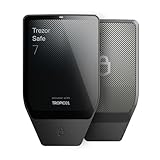
- Dual-chip architecture for maximum protection: The next-gen, fully auditable TROPIC01 chip works alongside a certified EAL6+ Secure Element—completely NDA-free—to deliver radically transparent, industry-leading defense against physical attacks.
- Quantum-ready security: Get protection against future threats with the first-ever hardware wallet designed with quantum-ready architecture.
- See every detail with confidence: Our largest high-resolution color touchscreen makes it easy to navigate your assets, review transactions and manage your coins with clarity.
- Wireless freedom with encrypted Bluetooth control: Manage, buy, swap and stake securely using Trezor Suite on desktop or mobile. Qi2-compatible wireless charging keeps your Trezor powered up. No cables required—security meets convenience.
- Works seamlessly with Android, iOS and desktop: Connect wirelessly or via USB-C to your phone or computer. Manage your crypto anywhere with our companion Trezor Suite app.
Lifecycle notices can change whether a token remains usable. In disclosures about Alloy, Tether said aUSD₮ and Alloy were winding down, new minting was closed, and users were instructed to return aUSD₮ and remove XAU₮ by September 17, 2026. That was a product-specific notice with a stated deadline; it does not establish the status of other Tether tokens. Check current issuer notices for the exact token, supported network, redemption window, and any successor arrangement before acting.
How should I compare two stablecoins?
Compare the same kind of evidence for each arrangement, using a consistent reporting date and the same holder profile. A feature such as a large reserve total or a regulator’s involvement is not enough by itself to establish which arrangement is safer for every user.
- Reserve asset quality, liquidity, maturity, and counterparty exposure.
- Supply reconciliation and the date and scope of the reserve evidence.
- Independent assurance provider, procedures, criteria, frequency, and exceptions.
- Custody arrangements, segregation, and whether reserves may be encumbered.
- Who has enforceable redemption rights and whether those rights cover your route and location.
- Eligibility, onboarding, fees, limits, settlement timing, and suspension conditions.
- Legal issuer, applicable regulator and jurisdiction, and what any authorization actually covers.
- Operational dependencies, resilience, and wind-down or resolution provisions.
The FSB’s 2023 final recommendations say: “For GSCs referenced to a single fiat currency, redemption should be at par into fiat.” This is a recommendation to authorities about requirements for global stablecoin arrangements; it is not evidence that every existing token already grants every holder that enforceable right. NYDFS’s June 8, 2022 guidance is a U.S. state example: it calls for clear policies conferring on lawful holders a right to redeem at par in a timely fashion, subject to reasonable conditions such as successful issuer onboarding and applicable legal or regulatory requirements.
Use those standards as questions to investigate, not as substitutes for the token’s terms or the law that applies to you. Reserve quality, legal rights, access, and operational reliability are separate dimensions; a comparison should explain the trade-offs rather than declare a universal winner from one feature.
Quick Recap
Product prices and availability are accurate as of the date/time indicated and are subject to change. Any price and availability information displayed on Amazon at the time of purchase will apply.

