
OLED is usually the better fit for a darker room and movie watching, while a bright-room buyer should compare high-brightness QLED models—especially Mini LED sets—with OLEDs on a model-by-model basis. There is no universal winner: room glare, the content you watch, static-image exposure, features, warranty, size, and local price all matter more than the label alone.
What do QLED and OLED mean?
OLED controls light pixel by pixel
OLED pixels emit their own light and can switch off individually. That lets a TV show a bright object beside a truly dark area without relying on a backlight, giving OLED an advantage in black levels and dark-scene contrast. OLED TVs include WOLED and QD-OLED panels, which produce color differently. RTINGS’ explanation of QLED and OLED covers these distinctions.
QLED is a backlit LCD with quantum dots
QLED TVs use an LED-backlit LCD panel and quantum dots to improve color production. The name does not specify the backlight design or guarantee a particular brightness or contrast level. Some QLED sets use Mini LED backlights and local dimming to control light in zones. QLED and QD-OLED are different technologies: QD-OLED is an OLED type, not a QLED LCD.
Which is better for your room and budget?
| What matters most | Starting point | What to verify on the exact TV |
|---|---|---|
| Dark-room films and high-contrast scenes | OLED | Whether a Mini LED QLED’s local dimming artifacts are acceptable to you |
| Bright room or bright, full-screen content | Compare bright QLED and OLED models; a strong Mini LED QLED is worth considering | Measured brightness and reflection handling |
| Sports, motion, or varied viewing | Compare individual panels; WOLED performed better on average for uniformity in RTINGS’ tested set | Screen uniformity and response behavior |
| Gaming | No universal technology winner is established | Refresh rate, variable refresh rate, input lag, response, size, and static-HUD exposure |
| Long sessions with a persistent static image | Consider your tolerance for OLED burn-in risk | Warranty terms and each manufacturer’s image-protection features |
| Value | Compare equivalent sizes and feature tiers locally | Current price, warranty, brightness, glare handling, contrast, and your use |
There is no reliable current price comparison across markets in the cited sources. Prices vary by region, retailer, size, and sale, so the category label cannot tell you which technology is cheaper or the better value.
What’s actually slowing this PC down?
Pick the symptom - the matching free tool is one click away.
#1 Best Overall
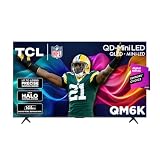
- TCL QM6K QD-MINI LED TV SERIES - AFFORDABLE PREMIUM PERFORMANCE FOR SPORTS, GAMING & STREAMING. Experience superior contrast, rich color, and ultra-smooth motion with TCL’s QD-Mini LED technology. Designed to outperform traditional QLED and OLED TVs, the QM6K is the best TV for every moment—whether you're streaming, gaming, or watching the big game.
- QD-MINI LED. IT’S MINI LED PLUS QLED COLOR - BREATHTAKING BRIGHTNESS AND COLOR IN ANY LIGHT. Combines ultra-precise Mini LEDs with Quantum Dot technology for incredible brightness, bold contrast, and over a billion vibrant colors.
- TCL HALO CONTROL SYSTEM - BETTER BLACKS. SHARPER DETAIL. NO BLOOMING. Advanced local dimming eliminates haloing, enhances shadow detail, and improves picture accuracy—so dark scenes look deeper, and bright scenes stay crisp.
- DOLBY VISION, HDR10+, HDR10 & HLG - STUNNING HDR IN EVERY FORMAT. Enjoy 4K content the way it was meant to be seen. Dynamic HDR support delivers exceptional color, contrast, and detail across all major formats.
- 144HZ NATIVE REFRESH RATE + MOTION RATE 480 - SMOOTH, FAST ACTION—PERFECT FOR LIVE SPORTS. Watch fast-paced action with incredible clarity and minimal motion blur—making this one of the best TVs for sports.
Is OLED worth it in a bright room?
It can be, but brightness and reflections are properties to check on the specific models rather than infer from OLED or QLED branding. Samsung’s UK buying guide recommends Neo QLED for bright rooms. In RTINGS’ 2025 comparison, QLED models were brighter on average than most WOLEDs, particularly in bright scenes; RTINGS also cautions that a category name alone cannot predict which individual TV is brighter. Samsung UK’s guide is specific to its market and product terminology.
Does QLED get brighter than OLED?
Not as a universal rule. The measured results for two 2025 flagship examples show why model-level comparisons matter: RTINGS measured 1,120 cd/m² for the LG G5 OLED and 1,019 cd/m² for the Samsung QN90F QLED in its HDR hallway measurement. Those figures describe those tested models and that measurement, not every OLED and QLED television.
Rank #2
- TCL QM6K QD-MINI LED TV SERIES - AFFORDABLE PREMIUM PERFORMANCE FOR SPORTS, GAMING & STREAMING. Experience superior contrast, rich color, and ultra-smooth motion with TCL’s QD-Mini LED technology. Designed to outperform traditional QLED and OLED TVs, the QM6K is the best TV for every moment—whether you're streaming, gaming, or watching the big game.
- QD-MINI LED. IT’S MINI LED PLUS QLED COLOR - BREATHTAKING BRIGHTNESS AND COLOR IN ANY LIGHT. Combines ultra-precise Mini LEDs with Quantum Dot technology for incredible brightness, bold contrast, and over a billion vibrant colors.
- TCL HALO CONTROL SYSTEM - BETTER BLACKS. SHARPER DETAIL. NO BLOOMING. Advanced local dimming eliminates haloing, enhances shadow detail, and improves picture accuracy—so dark scenes look deeper, and bright scenes stay crisp.
- DOLBY VISION, HDR10+, HDR10 & HLG - STUNNING HDR IN EVERY FORMAT. Enjoy 4K content the way it was meant to be seen. Dynamic HDR support delivers exceptional color, contrast, and detail across all major formats.
- 144HZ NATIVE REFRESH RATE + MOTION RATE 480 - SMOOTH, FAST ACTION—PERFECT FOR LIVE SPORTS. Watch fast-paced action with incredible clarity and minimal motion blur—making this one of the best TVs for sports.
Color measurements also differed between those examples: RTINGS reported BT.2020 coverage of 70.17% for the LG G5 and 61.31% for the Samsung QN90F. Color coverage is only one measure of color performance, and these two models do not establish a category-wide result.
Which is better for movies?
For films watched in a dark room, OLED is generally the safer choice because pixel-level light control produces deep blacks without the halos that can appear around subtitles or bright objects on a local-dimming LCD. Mini LED QLED can deliver strong contrast, but dimming zones can still create halos or other zone-related artifacts.
Rank #3

- Breathtaking picture: Sharp 4K brings out rich detail on our 65" flat screen TV, while the QLED screen and HDR10 create bright, accurate colors. Roku Smart Picture cleans up incoming TV signals, optimizes them, and chooses the right picture mode.
- Seamless streaming: With fast Wi-Fi and apps that launch in a snap, Roku Select Series TVs get you to your entertainment quickly. You get excellent picture quality, clear sound, automatic updates, and more. It’s simple to use. Hard to outgrow.
- TV, simplified: With setup that only takes minutes, a simple-to-navigate Home Screen, and an uncluttered remote control that does all you need—Roku makes it easier to watch the TV you love.
- A world of free entertainment: Enjoy a huge selection of free live TV, news, sports, movies, shows, and much more—all just a click away.
- More streaming, less searching: With personalized picks right on your Home Screen, quick access to the sports and entertainment you watch most, and fast and easy search in one place—the days of endless scrolling are over.
In RTINGS’ comparison of the LG G5 OLED and Samsung QN90F QLED, the measured contrast was effectively infinite for the G5 and 135,367:1 for the QN90F. These are results for the named models, not typical values for their categories. The same comparison measured 1.424% standard deviation on the LG’s 50% gray uniformity test and 1.972% on the Samsung’s; lower indicates less measured variation in that test. RTINGS’ TV comparison tool lets readers look up specific sets rather than rely on category averages.
Which is better for sports and gaming?
Sports and motion
RTINGS found better uniformity in WOLED on average across 41 tested TVs, although individual panels vary. In its LG G5 versus Samsung QN90F comparison, WOLED had substantially faster response. Fast response can make movie stutter more noticeable, so the quickest pixel response is not automatically best for every kind of viewing.
Rank #4

- Breathtaking picture: Sharp 4K brings out rich detail on our 55" flat screen TV, while the QLED screen and HDR10 create bright, accurate colors. Roku Smart Picture cleans up incoming TV signals, optimizes them, and chooses the right picture mode.
- Seamless streaming: With fast Wi-Fi and apps that launch in a snap, Roku Select Series TVs get you to your entertainment quickly. You get excellent picture quality, clear sound, automatic updates, and more. It’s simple to use. Hard to outgrow.
- TV, simplified: With setup that only takes minutes, a simple-to-navigate Home Screen, and an uncluttered remote control that does all you need—Roku makes it easier to watch the TV you love.
- A world of free entertainment: Enjoy a huge selection of free live TV, news, sports, movies, shows, and much more—all just a click away.
- More streaming, less searching: With personalized picks right on your Home Screen, quick access to the sports and entertainment you watch most, and fast and easy search in one place—the days of endless scrolling are over.
Gaming
Neither acronym alone determines the better gaming TV. Compare the refresh rate, variable refresh rate support, input lag, response, and available size on the actual models. If a game leaves the same HUD or other static graphic onscreen for very long sessions, include OLED’s burn-in risk in the decision.
Independent reader supportYour contribution helps us test, update, and keep practical guides available for everyone.Will OLED burn in?
Permanent burn-in can occur after extended display of static elements, particularly at high brightness. That risk is relevant for repeated, prolonged use with fixed logos, tickers, or game HUDs; varied viewing is a different use pattern, but it does not make risk impossible. LG describes safeguards on its televisions, including a screen saver and screen shift. Safeguards help manage risk; they are not a guarantee against it. LG’s explanation of OLED reliability and burn-in describes its guidance and protections.
Free tools Windows power users keep installed
One-click scans. No signup required.
QLED is not a guarantee against all image retention or display degradation. RTINGS’ accelerated longevity test also reported degradation in tested LCD models. Its final update was March 16, 2026, at month 30; an intensive accelerated test is evidence about tested sets and conditions, not a prediction of ordinary household lifespan for either category. RTINGS’ longevity test updates explain the test and results.
Quick Recap
How to compare two TVs before buying
- Match the size and feature tier. Compare sets of the same screen size and similar positioning rather than a flagship against an entry-level model.
- Check your viewing conditions. Consider daylight, lamps, reflections, and whether you usually watch with lights off.
- Look up measurements for the exact models. Prioritize brightness, reflection handling, dark-scene contrast, local-dimming behavior, color, and uniformity according to your room and content.
- For gaming, check the full feature set. Verify refresh rate, variable refresh rate, input lag, response, and the sizes available at your price.
- Review static-image risk and warranty terms. Think about how long fixed content stays onscreen and what the warranty actually covers.
- Compare current local prices. Weigh the real price against the features and trade-offs you care about; neither technology is always less expensive.
Product prices and availability are accurate as of the date/time indicated and are subject to change. Any price and availability information displayed on Amazon at the time of purchase will apply.

