
Choose a database data-quality testing tool by starting with the failures you need to prevent or detect—not with a vendor’s checklist. Define the assertions that matter, place them at the right stages of your data pipeline, then compare tools for engine fit, rule authoring and reuse, failure handling, scale, and ongoing maintenance. Test your shortlist against representative data and rules before committing.
Start with the failures you need to catch
Data quality means fitness for the dataset’s intended use. A useful first step is to describe concrete failure modes, then write a check that would expose each one. Typical examples include duplicate keys, missing required values, invalid categories, out-of-range measurements, broken references, unexpected row counts, stale data, and business-specific conditions.
Do not assume that one standard set of “quality dimensions” or a tool’s default terminology is universal. A 2024 survey by Papastergios and Gounaris reports that ISO/IEC 25012 defines 15 data-quality dimensions; in the six tools examined by that study, the authors associated tool functionality with six of those dimensions. That bounded finding does not mean tools support only six dimensions. It does reinforce the need to define quality in terms of your data and its use.
Turn requirements into assertions
- Uniqueness and completeness: Are primary or business keys unique? Are required fields non-null?
- Validity: Are values in an approved set or within acceptable ranges?
- Relationships: Does each foreign key refer to an existing record?
- Volume and completeness: Are row counts within expected bounds, or did an upstream feed arrive partially?
- Freshness: Did the latest expected data arrive on time?
- Business rules: Do cross-field or domain-specific conditions hold?
Separate deterministic expectations from behavior that can vary naturally. For example, a required identifier being null is usually a direct failure; a distribution shifting from its historical pattern may instead call for a monitored threshold or investigation.
Recommended Free Tools
#1 Best Overall

- Valued Carpenter Pencil Set: You will get 2 pcs solid carpenter pencils with 26 piece 2.8 mm refills, 1 replaceable sharpener, 1 plastic storage box.The complete carpenter pencils combination allows you to finish your work faster and more easily
- Deep Hole Marker Pencil: The deep-hole construction pencils adopts 45mm elongated tip design, which is more convenient to mark in the small hole or in other tight areas that other carpenter markers cannot reach
- Carpenter Pencils with Sharpener: The sharpener is screwed into the top of the work pencil, which won't get lost either. Built-in pencil sharpener that keep the lead with pointed and smooth to Improves line of sight in fine work
- Stronger Solid Lead: This work pencil is matched with a 2.8 mm thick lead , which is much thicker and stronger during the drawing process of construction work, it will not break or damage easily
- Marks on Various Surfaces: 3 colors solid construction pencil can marks on various surfaces,such as metal, plastic, wood, paper etc. Ideals for woodworkers, contractors, craftsmen, builders, merchants and masons
Place checks where they can prevent or expose failures
A good tool fits the stages at which the team needs feedback. Some checks belong close to ingestion, others after transformations, and still others in pull requests, scheduled workflows, or production monitoring. Correctness and freshness both matter: a table can satisfy its structural rules yet still be incomplete or out of date.
- Raw ingestion: Check arrival, schema, basic completeness, and source-specific constraints before bad inputs propagate.
- Transformation: Validate the assumptions and outputs of important models or jobs.
- Pull request or CI/CD: Run checks that give developers actionable feedback before changes are deployed.
- Scheduled and production workflows: Recheck critical expectations as data changes, and monitor for behavior that fixed assertions may not anticipate.
Not every rule needs to run at every stage. Repeated scans can add runtime and query cost, so prioritize checks by impact and decide where earlier feedback is worth the additional work.
Rank #2

- Ergonomically Designed: Work in tight areas with a compact design that gets into tough spots
- Compact and Lightweight: Both tools are designed to fit into difficult to reach spaces. The 1/4" impact driver has a length of 5.55 in. and weighs just 2.8 lbs, while the 1/2" drill/driver measures only 7.5 in. and weighs 3.6 lbs
- Both the DEWALT impact driver and electric drill driver feature integrated LED work lights with a convenient 20-second delay, ensuring enhanced visibility in dimly lit or challenging work areas
- One-Handed Loading - Keep one hand free with a 1/4 in. hex chuck that accepts 1 in. bit tips
- Power drill cordless with 1/2" single sleeve ratcheting chuck provides tight bit gripping strength, making bit changes faster and more secure
Distinguish testing, contracts, and observability
These capabilities overlap, but they answer different questions. Proactive data testing validates known expectations during development, deployment, transformation, or CI/CD. A data contract records an agreement between producers and consumers—such as schema, types, ranges, and constraints. Production observability watches live behavior and changes from historical norms, including issues that were not captured by a predetermined assertion.
Soda describes the relationship this way: “Together, they enable end-to-end data quality management: testing prevents problems, and observability detects those that escape prevention.” — Soda documentation, “What is Soda?”
What’s actually slowing this PC down?
Pick the symptom - the matching free tool is one click away.
Rank #3

- 【Great Compatibility】This Katerk 1/4 inch hex shank bit holder is specifically designed for 1/4 inch hex shank drill bits. It's compatible with most 1/4 fast hex handles, hex sockets, various electric screwdrivers, and handheld screwdrivers. The bit holder makes it a valuable addition for any handyman.
- 【Secure and Safe】Built with a secure backup nut design, each drill bit holder securely locks onto your bits, ensuring they stay firmly in place. Additionally, our bit holder incorporates a high-quality steel ball rolling design that holds up to several kilograms of weight, ensuring your various drill bits don't fall off.
- 【Easy One-Handed Operation】The bit holder for impact driver allows you to change bits single-handedly, simplifying your workflow. Its multi-color design further allows for quick identification of the drill bit you need.
- 【Compact and Convenient】Thanks to its compact size, this 1/4 inch bit holder is easy to carry around. The bit holder allows for easy attachment to various tools, making this a convenient addition to your construction accessories. The Katerk bit holder is cast from high-quality alloy material, promising a long product lifespan. Despite its rugged strength, the bit holder remains lightweight, making it portable.
- 【Cool Christmas Gift For Men Stocking Stuffers】 This screwdriver bit holder, driver bit holder, impact bit holder, can be given as a gift to your loved one, especially for anyone involved in construction or electrical work. It's a must-have for stocking stuffers for men and women, tools gifts for dad, tech gadgets for men, gifts for dad, gifts for him, gifts for husband, gifts for boyfriend, cool gadgets for men, and cool gifts for dad.
That does not mean every team needs a dedicated observability product. If a small set of deterministic checks covers the risks, a testing workflow may be sufficient. If teams also need anomaly detection, production alerts, historical context, or contract workflows, assess whether those functions are included in a candidate or require a complementary system.
Compare the main approaches
The options below represent different implementation patterns, not a performance ranking. The source documentation does not establish exhaustive engine compatibility, current service availability, pricing, or comparative results; verify those specifics for your environment.
Rank #4

- Long Nib and Deep Hole Marker: Our mechanical carpenter pencil with 45mm nib is designed for easy marking of deep holes or narrow areas. These construction pencils are the great choice for woodworking tools, construction tools, carpenter tools, contractor tools, wood carpentry tools and architect tools
- Extra Refills in 2 Colors for Versatile Marking: The construction mechanical pencil comes with 12 extra 2.8mm refills, including 6 red and 6 black refills. The black refill is suitable for light surfaces, while the red wax is perfect for dark surfaces. Our carpenter mechanical pencil makes sure that you'll have an ample supply for extended use
- Built-in Sharpener: Our construction pencil comes with a built-in sharpener to ensure the mechanical pencil tip is always sharp and ready for use. Never buy an extra pencil sharpener again. A great tool for any woodworker pencil, contractor pencils. The refill can easily be extended or retracted with a simple click of the pencils mechanical, allowing you to work more efficiently and accurately
- Portable Clip Design: Our deep hole construction pencil features a portable clip design, easy to carry and attach to your pocket or tool box, so that you can keep the carpenter pencils mechanical close at hand, making it a convenient tool to have on the go. Great gifts choice for carpenters
- Stronger Pencil Lead: The black refills are made of lead, sturdy and smooth. The red refills are made of wax, clear and light. These marking pencils are much thicker and stronger than normal pencils during the marking process of construction work, suitable for various surfaces, such as glasses, metal, boards, floors, walls, furniture, etc. The written marks can be easily wiped with a wet paper towel when needed
| Approach | What it does | When to evaluate it | What to verify |
|---|---|---|---|
| SQL tests in an analytics workflow | Assertions are expressed as SQL tests tied to transformations; reusable generic tests and one-off tests can both be used. | Your team already develops SQL transformations in dbt and wants checks alongside that work. | Exact adapter and engine support, execution workflow, and whether failures are easy to diagnose. |
| General-purpose expectation framework | Defines and validates reusable expectations across data-quality and observability dimensions. | Reusable validation suites and explicit validation workflows fit your architecture. | Current connectors, deployment model, alerting, reporting, and the maintenance burden for your use case. |
| Testing plus observability or contracts | Validates known expectations and can monitor production deviations or formalize producer-consumer agreements. | You need both prevention and visibility into unexpected changes in production. | Which features are available in the chosen product and edition, and whether their operational value justifies the added complexity. |
| AWS-native checks and Spark-based validation | AWS guidance describes no-code Glue DataBrew conditions, Glue Data Quality checks in Glue jobs, custom ETL rules, and Spark-based Deequ metrics and constraints. | Your pipeline is AWS-centered, or your team operates Spark workloads and has the relevant skills. | Current service state, engine and deployment support, setup, pricing, and required operating expertise. |
Evaluate rule authoring and reuse
Rules are only useful if the people responsible for data can express, review, and maintain them. Compare whether a candidate supports the languages and formats your team can operate—such as SQL, YAML or other configuration, Python, or Scala—and whether rules can be shared without hiding their meaning from reviewers.
dbt: SQL assertions near transformations
The dbt Developer Hub describes data tests as SQL select queries that seek records disproving an assertion. A uniqueness test, for example, returns duplicate records; a not-null test returns rows with nulls. dbt documents four built-in generic data tests and supports singular SQL tests for one-off purposes. Generic tests can be reused, while singular tests are written for a specific assertion. dbt states: “If the data test returns zero failing rows, it passes, and your assertion has been validated.” — dbt Developer Hub, “Add data tests to your DAG”.
Outdated Drivers Are Slowing You Down
One free scan finds every outdated or missing driver and matches the right update for your exact hardware.Free scan · exact hardware matchWindows Errors? Fix Them Before They Spread
Repair common Windows errors and clear accumulated junk for a smoother, more stable PC - no reinstall needed.Free scan · no reinstallBest Value
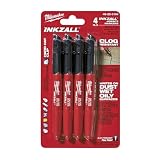
- Milwaukee Ink all Fine Point Marker, Black, 4 Per Pack
- 4 per pack Features Clog Resistant Marker Tip Writes through Dusty, Wet and Oily Surfaces Durable Marker Tip for Writing on Concrete, OSB and Rough Surfaces
- Clog resistant tip writes on dusty, wet and oily surfaces and is optimized for rough surfaces such as OSB, cinderblock and concrete
- Hard hat clip- attaches for easy access
- Quick dry time with reduced smearing and marking
This is a natural option when rules belong with SQL transformations and the team already uses dbt. The cited documentation does not establish support for every database engine or feature; check the adapter and workflow you actually use.
Great Expectations: expectation suites
Great Expectations documents defining and validating data-quality checks across quality and observability dimensions. Consider it when reusable expectation suites and explicit validation workflows fit your system. Its reviewed overview is high-level, so confirm connector, deployment, alerting, and reporting details in the current documentation before comparing it with other candidates: Great Expectations documentation.
AWS and Deequ: managed checks or Spark skills
AWS Prescriptive Guidance maps different use cases to Glue DataBrew for no-code column or table conditions, Glue Data Quality for checks in Glue jobs, custom ETL code for bespoke rules, and Deequ for metrics, constraint validation, and constraint suggestions. The Deequ article describes it as implemented on Apache Spark and identifies familiarity with Spark and Scala among its tutorial prerequisites. That makes Deequ worth evaluating for Spark-oriented teams, while Glue services may suit teams already operating in AWS. Confirm current product status, support, setup, and cost directly: AWS Prescriptive Guidance: Data quality and AWS Big Data Blog: Test data quality at scale with Deequ.
Score candidates against your operating reality
A feature checklist is a starting point, not a selection decision. Use the same representative rules and data for each candidate, and assess the practical workflow from authoring through remediation.
Do these 3 things before closing this tab:
1Repair Windows errors before they cause bigger problems2Fix the driver behind crashes, sound loss and screen glitches3Clear out junk files and repair common Windows errors- Platform fit: Confirm support for the exact databases, warehouses, Spark environments, storage, file formats, versions, and deployment model in use.
- Rule coverage: Test nulls, uniqueness, allowed values, ranges, relationships, schema changes, freshness, volume, distribution shifts, and any essential business SQL or code.
- Workflow placement: Check that rules can run at the needed ingestion, transformation, CI/CD, scheduled, and production stages.
- Failure feedback: Determine whether users see failing records, reports, saved results, alerts, lineage, or impact context—and whether they can trace problems upstream.
- Scale and cost: Measure runtime and query workload on your own data. Account for repeated scans, cluster or service needs, and the effect of checks on pipeline schedules.
- Ownership and governance: Clarify who owns each rule, who can change or approve it, how permissions and auditability work, and how producers and consumers agree on expectations.
- Total operating effort: Include deployment, upgrades, integrations, rule upkeep, alert tuning, and incident response—not just initial setup.
Run a small, representative evaluation
Before selecting a tool, use a short evaluation that resembles real work rather than a demo built around ideal data.
Quick Recap
- Choose a representative dataset and pipeline stage. Include data that reflects the scale, format, engine, and deployment environment you intend to support.
- Write a compact set of meaningful rules. Include a required field, a uniqueness or relationship check, a validity rule, freshness or volume expectations, and one business-specific assertion if relevant.
- Introduce controlled failures. Confirm that each check catches its intended problem and produces enough detail for the responsible person to investigate.
- Exercise the intended workflow. Run checks where they would live—such as a transformation job or CI/CD step—and examine how results are stored, reported, and acted on.
- Observe operating cost and upkeep. Record runtime, repeated scans or service requirements, effort to change a rule, and the work needed to keep alerts useful.
- Decide by fit, not feature count. Prefer the option that covers the team’s important risks with an operational model it can sustain.
Product prices and availability are accurate as of the date/time indicated and are subject to change. Any price and availability information displayed on Amazon at the time of purchase will apply.

