
Free tools Windows power users keep installed
One-click scans. No signup required.
The AMD Radeon RX 9070 GRE is no longer rumored: AMD lists it as an official desktop graphics card, and global launch coverage reported availability beginning June 2, 2026. Its 48 compute units, 3,072 stream processors and 12GB of GDDR6 position it as a 1440p gaming option. Performance and value depend on the games you play, ray tracing needs, software features and the card’s current local price.
RX 9070 GRE specifications
AMD’s product page confirms the processing and clock specifications below. Memory, bandwidth and board power were reported in launch coverage; they are launch-era specifications, not claims about current retail availability.
| Specification | RX 9070 GRE |
|---|---|
| Compute units | 48 (AMD product page) |
| Stream processors | 3,072 (AMD product page) |
| Game frequency | 2,220 MHz (AMD product page) |
| Boost frequency | Up to 2,790 MHz (AMD product page) |
| Ray accelerators | 48 (AMD product page) |
| AI accelerators | 96 (AMD product page) |
| ROPs | 96 (AMD product page) |
| Memory | 12GB GDDR6 (Tom’s Hardware launch report) |
| Memory interface | 192-bit (Tom’s Hardware launch report) |
| Maximum memory bandwidth | 432 GB/s (Tom’s Hardware launch report) |
| Board power | 220W (Tom’s Hardware launch report) |
| Auxiliary power connectors | Two 8-pin connectors (AMD product page) |
AMD’s current product specifications are listed on its RX 9070 GRE product page. The memory and power figures above come from Tom’s Hardware’s global launch report.
What performance can you expect?
The card is chiefly positioned for 1440p gaming, but no single benchmark represents every game or PC. Independent results vary with the test suite, resolution, settings and specific card model.
What’s actually slowing this PC down?
Pick the symptom - the matching free tool is one click away.
#1 Best Overall

- OC mode (GPU Tweak III): Up to 2880 MHz (Boost Clock)/ up to 2300 MHz (Game Clock)
- OC mode (GPU Tweak III): up to 2880 MHz (Boost Clock)/up to 2300 MHz (Game Clock) Default mode: up to 2860 MHz (Boost Clock)/up to 2280 MHz (Game Clock)
- Axial-tech fans now feature a smaller fan hub that facilitates longer blades and a barrier ring that increases downward air pressure
- Phase-change GPU thermal pad helps ensure optimal heat transfer, lowering GPU temperatures for enhanced performance and reliability
- 2.5-slot design allows for greater build compatibility while maintaining cooling performance
Independent test results
In Tom’s Hardware’s 11-game raster test of an XFX Swift RX 9070 GRE, the card averaged 120 FPS at 1080p and 86.6 FPS at 1440p. In that coverage, it struggled to sustain a 60 FPS average at 4K. These are results from that review’s games and setup, not guaranteed frame rates. The same report says FSR 4 can improve performance in supported titles.
Tom’s Guide’s June 2, 2026 review found strong 1440p gaming results against the RTX 5060 Ti and RTX 5070 in selected tests. It also found weaker Blender and AI results relative to Nvidia cards and described Nvidia as having broader software-feature and game support. For details, see Tom’s Hardware’s later review and price coverage and Tom’s Guide’s RX 9070 GRE review.
Rank #2
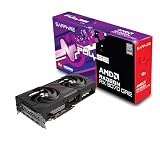
- Memory Size: 12 GB
- Memory Interface: 192-bit GDDR6
- Output: 2 x HDMI, 2 x DisplayPort
AMD’s 1440p comparison claim
AMD Indonesia says its internal test of more than 40 games at native 1440p found up to 22% higher average performance for the RX 9070 GRE than the GeForce RTX 5060 Ti. AMD cautions that results vary with system configuration, drivers, games and settings. Treat this as a manufacturer claim, not an independent benchmark; the comparison’s applicability depends on the tested configuration and games. The claim is described by AMD’s announcement.
How to compare it with other graphics cards
The closest comparison set in launch and review coverage includes the GeForce RTX 5060 Ti 16GB and RTX 5070, plus AMD’s RX 9060 XT 16GB and RX 9070. The GRE’s 12GB memory capacity is a relevant difference from the 16GB RTX 5060 Ti variant and RX 9060 XT 16GB; whether that matters depends on the games, resolution and settings you use.
Rank #3
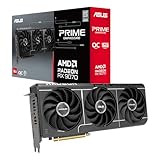
- OC mode(GPU Tweak III): up to 2610 MHz (Boost Clock)/up to 2140 MHz (Game Clock)/ Default mode: up to 2590 MHz (Boost Clock)/up to 2120MHz (Game Clock)
- Axial-tech fans now feature a smaller fan hub that facilitates longer blades and a barrier ring that increases downward air pressure
- Phase-change GPU thermal pad helps ensure optimal heat transfer, lowering GPU temperatures for enhanced performance and reliability
- 2.5-slot design allows for greater build compatibility while maintaining cooling performance
- Dual-ball fan bearings last up to twice as long as standard conventional sleeve bearings designs
- Price and stock: Compare the exact card model and current local price, not an old launch figure or another region’s listing.
- 1440p raster performance: Look for benchmarks in the games you actually play and at comparable settings.
- Ray tracing and upscaling: Compare results and support in your preferred titles; feature availability is game-dependent.
- Memory: Consider the 12GB capacity against alternatives, especially if you use high-resolution textures or expect to keep the card for several years.
- Power and fit: Account for the reported 220W board power, two 8-pin connectors, your power supply and the dimensions of the specific partner card.
- Workloads beyond gaming: If Blender, AI or other creator applications matter, compare application-specific results and software support rather than relying on gaming averages.
Launch price and current availability
Tom’s Hardware reported a $549 suggested global launch price and availability from June 2, 2026. That is historical launch context, not a current universal retail price. A July 11 report cited one Gigabyte card at Newegg for $499 after a promotional code; the promotion may have expired. Check the current listing, region, exact model, stock and offer terms before buying. The dated deal appears in Tom’s Hardware’s launch coverage and its later price and testing report.
Quick Recap
Rank #4

- OC mode (GPU Tweak III): Up to 2880 MHz (Boost Clock)/ up to 2300 MHz (Game Clock)
- Axial-tech fans now feature a smaller fan hub that facilitates longer blades and a barrier ring that increases downward air pressure
- Phase-change GPU thermal pad helps ensure optimal heat transfer, lowering GPU temperatures for enhanced performance and reliability
- 2.5-slot design allows for greater build compatibility while maintaining cooling performance
- Dual-ball fan bearings last up to twice as long as standard conventional sleeve bearings designs
Product prices and availability are accurate as of the date/time indicated and are subject to change. Any price and availability information displayed on Amazon at the time of purchase will apply.

