
Intel combines chip design with a capital-intensive manufacturing business that is trying to win outside customers; NVIDIA sells accelerated-computing platforms, with recent growth concentrated in AI data centers. Intel investors are weighing product competitiveness and foundry execution, while NVIDIA investors are weighing whether customers can keep funding and deploying AI infrastructure. Both face geopolitical and supply-chain risks, but through different channels.
How the businesses make money
Intel sells products and operates a foundry
Intel’s Intel Products business includes Client Computing and Edge (CCPG), which serves PC and edge-device markets, and Data Center and AI (DCAI), which sells x86-based CPUs, AI accelerators, networking and infrastructure processors, and ASICs. Intel manufactures products through Intel Foundry and, to a lesser extent, third-party manufacturers. Intel Foundry also aims to manufacture for external customers. These businesses connect product competitiveness to manufacturing performance: Intel must sell compelling chips while operating its own production network effectively. Intel’s Q2 2026 Form 10-Q describes the segments and manufacturing model.
Intel reported $16.128 billion in consolidated revenue and $1.796 billion in consolidated operating income for the quarter ended June 27, 2026. Intel Products reported $15.139 billion in revenue before intersegment eliminations, including $8.877 billion from CCPG and $6.262 billion from DCAI. Intel Foundry reported $5.765 billion in segment revenue and a $2.089 billion operating loss. Because segment revenue includes intersegment activity, these segment figures should not be added together as though they were consolidated revenue. Intel’s filing provides the quarter’s results.
NVIDIA sells accelerated-computing platforms
NVIDIA’s latest reported quarter showed how heavily its recent business growth depends on Data Center. For fiscal Q2 2027, ended July 26, 2026, NVIDIA reported $96.2 billion in total revenue, up 106% year over year, including $89.0 billion in Data Center revenue, up 117%. GAAP gross margin was 75.0%. For fiscal Q3, management forecast $108.0 billion in revenue, plus or minus 2%, and said the outlook did not assume Data Center compute revenue from China. That is guidance, not a realized result. NVIDIA’s August 26, 2026 results release reports the figures and outlook.
Free tools Windows power users keep installed
One-click scans. No signup required.
#1 Best Overall

- Start Your PC Gaming Story With RTX 5060 Performance: The NVIDIA GeForce RTX 5060 delivers smooth 1080p and 1440p gaming with ray tracing and DLSS 4 Multi-Frame Generation — serious hardware for a first PC that refuses to feel like one.
- A Platform Built to Perform and Scale: The Intel Core i7-14700F and 32GB DDR5 RAM keep the RTX 5070 running at peak performance — smooth, stutter-free gameplay whether you’re gaming, streaming, or multitasking at full load.
- The Prebuilt That Grows With You: Built on standard, off-the-shelf components, upgrading your storage, RAM or GPU down the line is always a straightforward next step — no tech expertise required.
- Four-Fan Cooling Built for Marathon Sessions: A dedicated RGB CPU Air Cooler and four-fan airflow system maintain consistent temperatures throughout every session, so your performance at hour one is identical to hour five.
- WiFi 6E, MSI Center and Windows 11 Home Included: WiFi 6E delivers lower latency on the less congested 6GHz band, while MSI Center puts full control of RGB, fan curves and performance profiles in one beginner-friendly dashboard.
NVIDIA’s sales depend on customers being able to build and finance the facilities that use its systems—not just on customers wanting more computing capacity. Its fiscal Q2 2027 filing says data-center deployments can be delayed by shortages of land, power, facilities, or capital, and by slower adoption. As of July 26, 2026, NVIDIA reported $279 billion in supply and capacity commitments, up from $119 billion in the prior quarter. Such commitments are intended to secure capacity for expected demand, but could be difficult to reduce if customer plans or demand change. NVIDIA’s Q2 FY2027 Form 10-Q discusses the commitments and deployment risks.
At a glance: business economics and exposure
| Comparison | Intel | NVIDIA |
|---|---|---|
| Business mix | Client and edge products, data-center and AI products, and manufacturing through Intel Foundry | Accelerated-computing platforms; Data Center was the largest part of recent reported revenue |
| Recent reported scale | $16.128 billion consolidated revenue; quarter ended June 27, 2026 | $96.2 billion total revenue, including $89.0 billion Data Center revenue; fiscal quarter ended July 26, 2026 |
| Central execution question | Can product competitiveness and manufacturing economics improve, and can the foundry attract external customers at viable economics? | Can customers continue to fund, build, and deploy AI infrastructure at a pace that supports demand? |
| Capital exposure | Factories and process development require substantial investment, long lead times, and sufficient utilization | Supply and capacity commitments must be matched to uncertain customer demand and deployment schedules |
| Key geopolitical channel | Global manufacturing and supplier exposure, including disclosed risks involving Taiwan and Israel, plus trade restrictions | Changing export controls can restrict products and market access, including China-related sales |
The companies’ fiscal calendars and segment definitions differ, so their reported figures are not a like-for-like comparison of business segments or profitability.
Rank #2
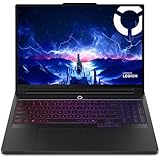
- Processor - Intel Ultra 9 275HX, 24C (8P + 16E) / 24T, P-core 2.7 / 5.4GHz, E-core 2.1 / 4.6GHz, 36MB
- Operating System - Windows 11 Pro 64
- Graphic Card - NVIDIA GeForce RTX 5090 24GB GDDR7, TGP 175W
- Memory - 64 GB DDR5-6400MHz (CSODIMM) - (2 x 32 GB)
- Storage - 2 TB SSD M.2 2280 PCIe Gen4 TLC (2 x 1 TB)
Intel’s main investor risks
Foundry progress is not yet the same as foundry success
Intel reported that 18A entered high-volume production at the start of 2026, that 18A-P entered risk production in June 2026, and that development of 14A continued. These milestones indicate progress in manufacturing development; they do not by themselves demonstrate profitable external foundry scale. Intel’s plans depend on manufacturing execution, customer commitments, and external design wins. Investors assessing the thesis can watch for evidence of customer adoption, yield, utilization, margins, and returns on the capital invested. Intel’s July 23, 2026 Q2 results release and quarterly filing describe the milestones and associated uncertainties.
Product cycles and manufacturing costs can reinforce each other
PC and server demand, product transitions, competition in AI products, and factory utilization can all affect Intel’s results. Weak demand or a less competitive product can leave costly manufacturing capacity underused; production constraints or slow process progress can also make it harder to deliver competitive products. Manufacturing and research and development require heavy investment, so a technical advance alone does not answer whether Intel can earn adequate returns.
Rank #3

- [144Hz FHD anti-glare display]: 15.6" diagonal, FHD (1920 x 1080), 144 Hz, IPS, micro-edge, antiglare; Reduce frustrating lag and image ghosting with a display that combines a 144Hz refresh rate and 1080p Full High Definition resolution for smooth, crisp gameplay.
- [Gaming Processor]: Intel Core i5-13420H, 4 P-Cores, 4 E-Cores, Total 12 Threads, Up to 4.6GHz, Intel UHD Graphics; 13th Gen Intel Core processor distributes performance where you need it the most — saving you time and increasing your ability to do the things you actually want.
- [Memory& Hard drive]: 16GB high-bandwidth RAM to smoothly run multiple applications and browser tabs all at once, 512GB Solid State Drive ideal for faster bootup and data transfer.
- [Features]: w/256gb 9H docking station; Windows 11 Pro; Backlit Keyboard; NVIDIA GeForce RTX 4060 Laptop GPU, 8GB GDDR6, Up to 1470MHz Boost Clock 45W Maximum Graphics Power with Dynamic Boost.
- [Communications]: 1 x USB-C, 3 x USB-A, 1 x HDMI, 1 x RJ45, 1 x Headphone/Microphone combo; Intel Wi-Fi 6E, Bluetooth 5.3.
Physical operations and trade rules matter
Intel’s filing identifies supplier concentration and disruption risks involving Taiwan, as well as risks to its manufacturing and development operations in Israel. Geopolitical conflict, trade restrictions, export controls, or supply interruptions could affect operations, costs, or sales; the filing does not make any particular disruption certain. Intel’s Q2 2026 filing and results release detail these risks.
Independent reader supportYour contribution helps us test, update, and keep practical guides available for everyone.NVIDIA’s main investor risks
AI demand must translate into deployable infrastructure
Customer demand estimates can prove inaccurate, and customers may postpone purchases if they lack power, land, data-center facilities, or financing. NVIDIA’s $279 billion in reported supply and capacity commitments as of July 26, 2026 is therefore a two-sided indicator: it supports the effort to secure supply for expected demand, while exposing the company if demand changes and commitments cannot be readily reduced. Investors can track whether reported sales and customer deployments continue to support the capacity NVIDIA has committed to secure. NVIDIA’s filing describes these risks.
Rank #4

- GPU Memory Size: 16 GB GDDR6 with ECC
- Form Factor: 2.7"(H) x 6.6"(L), dual slot, half height.
- Thermal Solution: Blower Active Fan
Export controls can change the addressable market
Restrictions on advanced-computing exports can limit which products NVIDIA may sell and where, add compliance burdens, or create excess inventory and supply charges. NVIDIA’s filing says controls may affect markets beyond China and could advantage competitors whose alternatives are less likely to be restricted. The company’s fiscal Q3 2027 outlook, which assumed no Data Center compute revenue from China, shows a current effect on its planning assumptions; it does not establish that the rules will remain unchanged. The results release and Form 10-Q describe the outlook and regulatory exposure.
Concentrated growth magnifies changes in the AI cycle
With Data Center accounting for most of NVIDIA’s reported Q2 FY2027 revenue, changes in AI infrastructure spending, deployment timing, competition, or platform transitions could have an outsized effect on results. NVIDIA CEO Jensen Huang characterized the market in the August 26, 2026 earnings release: “AI has reached its inflection point. It’s doing useful work. Its tokens are productive and profitable. Now, compute is revenue.” That is management’s view of the opportunity, not independent evidence that growth will continue at the recent rate. NVIDIA’s release contains the statement.
Do these 3 things before closing this tab:
1Repair Windows errors before they cause bigger problems2Fix the driver behind crashes, sound loss and screen glitches3Clear out junk files and repair common Windows errorsBest Value

- NVIDIA Blackwell Architecture The Ultimate Platform for Gamers and Creators Tensor Cores Max AI Performance with FP4 and DLSS 4 NVIDIA Reflex 2 with Frame Warp Full Ray Tracing with Neural Rendering
- VIDEO CARD
- NVIDIA
What the comparison can—and cannot—tell an investor
The central difference is the source of business risk: Intel must coordinate product competition with the economics and execution of manufacturing, while NVIDIA must convert concentrated AI demand into customer deployments despite infrastructure, financing, supply, and regulatory constraints. Both also depend on global supply chains and face competition and geopolitical uncertainty.
Reported growth, operating income, or manufacturing milestones do not determine whether a stock is attractive at its current price. A company can have strong growth and still be expensive, or face difficult economics while investor expectations are low. The figures above are company-reported results and guidance, not a valuation comparison or forecast of returns; an investor would need current share-price and valuation information, alongside personal risk and time-horizon considerations, to make that judgment.
Quick Recap
Product prices and availability are accurate as of the date/time indicated and are subject to change. Any price and availability information displayed on Amazon at the time of purchase will apply.

