
Free tools Windows power users keep installed
One-click scans. No signup required.
Choose an exchange wallet for a managed account and trading convenience, a self-custody software wallet for direct key control and everyday access, or a hardware wallet if you want to sign transactions on a dedicated device. The key question is who controls the keys—and who is responsible if account access or the keys are lost.
What the three wallet choices mean
Exchange account
An exchange wallet is usually custodial: the provider holds the keys and manages access to XRP on your behalf. A balance in the exchange app may be an entry in the provider’s own records rather than XRP held in a separate XRP Ledger account that you control. The provider may offer password recovery, but you depend on its account security, policies and continued service. XRP Ledger’s wallet guidance explains the distinction between hosted accounts and individual ledger accounts.
Self-custody software wallet
With a self-custody software wallet, you control the secret keys to your XRPL account through an app. That gives you direct control over transactions the ledger permits, but it also makes you responsible for protecting and backing up the keys. If you lose them, the XRP Ledger has no way to restore access. The app and the device it runs on also matter: vulnerabilities or compromised software updates can put keys at risk. XRPL wallet guidance discusses custody, recovery and software risks.
Self-custody hardware wallet
A hardware wallet is a dedicated signing device designed to keep the secret key on the device and sign transactions there. You control the keys, but the device must support the XRP Ledger actions you plan to use. Hardware devices can differ in which transaction types they support, so check compatibility for the specific device, firmware and wallet app before buying or relying on it. XRPL secure-signing guidance describes dedicated signing devices and compatibility limits.
Quick wins for a faster PC:
Scan for outdated or missing drivers - takes under a minuteDriver Scan →Repair Windows errors before they cause bigger problemsFix Now →#1 Best Overall

- Proven security at scale: Over 9 years and millions of cards issued with no known remote hacks, while military‑grade EAL6+ security keeps your private keys locked inside the chip. Your cryptocurrencies stay strongly protected from online attackers.
- Tap once to manage your entire crypto wallet across 90 blockchains - no USB cables or Bluetooth, no batteries, no setup. Access 14,100+ coins & tokens, DeFi, NFTs, and staking instantly from your phone
- Smart backup: Use your second Tangem Wallet as your Backup keys with end‑to‑end encryption; no more papers, pictures. If one card is lost, the remaining can still restore full access, with an optional seed phrase available for advanced users.
- Engineered to last up to 25 years: Waterproof (IP69K), shockproof and tested for extreme temperatures from −25°C to 50°C. A durable cold wallet with long‑term protection and independently audited security.
- Trusted by 6 million users worldwide - buy, sell, swap, stake, and spend cryptocurrency directly. The secure offline storage wallet designed for how people actually use crypto wallets
Compare the tradeoffs
| Choice | Who controls the keys? | Everyday advantage | Main tradeoff | Best suited to |
|---|---|---|---|---|
| Exchange account | The provider | Managed access and trading within the service; password reset may be available | You rely on the provider’s custody, account security and policies | People who value an integrated managed service and accept provider custody |
| Self-custody software wallet | You | Convenient access and wallet features | You must secure the keys and device; lost keys cannot be recovered by the ledger | Regular use when direct control and convenience matter |
| Self-custody hardware wallet | You; transactions are signed on the device | The key can stay on a dedicated device when it is not signing | More setup and physical-device handling; supported actions vary | People who prioritize key isolation for holding or signing |
This comparison describes wallet types, not a ranking of providers or a guarantee about any product. Custody and form factor are separate: an exchange interface may be software but still custodial, while a hardware device is commonly used for self-custody. Confirm how a particular product handles keys and signing rather than relying on its label. XRPL wallet guidance and secure-signing guidance explain these distinctions.
Choose based on your priorities
- Prefer managed access and trading? An exchange account may fit if you are comfortable trusting the provider and following its access and withdrawal policies.
- Want direct control with convenient access? Consider a self-custody software wallet, provided you can protect and back up its keys.
- Want keys kept on a dedicated signing device? Consider a hardware wallet, after confirming it supports the XRPL actions you need.
- Need both routine access and stronger separation for some holdings? Separate addresses with different security arrangements are an option; choose an arrangement appropriate to each address’s use and value. XRPL secure-signing guidance discusses this approach.
Understand the XRP Ledger reserve before funding a self-custody account
An individual XRPL account needs XRP reserved on the ledger. As documented for mainnet on October 4, 2026, the reserve was 1 XRP per account plus 0.2 XRP for each owner-held ledger item. Reserved XRP cannot be sent while it remains reserved. Validators can change the required amount through fee voting, and other networks may use different values, so check the official reserve documentation and your account’s ledger objects before funding it.
Rank #2

- Proven security at scale: Over 9 years and millions of cards issued with no known remote hacks, while military‑grade EAL6+ security keeps your private keys locked inside the chip. Your cryptocurrencies stay strongly protected from online attackers.
- Tap once to manage your entire crypto wallet across 90 blockchains - no USB cables or Bluetooth, no batteries, no setup. Access 14,100+ coins & tokens, DeFi, NFTs, and staking instantly from your phone
- Smart backup: Use your second Tangem Wallet as your Backup keys with end‑to‑end encryption; no more papers, pictures. If one card is lost, the remaining can still restore full access, with an optional seed phrase available for advanced users.
- Engineered to last up to 25 years: Waterproof (IP69K), shockproof and tested for extreme temperatures from −25°C to 50°C. A durable cold wallet with long‑term protection and independently audited security.
- Trusted by 6 million users worldwide (4.9 App Store, 4.8 Google Play) - buy, sell, swap, stake, and spend cryptocurrency directly. The secure offline storage wallet designed for how people actually use crypto wallets
This protocol reserve is not the same as an exchange’s fees or rules. If a custodian provides an account and you do not have an individual ledger account, the individual-account reserve requirement does not apply to you in the same way. That does not mean an exchange is fee-free: trading, withdrawal and other provider charges are separate, and vary by provider. XRPL wallet guidance describes hosted accounts; the reserve documentation covers ledger requirements.
Security checks before you choose
- Keep secret keys secret. Never give a seed or secret key to a website, support agent or signing service. Anyone who obtains it can control the account. XRPL secure-signing guidance explains key risks.
- Store keys carefully. If keys are stored, protect them and encrypt them; do not keep them in plaintext or send them over the internet. XRPL secure-signing guidance covers safe handling.
- Check compatibility in detail. Verify that the exact device, its current firmware and the wallet app support the XRPL transaction types and features you intend to use. XRPL secure-signing guidance warns that device support can be incomplete.
- Evaluate software and provider practices. Self-custody does not make wallet software automatically safe, and exchange custody does not remove the need to protect your login. XRPL notes that software updates and dependencies can be exposed to supply-chain attacks. Wallet guidance discusses software risks.
- Be clear about what an exchange balance represents. It may be a provider-recorded claim rather than a distinct on-ledger balance controlled by your own keys. XRPL wallet guidance explains the distinction.
What to verify before using a wallet
Wallet features, provider policies, hardware compatibility and reserve settings can change. Before choosing, verify the provider’s current custody and recovery terms, confirm the exact XRPL functions supported by your software or hardware, and check the current reserve for the network you intend to use. The XRP Ledger identifies XRP as its native asset and advises due diligence on third-party providers, whose compliance, privacy and data-security practices may differ. XRP Ledger overview.
Quick Recap
Best Value

- Unparalleled Security: Protect your assets with EAL 6+ Secure Element, offering robust defense and complete transparency
- Simple & Secure Interface: Manage your digital assets easily with a clear OLED screen for secure on-device confirmations
- Supports 1000s of Coins & Tokens: Securely handle thousands of assets, including Bitcoin, Ethereum, and more, all in one wallet
- Effortless Asset Management: Monitor and transact seamlessly with Trezor Suite, our intuitive desktop and mobile app
- Enhanced Backup Solution: Multi-share Backup eliminates single points of failure for secure cold wallet recovery
Rank #4

- Superior Security - Elevate the cold storage safety of your digital assets with Arculus's innovative 3-factor authentication system: biometric lock, 6-digit PIN, and the Arculus metal card with private key encryption for multiple layers of security.
- Effortless Transactions - Simplify your crypto management with the Arculus Cold Storage Wallet and Arculus App, to seamlessly send, swap, or receive assets with a simple tap to your mobile device.
- CC EAL6+ Secure Element Technology – Safeguard your keys on the Arculus Card through robust, certified encryption, protecting against unauthorized access.
- Supports 95% of the Cryptocurrency Market Cap, including Bitcoin (BTC), Ethereum (ETH), Tether (USDT), XRP (XRP), and Cardano (ADA), Litecoin (LTC), Polkadot (DOT), and other popular coins.
- Hassle-Free - The Arculus Cold Storage Wallet communicates with your phone using secure tap-to-transact NFC technology. No cords, no connections and no internet required for next-gen levels of security.
Rank #3
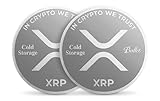
- 2 XRP COLD STORAGE COINS FOR FLEXIBLE STORAGE - This 2-pack includes two physical XRP cold storage coins, ideal for splitting holdings, keeping one as a backup, or giving one as a gift while maintaining a dedicated XRP-only storage format.
- NO ELECTRONICS FOR OFFLINE XRP STORAGE - No battery, no Bluetooth, no USB, and no firmware updates. These stainless steel XRP coins are designed for offline cold storage and keep key information separate from internet-connected devices.
- NO SEED PHRASE AND NO PIN OR PASSWORD - Ballet simplifies XRP cold storage with no 12 or 24-word seed phrase to write down and no PIN or password to remember, making setup easier for beginners and long-term holders.
- WORKS WITH BALLET CRYPTO APP FOR XRP - Use the Ballet Crypto App for iOS and Android to scan each coin, view the XRP address, load XRP, check balances, and transfer XRP through a guided workflow.
- TAMPER-EVIDENT SECURITY LAYERS - Each coin includes peel-to-reveal protection that helps provide a clear visual signal if the private key area has been accessed. Once opened to move funds out, the coin should not be reused for secure cold storage.
Product prices and availability are accurate as of the date/time indicated and are subject to change. Any price and availability information displayed on Amazon at the time of purchase will apply.

