
Windows Errors? Fix Them Before They Spread
Repair common Windows errors and clear accumulated junk for a smoother, more stable PC - no reinstall needed.Free scan · no reinstallCrashes, No Sound, or Screen Glitches?
Random freezes, missing sound and display glitches usually trace back to one bad driver. Find and replace yours safely.Free scan · under a minuteiscsiadm: no records found usually means the command could not find a saved or matching iSCSI record—not that your disk, network, or target is necessarily broken. First identify the command’s mode, then check whether the record it needs exists. If you are trying to log in through node mode and iscsiadm -m node lists no target, discover the target at its portal and use the exact IQN and portal returned.
What “no records found” means
iscsiadm works with different record types and modes, including discovery, discoverydb, node, and session. The message indicates that the requested lookup found no relevant saved or matching record. It does not, by itself, indicate a network timeout or prove that the iSCSI target or storage hardware has failed. The open-iscsi command implementation distinguishes these modes and emits the missing-record message in record lookups.
The wording alone does not identify which record is missing. A node-record lookup, a discovery-record lookup, and a check for active sessions are different operations; the command that produced the message determines which path to investigate.
Check the command and record type first
If the command used node mode
Run iscsiadm -m node to list saved node records. If the list is empty, there is no saved node entry for a node-mode login to match. Discover the target first, then use the IQN and portal from that output.
Free tools Windows power users keep installed
One-click scans. No signup required.
#1 Best Overall

- 【Fast Charging Max】: This NACS to CCS adapter supports TSLcharging rates of up to 120 kW to ensure your EV is charged at optimal speeds, greatly reducing downtime, and is ideal for those who require a fast, efficient supply of power, with a charge speed of up to 80 miles in 14 minutes (actual charging speeds are dependent on Supercharger station, EV specifications, ambient conditions and battery temperature).
- 【NACS DC Adapter Supercharger】: The adapter is compatible with v3 and v4 TSL superchargers.Made with one-piece stamping technology and molded in one piece, it is rated up to 80 amps and 240 volts, so you can get going fast!
- 【Widely Compatible】: This NACS to CCS1 adapter for non-TSL CCS1 electric cars can be charged by TSL supercharger nacs to ccs adapter station, currently supported models are Ford/Rivian/GMC/Chevrolet/Cadillac.(Note: unsupported models can't use this adapter Supercharger)
- 【Safety First】: The Vortex Plug includes built-in temperature monitoring, charging power may decrease if the terminal exceeds 185°F, Operation shuts off at a 131°F charging handle temperature. Prevents leakage of electricity, fire and other hazards.
- 【Easy To Carry】: This adapter has a compact design, not easy to damage, easy to store in the armrest box or storage box in the car. It also comes with a storage bag that can be hung anywhere. (WARNING : Do not store the NACS DC Adapter outside of the storage temperature range of - 40°F to 185°F)
If the command used discoverydb
discoverydb is not the same mode as discovery. A 2011 open-iscsi mailing-list discussion explains that a discoverydb command without -D looks for a saved discovery record, while -D requests discovery. The same discussion distinguishes discoverydb settings from the separate discovery mode. Because this explanation is historical, check the installed iscsiadm manual for the exact syntax and behavior in your version.
If the command used session mode
Session mode reports active sessions; it is not a listing of saved node records. An empty session result and an empty node list describe different states. Use the mode that matches the question you are trying to answer.
Rank #2
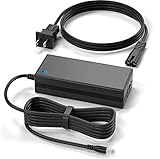
- Brand New, High Quality Replacement Power Charger Adapter
- Input: AC 100-240V 50/60Hz Auto (Worldwide AC Input),10Ft extra Long cord
- Over Voltage Protection, Over Heat Protection
- Tested Units. In Great Working Condition.
Discover a target and match its details exactly
- Confirm the target portal. Use the portal address and port supplied by your storage administrator or target configuration. Do not assume a portal from an example is correct for your system.
- Run discovery using your installed version’s syntax. The open-iscsi interface supports discovery commands with a discovery type and portal. Consult the local manual for the precise command form for your distribution and release.
- Read the discovery output. Copy the complete target IQN and portal, including the port, exactly as shown. A typo, truncated IQN, incorrect portal, or stale target name can prevent a node lookup from matching.
- Use the discovered values for the node operation. If the exact target and portal still do not appear in
iscsiadm -m node, investigate how the node record is being created or selected using documentation for your installed open-iscsi version.
IQN mismatches are documented causes, but not universal explanations. In a case concerning RHEL 6.5, Red Hat describes discovery returning an older IQN than the target’s configured IQN, followed by a node login attempt that returned “No records found.” A separate historical open-iscsi discussion illustrates how spelling or omitting part of a target IQN can prevent a match.
If discovery returns no target
A missing-record message is not evidence of a reachability failure. If discovery itself finds no target, troubleshoot that separately rather than treating the record error as a network diagnosis. Check the portal address, network route and firewall, target-side exports, and any configured authentication. The relevant checks depend on your distribution, open-iscsi version, network, and target vendor.
What’s actually slowing this PC down?
Pick the symptom - the matching free tool is one click away.
Rank #3
- SLLEA--Determined to become the most professional store of wire and chargers
- Input: 100 - 240 VAC 50/60Hz Worldwide Voltage Use Mains PSU
- Please make sure the output and tip is correct before purchasing
- Industry Quality : Over Voltage Protection, Over Heat Protection
- Warranty: 30 Days Money Back Guarantee / 60 Days Free Exchange With Paid Return Label / 360 Days Anytime Worry-Free Warranty! / Please don't hesitate to contact us if any questions or concerns - we are here to help!
- Verify that you are querying the correct portal and port.
- Check that the host can route to the portal and that network filtering permits the required iSCSI traffic.
- Confirm that the target is configured to present the expected target and that the host is allowed to discover it.
- Review authentication settings on both sides if the target requires them.
Without the exact command, operating-system release, open-iscsi version, discovery output, IQN, portal, and network details, there is not enough information to identify which of these applies to a particular system.
Independent reader supportYour contribution helps us test, update, and keep practical guides available for everyone.Which troubleshooting path fits?
| What you ran or saw | What it tells you | Next check |
|---|---|---|
iscsiadm -m node returns no entries |
No saved node record is available in that listing. | Discover the target portal, then use the exact discovered IQN and portal. |
discoverydb reports a missing discovery record |
The operation may be looking for a saved discoverydb record rather than performing discovery. | Check the installed manual for the discoverydb syntax and whether an explicit discovery request is needed. |
| Discovery runs but returns no target | The record message does not explain why discovery found nothing. | Check portal, routing, firewall, target exports, and authentication separately. |
| Session mode lists no active session | There is no active session shown; this is distinct from whether node records exist. | Check the node record and discovery state before diagnosing login or connectivity. |
Command options can vary by installed version. The upstream open-iscsi source is on a mutable branch; the Red Hat example concerns RHEL 6.5, and the discoverydb explanation dates to 2011. Use those examples to understand the distinction between record types, not as a substitute for your system’s current manual.
Quick Recap
Best Value

- 【Controller】: 10GbE PCI-E NIC with Original Mellanox ConnectX-3 controller.
- 【Data Rate】:Dual SFP+ Ports(1GbE/10GbE) let you connect to network cable for meeting the demands of data center environments. PCIe v3.0 (8.0GT/s) x8(Compatible with 2.0/1.1); X8/X16 Lane.
- 【Technical Support】:iPXE, DPDK, iSCSI, Qos, Jumbo Frames, SR-IOV, Network Virtualization Offloads(Geneve, VXLAN and NVGRE).
- 【Technical Support】:iPXE, DPDK, iSCSI, Qos, Jumbo Frames, SR-IOV, Network Virtualization Offloads(Geneve, VXLAN and NVGRE).
- 【What you Get】: Vogzone 10GbE PCI-E X8 Network Card MCX312B-XCCT-10G (compare to Mellanox MCX312B-XCCT ) x1, Low-profile Bracket x1.
Rank #4

- 1. CX4121A is a dual 25GbE SFP28 fiber port intelligent RDMA Ethernet adapter with a PCIE Gen 3.0 x8 interface. Based on the Mellanox ConnectX-4 Lx EN MT27711A0 converged Ethernet controller, it provides a cost-effective and flexible Ethernet solution for Web 2.0, cloud, data analytics, database, and storage platforms.
- 2. Ethernet Controller: Mellanox ConnectX-4 Lx EN MT27711A0;Bus Interface: PCIE 3.0 x8; Ethernet Speed: 2x 25GbE; Connector Type: 2x SFP28 Fiber Ports; Remote Boot: RoCE, PXE, iSCSI; Supports RDMA over RoCE; Support I/O Virtualization and SR-IOV; Support Overlay Networks by providing advanced NVGRE, VXLAN and GENEVE.
- 3. Supports IEEE 802.3by, 25 Gb/s; IEEE 802.3ae 10Gb/s; IEEE 802.3az Energy Efficient Ethernet; IEEE 802.3ap; IEEE 802.3ad; 802.1AX; IEEE 802.1Q; 802.1P VLAN tags and priority; IEEE 802.1Qaz; IEEE 802.1Qbb; IEEE 802.1Qbg; IEEE 1588V2; Support Jumbo frame (9.6KB).
- 4. PCIE Gen 3.0 Standard, 8Gb/s Per Lane. PCIE x8 Interface, 64Gb/s Bandwidth Totally, Ensure 2x SFP28 Fiber Ports archive 25GbE simultaneously. Auto-negotiates to PCIE X8, X4 Lane. Auto-switch to PCIE Gen 3.0, Gen 2.0. Support MSI/MSI-X mechanisms.
- 5. Support plug and play on Windows 11, 10 64bit and Windows Server 2012, 2012R2, 2016, 2019, 2022, 2025 64bit. Compatible with RHEL, CentOS, FreeBSD, VMware and other Linux kernel-based systems.
Product prices and availability are accurate as of the date/time indicated and are subject to change. Any price and availability information displayed on Amazon at the time of purchase will apply.

