
To check an AI-generated I Ching reading, verify the cast first, then compare each quoted Judgment, Image, and changing-line statement with the exact translation and edition the AI names. Keep the source text, its commentary, and the AI’s application to your question separate: textual accuracy can be checked, but a match does not prove that one interpretation is uniquely correct.
Record what the AI says it is interpreting
Save the complete response before checking it. Record the hexagram number and name, all six line positions, any changing lines, the resulting hexagram if supplied, and the translation and edition cited. Hexagrams are read from the bottom line upward, so preserve the position of every line rather than treating the figure as an unordered set.
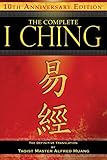


If the response does not identify a source, ask which translation, edition, and textual passage support each quotation. A familiar-sounding phrase is not enough to identify its translator. For a quotation check, the named edition—not a general impression of how the I Ching is usually worded—is the relevant comparison point.
Check the cast independently of the interpretation
A wrong hexagram or line selection can undermine everything that follows, even if the prose sounds plausible. Confirm the figure and changing lines using the casting method that was actually used. Do not silently apply one school’s or app’s line-selection rules to a cast made another way.
The Tool Desk
Outbyte PC Repair FREEClear out junk files and repair common Windows errorsFree Scan →Outbyte Driver Updater FREEScan for outdated or missing drivers - takes under a minuteDriver Scan →#1 Best Overall
Three-coin method
In the three-coin method described in How to cast the Yi-Jing, three identical coins are tossed six times, building the lines from the bottom upward. The guide assigns totals of 6 and 9 to changing yin and yang lines, and 7 and 8 to stable yang and yin lines. When changing lines are present, reverse those lines to derive the resulting hexagram and compare it with the AI’s result.
These mechanics describe that guide’s account of the three-coin method, not a universal rule for every I Ching practice. Keep the method used with your notes so a discrepancy can be traced to a different casting or line-selection convention rather than mistaken for a translation error.
Rank #2
Compare like with like in the named edition
Open the cited translation at the exact hexagram and compare matching textual components. The Judgment is checked against the Judgment, the Image against the Image, and each numbered line against that same line. If the reading refers to changing lines, check those line passages; where the method calls for it, also check the resulting hexagram’s Judgment. The casting guide outlines this kind of reading sequence.
- Check that the hexagram number, name, and line number agree.
- Look for missing qualifications, changed wording, or text assigned to the wrong line.
- Check whether a sentence is presented as a quotation when it is actually a paraphrase.
- Notice whether the AI has combined a line statement with commentary without labeling the transition.
For example, the guide reproduces James Legge’s wording for hexagram 1: “Qian (represents) what is great and originating, penetrating, advantageous, correct and firm.” This is an example tied to Legge’s The I Ching (1882), not a template all translators use. Compare it with the specific Legge edition the AI claims to have used.
Rank #3
Separate the source text from commentary and AI inference
Mark each part of the reading as one of four things: an exact quotation, a paraphrase or translation, traditional commentary, or the AI’s own application to your question. Ask the model to label those parts separately if it blends them together. A reading may quote a traditional passage accurately while adding an interpretation that does not appear in that passage.
Product documentation is not a substitute for checking your own output. For example, The Original I Ching App’s FAQ describes that product’s approach to AI, sources, and rule systems; those statements apply to that app and do not establish how another chatbot or app works. Likewise, Yi Jing’s help documentation describes its own original-text access and commentary comparison features.
Account for translation and edition differences
Legge and Wilhelm represent distinct English translation traditions. A wording difference between them is not automatically an AI error: first establish which translator and edition are being compared, whether the passage is core Zhou Yi text or commentary, and whether the AI claims an exact quotation or offers a paraphrase.
When useful, align the same passage in at least two translations and compare how each renders a key phrase and handles commentary. That can expose translation choices and help explain a mismatch, but it does not establish one universally correct English wording or rank the translations. Keep the changing-line method in view as well; different line-selection rules can mean the readings are not comparing the same passages.
Quick wins for a faster PC:
Fix the driver behind crashes, sound loss and screen glitchesFind Drivers →Repair Windows errors before they cause bigger problemsFix Now →Scan for outdated or missing drivers - takes under a minuteDriver Scan →Best Value

- The Original I Ching: An Authentic Translation of the Book of Changes
Describe what the check establishes
Report the result narrowly and specifically. For example: “The quotation matches Legge’s wording in this edition,” “The cited line number is wrong,” “This is a paraphrase rather than a quotation,” or “The AI’s application is not stated in the cited text.” This distinguishes a checkable textual claim from an interpretive judgment.
Matching a translation can show that the AI represented that source faithfully. It cannot, by itself, prove spiritual truth, predictive success, or that the AI’s application is the only valid interpretation. No controlled benchmark establishing an accuracy rate for AI-generated I Ching interpretations is identified here, so an accuracy percentage would not be a sound conclusion.
Quick Recap
Product prices and availability are accurate as of the date/time indicated and are subject to change. Any price and availability information displayed on Amazon at the time of purchase will apply.

