
iTechGuides is reader-supported. When you buy through links on our site, we may earn an affiliate commission. As an Amazon Associate I earn from qualifying purchases. Learn more
To photograph fall foliage well, plan around local conditions, find one clear subject in the color, and choose light, depth of field, and shutter speed to support the picture you want. Photographer Tom Bol shares advice shaped by two decades of photographing autumn, but his dates and settings are examples—not universal forecasts or camera recipes.
Plan for local color, not a national peak week
Fall color varies by region, elevation, and year, so check a current local foliage report close to your trip. Rod Planck recommends checking state tourism information for conditions. Western landscapes can change markedly with altitude: Canon notes the role elevation plays in Colorado, while Bol’s Ouray example spans roughly 7,000 to 11,000 feet.
Bol’s locations illustrate why one calendar cannot fit everywhere. In his experience, Denali often peaks around September 1, while Acadia can remain good into mid-October. These are his examples, not a current forecast. He has also observed that color arrives about a week later than it did twenty years ago, while emphasizing that each year differs and early storms can alter conditions. That observation is personal, not an independently established climate statistic.
Recommended Free Tools
Before setting out, identify a few possible locations and check the latest regional report. Leave room in your schedule to adjust for elevation, weather, and what you find on arrival.
#1 Best Overall
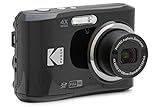
- 16MP Sensor: Captures detailed photos with a CMOS sensor for everyday shooting
- Optical Zoom: 4x optical zoom with a 27mm wide angle lens for flexible framing indoors or outdoors
- Full HD Video: Records 1080p video for travel clips, family moments, or simple vlogging
- Memory Support: Works with Class 10 SD, SDHC, or SDXC cards up to 512GB
- LCD Screen and Battery: 2.7in LCD screen with 2 AA alkaline batteries for convenient on-the-go use
Use changing light to shape the scene
First light and low-angle sun
Bol’s workshop rule is, “The first three minutes are the most important.” He is referring to the first low-angle light after sunrise, which can rake across a landscape and reveal texture and dimension. Try front light for a clear view of color, then turn toward backlit leaves to see whether sunlight makes them glow. Shooting into a canopy can create a sunstar; Bol suggests trying f/16 or f/22 for that effect, though the result depends on the scene and lens.
Overcast skies, rain, and fog
Bright sun is not the only useful condition. Overcast light can soften shadows and render foliage evenly. Planck favors gray days for this reason and says he checks the histogram for clipped highlights; that is his working preference, not a rule that cloudy weather is always best. When composing in flat light, avoid letting a large blank white sky dominate the frame.
Rain or the period just after it can make foliage look saturated and reveal droplets on leaves. Fog can simplify a busy woodland and lend it atmosphere. If you use backlight, watch for lens flare. The same place may look quite different before sunrise, in the first light, and later in the day, so consider returning to a subject as the light changes.
Rank #2

- 16MP Sensor: Captures detailed photos with a CMOS sensor for everyday shooting
- Optical Zoom: 5x optical zoom with a 28mm wide angle lens for flexible framing indoors or outdoors
- Full HD Video: Records 1080p video for travel clips, family moments, or simple vlogging
- Memory Support: Works with Class 10 SD, SDHC, or SDXC cards up to 512GB
- Rechargeable Battery: Included LB-012 lithium-ion battery charges in the camera over USB with the supplied adapter in about 2 hours; charge it for at least 4 hours before first use to maximize battery life
Make the composition simpler than the color
When a wall of red, orange, and yellow feels overwhelming, choose a visual anchor: one distinctive tree, a leaf, a repeating line of trunks, a branch, a reflection, or a patch of contrasting color. Bol describes pairing red maples with green evergreens and setting repeated aspen trunks against yellow leaves. Those combinations give the eye structure as well as color.
Vary your viewpoint. An overlook can reveal broad bands of color; later in the season, the forest floor may offer a more intimate subject. Streams and ponds can add reflections and contrast, while moving water gives the frame a different texture. Try a wide view for context, then move closer or use a longer focal length to isolate a detail. A single leaf can anchor a wider scene if you position it carefully.
Match the lens to the frame
| Approach | Useful for |
|---|---|
| Wide-angle | Including landscape context or emphasizing a foreground leaf. |
| Telephoto | Isolating distant color, repeated trunks, or a compact pattern. |
| Close-focusing or macro | Showing leaf texture, veins, and water droplets. |
These are compositional options, not a shopping list. Start with the picture you want and use the lens that can frame it.
Rank #3

- Latest Digital Camera Built-in Fill Light : This compact digital camera is paired with a powerful CMOS processor and image stabilization to help you take & record the most exciting moments in 44 MP quality images & FHD 1080P quality videos anywhere, anytime. Plus, there is also a built-in fill light to help you take high quality pictures even in low light&dark settings, making this the perfect camera for all indoors/outdoors situations.
- Long-Lasting Battery Life & 16X Digital Zoom :This point and shoot camera will retain its battery charge even after long use. The controls and functions are easy to operate making this the perfect choice for children, teens and younger. This kids camera supports 16x digital zoom, you can zoom in or out the subject by pressing the W/T button for taking still photos to zoom in or out on distant objects and capture all the details you need.
- Multifunctional & Portable Digital Camera: This cheap digital camera is slim enough to fit in your pocket. You'll easily be able to take it with you on all your indoor/outdoor activities and adventures and ideal for beginners, children and teenagers. This kids digital camera is equipped with 20 filters, anti-shaking, self-timer, continuous shooting, date stamp, time-lapse recording, smile capture, internal MIC and speaker (recording sound videos), great for your daily photography needs.
- WEBCAM & PAUSE FUNCTION : More than just a FHD 1080p digital camera, it also works as a webcam for video calls and vlogging. Connect the camera to the computer, press shutter and power button at the same time and the camera will automatically turn on webcam mode for all your video calling and live streaming needs. The pause function allows you to pause when seeing playback videos.
- A Must Have Photography Device : This digital camera with SD card made from high-quality materials, this retro camera is safe and durable. Perfect for all ages to develop & improve their photographic abilities and observation skills. Our dedicated and experienced 24/7 support team is available for all after purchase troubleshooting, questions and technical help.
Choose aperture for depth and separation
Aperture determines how much of the scene appears in focus. Bol says aperture priority is his usual landscape mode because it lets him set depth of field while the camera selects a shutter speed. He uses f/16 as an example when he wants a broad scene sharp, and f/2.8 when he wants to isolate a leaf against a blurred background. These settings are examples from his practice; distance, lens, light, and the desired look all affect the result.
For woodland scenes, Nikon UK’s beginner guide suggests f/10 as a starting point, paired with base ISO and aperture-priority or manual exposure. It also recommends single-point autofocus for still scenes. Treat these as starting suggestions rather than fixed requirements: check focus and exposure in the conditions you actually have.
Use shutter speed and movement intentionally
For crisp leaf detail, keep the camera steady and use a shutter speed fast enough for any movement in the subject. In low light, Planck suggests raising ISO rather than sacrificing the depth of field he wants when handholding and needing a faster shutter speed. With a tripod in calm conditions, he says he can use the lowest ISO because shutter speed is less of a concern.
Rank #4

- 16MP Sensor: Captures detailed photos with a CMOS sensor for everyday shooting
- Optical Zoom: 5x optical zoom with a 28mm wide angle lens for flexible framing indoors or outdoors
- Full HD Video: Records 1080p video for travel clips, family moments, or simple vlogging
- Memory Support: Works with Class 10 SD, SDHC, or SDXC cards up to 512GB
- Rechargeable Battery: Included LB-012 lithium-ion battery charges in the camera over USB with the supplied adapter in about 2 hours; charge it for at least 4 hours before first use to maximize battery life
Movement can also be part of the picture. Bol suggests experimenting with a shutter speed around one second while moving the camera vertically during the exposure to turn foliage into abstract patterns. Try different directions and speeds; the result is an experiment, not a repeatable recipe. Moving water offers another way to introduce motion. For waterfall long exposures, Nikon UK recommends using a tripod and a two-second shutter delay to reduce vibration.
Independent reader supportYour contribution helps us test, update, and keep practical guides available for everyone.Bring accessories only when they solve a problem
Circular polarizing filter
A circular polarizing filter can reduce reflections from foliage, including wet leaves, and may deepen the appearance of color. Its effect depends on the scene. Choose one sized for the lens you intend to use; it is helpful in some conditions, not essential for every foliage photograph.
Free tools Windows power users keep installed
One-click scans. No signup required.
Tripod
A tripod helps with careful leveling, deliberate framing, low-light work, and longer exposures. It is especially useful when photographing moving water or when stability matters. For ordinary handheld foliage photographs in sufficient light, it is not a prerequisite.
Quick Recap
A practical field routine
- Check conditions: Look up a current local foliage report and consider the location’s elevation; treat general peak dates as rough examples.
- Scout the subject: Find one dominant tree, leaf, trunk pattern, contrasting color, or reflection instead of trying to include every bright area.
- Work the light: Photograph the scene in more than one direction and, if possible, revisit it as the light changes. In overcast weather, keep empty sky from taking over the frame.
- Set depth of field: Choose a wider aperture to separate a detail or a smaller aperture when you want more of the scene in focus.
- Decide whether motion belongs: Keep the camera steady for detail; experiment with camera movement or a longer exposure when you want abstraction or flowing water.
- Review the result: Check focus and exposure, including the histogram if highlights may be clipping, then adjust your framing or settings before moving on.
Product prices and availability are accurate as of the date/time indicated and are subject to change. Any price and availability information displayed on Amazon at the time of purchase will apply.

