
The Tool Desk
Outbyte Driver Updater FREEFix the driver behind crashes, sound loss and screen glitchesFind Drivers →Outbyte PC Repair FREERepair Windows errors before they cause bigger problemsFix Now →Start by defining exactly what your company will do, then request a pre-application consultation with Transport Canada’s Interim Commercial Space Launch Program before committing to a launch site or schedule. Under the current interim process, the Minister of Transport must authorize a commercial uncrewed rocket launch from Canadian territory. Site access, launch authorization, vehicle development, payload permissions and funding are separate workstreams—not one approval or one startup application.
This guide reflects the official material available on October 4, 2026. Canada’s proposed permanent framework and related licensing rules are still evolving, so verify their status before making regulatory or investment decisions.
Choose the business you are actually building
“Space launch company” can mean several businesses, with different capital needs and responsibilities. Decide whether you plan to operate a rocket, develop a vehicle for another operator, run a launch site, or provide integration and test services. Combining roles may be possible, but it increases the number of interfaces, approvals and operating capabilities you need to plan for.
| Business role | Primary work | Key planning question |
|---|---|---|
| Launch operator | Conducts the launch and associated ground, flight and, where applicable, recovery operations. | Can the company demonstrate a safe, viable mission and meet the Minister of Transport’s authorization requirements? |
| Vehicle developer | Designs and develops a launch vehicle, potentially for use by another operator. | Who will operate the vehicle, and who is responsible for launch authorization and mission interfaces? |
| Launch-site operator | Provides a site and related infrastructure or services. | What site rights, facilities, hazard controls and operator arrangements are required? Transport Canada says it does not license spaceports. |
| Payload integration or test provider | Prepares payloads or supports testing and launch readiness. | Which payload-specific permissions and technical responsibilities belong to the provider, customer or launch operator? |
Then write a concise mission concept: orbital or suborbital flight; vehicle and payload class; trajectory; planned ground operations; recovery approach; candidate site; and the parties responsible for each activity. Transport Canada’s draft application requirements cover uncrewed commercial launch vehicles and experimental rockets other than amateur rockets. The mission details determine the hazards, site interfaces and permissions that must be addressed.
#1 Best Overall

- BEGINNER MODEL-ROCKET LAUNCH SET: The Tandem-X rocket-model launch set offers adults and kids ages 10+ hours of fun during the holidays as they complete and launch our Amazon and Crossfire ISX rocket models. This set includes the easy-to-assemble Amazon model parts, the Crossfire ISX model parts, parachutes, and the launch pad system. It requires rocket engines, Starters, Recovery Wadding, and 4 high-quality 1.5-volt AA alkaline batteries for launch use (sold separately).
- 2 SOARING ALTITUDE HEIGHTS: Our Tandem X set offers a high-performing power duo with our giant 30-inch Amazon model (600-foot projected altitude with a C6-5 rocket engine) and our streamlined 15.6-inch Crossfire ISX model (1,150-foot projected altitude with a C6-7 rocket engine). Other compatible Estes model-rocket engines for Amazon model: B4-2, B4-4, B6-2, B6-4, C5-3, and C6-3. Other compatible engines for Crossfire ISX: A8-3, B4-4, B6-4, and C6-5. All engines sold separately.
- READY TO ASSEMBLE: Our beginner model-rocket launch set comes with 2 build options. The precolored Amazon model features plastic fins and self-stick graphics and can be built in an hour. The Crossfire ISX model comes with laser-cut wood fins, self-stick decals, and aerodynamic parts. Pair the rockets with the included Porta Pad II Launch Pad and Electron Beam Launch Controller for a hands-on educational activity or a unique Christmas gift for a budding scientist or a space aficionado.
- SAFETY FIRST, FUN ALWAYS: Our rockets and rocket launch accessories are designed to be used with the NAR (National Association of Rocketry) model-rocket safety code. Always ensure you have an appropriate launch site, stand back at least 15 ft., insert the safety key, issue a countdown, and then you can let your rocket fly!
- WE IGNITE IMAGINATIONS: Since 1958, Estes has created educational rocket kits and displays designed for an unforgettable aerospace experience. As a family-owned company, we have grown to offer exciting STEM products that engage aspiring rocketeers and the future minds of aerospace.
What permission does a Canadian launch operator need?
Launch authorization under the interim process
Transport Canada’s current commercial launch overview says the Minister of Transport must authorize a launch. The department describes the review as lengthy and says it begins with pre-application consultation to discuss preliminary plans and identify approvals or assessments that may be needed. A formal application must then show how the proposal meets applicable requirements. Do not build a financial model around an assumed review duration or guaranteed decision.
To begin, email the Interim Commercial Space Launch Program at tc.commercialspacelaunch-lancementspatialcommercial.tc@tc.gc.ca. Confirm that the contact and process are still current when you approach the department. Prepare a short, technically credible mission outline and questions about the approvals and assessments that may apply; the initial consultation is not itself an authorization.
Proposed legislation is not yet the operating rule
The Canadian Space Launch Act was introduced as Bill C-28 in April 2026. The parliamentary source cited for the bill records it at first reading; that is a proposed statute, not enacted law. Separately, Transport Canada’s forward regulatory plan expects proposed regulations to appear in Canada Gazette, Part I, in Spring 2028 for a 30-day comment period. That is a planned future step, not a completed regulation or a change to the interim process.
Rank #2
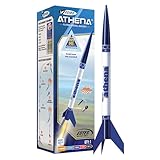
- BEGINNER MODEL ROCKET SET: The Estes Athena model rocket gives kids ages 10+ and beginners an easy way to experience real rocket launches with no building required! This ready-to-fly model rocket kit includes a fully prepared rocket with a parachute. This rocket requires Estes rocket engines, a launch pad system, Starters, Recovery Wadding, and 4 high-quality 1.5-volt AA alkaline batteries (sold separately) for launch use.
- SOARS UP TO 1,125 FT.: Our high-flying Athena rocket features a bright 12-inch parachute for safe recovery and soars up to a projected altitude of 1,125 ft. (343 m) with a C6-7 engine (sold separately). It is also compatible with the A8-3, B4-4, B6-4, and C6-5 rocket engines.
- READY TO FLY: Rocket-building kits are creative, educational gift ideas for Christmas or special-occasion surprises! This beginner-friendly Athena rocket comes fully assembled and just takes 15 minutes of preparation time. This model pairs with the Porta Pad II Launch Pad and Electron Beam Launch Controller (sold separately) for blastoff.SAFETY FIRST, FUN ALWAYS: Our rockets are designed to be used with the NAR (National Association of Rocketry) model-rocket safety code. Always ensure you have an appropriate launch site, stand back at least 15 ft., insert the safety key, issue a countdown, and then you can let your rocket fly!
- SAFETY FIRST, FUN ALWAYS: Our rockets are designed to be used with the NAR (National Association of Rocketry) model-rocket safety code. Always ensure you have an appropriate launch site, stand back at least 15 ft., insert the safety key, issue a countdown, and then you can let your rocket fly!
- ESTES EDUCATION: Since 1958, Estes has created educational rocket kits designed for an unforgettable launch experience. As a family-owned, US-based company, we offer exciting and engaging STEM products for all interests, skills, and power levels.
Transport Canada’s consultation on draft application requirements ran from February 25 to April 13, 2026 and is closed. The draft requirements document says oversight currently stems from the Aeronautics Act and is expressly subject to change. Treat it as important planning material, not a final checklist. Check Bill C-28’s parliamentary status and Transport Canada’s latest material before relying on either as current law.
PC Slower Than It Used to Be?
A free scan shows the junk files, broken settings and background clutter dragging Windows down - then fixes them in one click.Free scan · Windows 10 & 11Crashes, No Sound, or Screen Glitches?
Random freezes, missing sound and display glitches usually trace back to one bad driver. Find and replace yours safely.Free scan · under a minuteHow to start: a practical sequence
- Define the mission and corporate role. Identify the operator, vehicle developer, site provider, payload owner and service providers. Set out the mission type, trajectory, payload, ground operations and recovery plan at a level that makes safety and regulatory questions concrete.
- Contact Transport Canada early. Request the pre-application consultation and use it to establish which application materials, assessments and other authorities may be relevant to the proposed mission.
- Screen candidate sites before committing. Confirm site access, operator responsibilities, infrastructure, hazard areas, flight-path constraints and interfaces with air and marine traffic. Engage the relevant authorities and site operator as the concept develops.
- Build the safety and operations case. Develop the vehicle, ground-operation, hazard-control, public-notification and emergency-planning material needed to support a formal application. Use the current Transport Canada draft as a planning reference and confirm requirements directly.
- Map permissions by activity and responsible party. Separate launch authorization from payload spectrum, remote-sensing and other mission-specific permissions. Identify which entity will obtain each approval and when it is needed.
- Stage funding against evidence and milestones. Match each funding request to technical feasibility, prototype or demonstration work, site and test readiness, authorization preparation or commercial service development. Treat competitive program awards as uncertain until an award is confirmed.
How to choose a launch site
Transport Canada says Canadian launch sites are privately owned and operated, and that it does not license spaceports. That does not mean launch permission comes automatically with land access: the launch application includes site information, and the proposed site must meet the department’s requirements. The Minister’s review can consider proximity to people, environmental-law compliance, national security, and air and marine traffic.
Compare actual candidate sites against the mission rather than relying on a generic ranking. There is not enough comparable site-performance or cost information in the cited official material to name a best Canadian site.
Rank #3

- INTERMEDIATE MODEL-ROCKET-BUILDING KIT: This Estes model rocket kit bulk pack offers kids ages 10+ the chance to build and blast our high-flying 1754 Wizard model rocket during holidays and special occasions. Each intermediate building kit includes the model parts, an engine mount, design decals, a recovery parachute, and instructions. Each requires rocket engines, a launch pad system, Starters, Recovery Wadding, and 4 high-quality 1.5-volt AA alkaline batteries for launch (sold separately).
- SOAR UP TO 1,600 FT.: Our spellbinding 1754 Wizard rocket model was made for wind-drift studies or flight competitions. It has a projected altitude of 1,600 ft. (488 m) on a C6-7 Estes model-rocket engine (sold separately) and is also compatible with 1/2A6-2, A8-3, A8-5, B4-4, B6-4, B6-6, or C6-5 rocket engines.
- READY TO ASSEMBLE: Rocket-building kits are creative, educational gift ideas for Christmas or special-occasion surprises! Our intermediate-level rocket-building bulk pack comes with ready-to-build rockets that each require approximately 1 hour of assembly time. Add the included decals and pair the rockets with the right engines, Porta-Pad II Launch Pad, and Electron Beam Launch Controller (sold separately) for a memorable blastoff.
- SAFETY FIRST, FUN ALWAYS: Our rockets are designed to be used with the NAR (National Association of Rocketry) model-rocket safety code. Always ensure you have an appropriate launch site, stand back at least 15 ft., insert the safety key, issue a countdown, and then you can let your rocket fly!
- ESTES EDUCATION: Estes Education provides educators with the tools for success through our interdisciplinary STEM products, accessible lessons, and online resources. Our mission is to cultivate the skills and confidence necessary to easily implement science and rocketry in classrooms, youth programs, and beyond.
- Mission fit: Is the site compatible with the planned trajectory, orbital or suborbital mission, recovery approach and expected cadence?
- Safety and access: Can the company secure the necessary access and define responsibility for hazard areas, public notification, emergency response and operations?
- Air and marine interfaces: What traffic coordination and flight-corridor issues does the mission create?
- Environmental and community factors: What environmental approvals, land issues and consultation obligations may apply to this location?
- Site readiness: Which facilities and services exist, which must be developed, and who is responsible for them?
A National Defence release in March 2026 announced a 10-year, $200 million agreement to lease a dedicated launch pad and associated services at a multi-user spaceport near Canso, Nova Scotia, operated by Maritime Launch Services. The release said initial operational capability was required by the end of 2026. It establishes the terms and target stated in that announcement; it does not establish later operational readiness or public commercial booking availability.
What should the safety and application case cover?
Transport Canada’s draft application document asks for a description of proposed ground operations, the launch site, vehicle and mission, hazards and controls, payload characteristics, and relevant licensing intentions. Its examples include hazardous or radioactive materials, pressure vessels, explosive potential, orbit parameters, payload release of control, payload lifespan and disposal, and encryption. It also addresses hazard-area planning, public notification and safety-analysis methods and criteria. The appropriate evidence depends on the actual vehicle and mission; do not treat every example in a draft annex as a final universal checklist.
Free tools Windows power users keep installed
One-click scans. No signup required.
Transport Canada says it works with up to 15 other federal departments and consults the provincial or territorial government. Its overview says the Minister may impose conditions where a launch is considered in the public interest and unlikely to affect aviation safety. The review is therefore not only a vehicle-performance assessment: it also addresses public exposure, airspace, national security and related public-interest considerations.
Rank #4

- BEGINNER MODEL ROCKET LAUNCH SET: The Estes Alpha III launch set lets kids ages 10+ and hobbyists easily build and launch this iconic model rocket. The model rocket kit includes rocket parts, engine mount, decals, a parachute, a launch pad system, and instructions. For blastoff, you’ll need Estes rocket engines, Starters, Recovery Wadding, and 4 high-quality 1.5-volt AA alkaline batteries (not included).
- SOARS UP TO 1,150 FT.: Our Alpha III model rocket is designed for first-time STEM kit builders and climbs up to a projected altitude of 1,150 ft. (351 m). It’s compatible with 1/2A6-2, A8-3, A8-5, B4-4, B6-4, B6-6, C6-5, or C6-7 Estes rocket engines (sold separately).
- READY TO ASSEMBLE: Rocket building sparks creativity and a love for science and outer space! This beginner Alpha III model kit is easily put together with 1 hour of preparation and includes decals. It comes with a Porta-Pad II Launch Pad and Electron Beam Launch Controller for an unforgettable blastoff for first-time rocketeers.
- SAFETY FIRST, FUN ALWAYS: Our rockets are designed to be used with the NAR (National Association of Rocketry) model-rocket safety code. Always ensure you have an appropriate launch site, stand back at least 15 ft., insert the safety key, issue a countdown, and then you can let your rocket fly!
- ESTES EDUCATION: Since 1958, Estes has created educational rocket kits designed for an unforgettable launch experience. As a family-owned, US-based company, we offer exciting and engaging STEM products for all interests, skills, and power levels.
Commercial launch safety is handled through this authorization and assessment process, but that does not establish that every proposed launch is safe or will be approved. The company must make a mission-specific safety case and address hazards and controls to the satisfaction of the relevant authorities.
Independent reader supportYour contribution helps us test, update, and keep practical guides available for everyone.Keep launch approval separate from payload and other permissions
A launch authorization does not by itself resolve every permission related to the payload or its operation in space. Transport Canada’s draft asks about payload owner or operator licensing, or licensing intentions, under domestic or foreign jurisdictions, with spectrum and remote sensing as examples.
Innovation, Science and Economic Development Canada (ISED) has a separate process for space-station spectrum licence applications. Its CPC-2-6-02, Issue 7, dated April 2026, sets out that procedure. A separate ISED consultation describes a proposed approach to treating launch vehicles as space stations under the framework; because that material is consultation-stage, check whether ISED has since issued a final decision.
Best Value

- BEGINNER MODEL ROCKET LAUNCH SET: This Estes rocket model launch set offers kids ages 10+ the chance to blast off our 2 ready-to-fly 1499 Rascal and Hijinks models—no building required! This set includes the fully assembled 1499 Rascal and Hijinks rocket models, parachutes, and the launch pad system. It requires rocket engines, Starters, Recovery Wadding, and 4 high-quality 1.5-volt AA alkaline batteries for launch use (sold separately).
- SOAR UP TO 1,100 FT.: Our 1499 Rascal and Hijinks model rockets help you reach the skies faster with the included Estes rocket launch pad system. They have a projected altitude of 1,100 ft. (335 m) when used with a C6-7 Estes model-rocket engine (sold separately). They are also compatible with A8-3, B4-4, B6-4, C6-5, or A10-3T rocket engines.
- READY TO FLY: Rocket launch sets are creative, educational gift ideas for Christmas day or special-occasion surprises! Our dual beginner rocket launch set comes decorated and ready to launch with the included Porta Pad II Launch Pad and Electron Beam Launch Controller. Get outside faster and prepare for a successful and memorable blastoff!
- SAFETY FIRST, FUN ALWAYS: Our rockets are designed to be used with the NAR (National Association of Rocketry) model-rocket safety code. Always ensure you have an appropriate launch site, stand back at least 15 ft., insert the safety key, issue a countdown, and then you can let your rocket fly!
- WE IGNITE IMAGINATIONS: Since 1958, Estes has created educational rocket kits designed for an unforgettable launch experience. As a family-owned company, we have grown to offer exciting STEM products that engage aspiring rocketeers and the future minds of aerospace.
Screen the actual project for other potential requirements, including environmental approvals, land and site permissions, Indigenous rights and consultation where applicable, controlled technology and export rules, dangerous goods and hazardous materials, insurance, liability, employment, corporate, tax and contracting matters. The applicable answer depends on the location, ownership, vehicle, payload and mission; this list is not exhaustive or a determination that every item applies. Work through the relevant regulators and qualified advisers.
Funding routes and how to plan around them
There are public innovation-funding routes relevant to launch development, but they are competitive and conditional. Do not treat an announced program budget or another company’s award as money available to your startup.
| Route | What official material says | What a founder should not assume |
|---|---|---|
| Launch the North | National Defence describes a $105 million multi-year contest to develop and demonstrate Canadian-designed launch vehicles and supporting technology. Its March 2026 release said three first-round companies were conditionally approved for $8.3 million each. The program page describes responsive light-lift development and an initial operational capability target as late as 2028. | The awards are specific competitive decisions, not an open grant entitlement. Confirm current intake, eligibility, terms and milestones before including it in a funding plan. |
| NRC IRAP | The National Research Council of Canada’s Industrial Research Assistance Program may be relevant to an incorporated, for-profit Canadian SME with up to 500 employees developing and commercializing innovative technology. Support can include advice and connections and, in some cases, funding. | Meeting minimum eligibility does not guarantee support. NRC IRAP says it does not fund ordinary operating costs or purely commercial activities, among other exclusions. |
Build a staged plan around evidence: feasibility and hazard analysis; prototype and demonstration; site access and test readiness; authorization application; and commercial-service development. Tie each funding request to the program’s eligible work and milestones, and to Canadian economic benefits where required. This is a planning approach, not a promise that any source will fund the company.
What to resolve before investing heavily
- Who is the launch operator, and which organization owns each vehicle, site, payload and operational responsibility?
- Has Transport Canada identified the pre-application work and authorities relevant to this mission?
- Are site rights and responsibilities documented, and have air, marine, environmental and community constraints been screened?
- What payload, spectrum, remote-sensing or other permissions are needed, and which party will obtain them?
- Does the technical plan address hazards, public exposure, notifications and emergency response with mission-specific evidence?
- Is each prospective funding source currently open and suitable for the company’s actual work, rather than merely announced?
- Have you checked the latest status of Bill C-28, the draft requirements, ISED’s launch-vehicle proposal and the site’s operating status?
For context, Transport Minister Steven MacKinnon said in an April 21, 2026 Transport Canada release, “Our government is opening Canadian airspace under clear and controlled conditions so companies can safely launch and return spacecraft from Canada.” This was a policy statement accompanying the introduction of Bill C-28, not enacted law or a guarantee of authorization.
Recommended Free Tools
Quick Recap
Product prices and availability are accurate as of the date/time indicated and are subject to change. Any price and availability information displayed on Amazon at the time of purchase will apply.

