
Do these 3 things before closing this tab:
1Repair Windows errors before they cause bigger problems2Fix the driver behind crashes, sound loss and screen glitches3Clear out junk files and repair common Windows errorsMake, Zapier, and n8n can all help you respond when an automation fails, but they do different things. Make offers several ways to handle a failed module and can store incomplete executions for retry. Zapier supports replaying failed steps or a whole run, plus custom error branches. n8n documents a separate error workflow for responding to failed executions, with execution history and log streaming for investigation. The best fit depends on whether you need to retry work, route a failure, or investigate and alert someone.
Quick comparison
| Platform | Documented recovery pattern | Key consideration |
|---|---|---|
| Make | Per-module error handlers, including retry, resume, skip, commit, and rollback; incomplete executions can be stored and retried or resolved. | Incomplete-execution storage is disabled by default and must be enabled in scenario settings. |
| Zapier | Manual replay and Autoreplay for failed steps, whole-run replay from the editor, and custom error-handler branches. | Replay has task, time, workflow-status, and step-type constraints; replaying a whole run may repeat successful side effects. |
| n8n | A configured error workflow can run when an execution fails; execution review and log streaming support investigation. | The cited documentation does not establish a directly comparable node-level retry policy. |
The comparison below is based on official product documentation reviewed on October 4, 2026. Product behavior and plan restrictions can change.
How Make handles failed modules
Make’s error handlers let you choose what happens after a module fails. Its documentation lists five options, each suited to a different outcome:
- Retry: Store an incomplete execution and try the failed module again, automatically or manually.
- Resume: Supply a predefined output in place of the failed module’s result, then continue.
- Skip: Ignore the error so subsequent bundles can be processed.
- Commit: Stop the scenario while retaining processed changes for supported transactional apps.
- Rollback: Stop the scenario and revert changes for modules that support transactions.
These options are not interchangeable: retry attempts the operation again, while resume continues with substitute output. Commit and rollback concern what happens to changes in supported transactional modules. See Make’s error-handler reference and its overview of error handling.
What’s actually slowing this PC down?
Pick the symptom - the matching free tool is one click away.
#1 Best Overall

- VERSATILE CABLE TESTING: Cable tester for data (RJ45) terminated cables and patch cords, ensuring comprehensive testing capabilities
- LARGE BACKLIT LCD: Backlit LCD display enables easy reading of pin-to-pin wiremap results, even in low-lit areas
- COMPREHENSIVE FAULT DETECTION: Test for Open, Short, Miswire, Split-Pair faults, Cross-over, and Shield, providing thorough fault detection
- INTUITIVE USER INTERFACE: User-friendly interface with three buttons and simple, easy-to-identify test responses, ensuring a smooth testing experience
- MULTIPLE TONE GENERATOR STYLES: Tone on a single wire, wire pair, or all 8 conductor wires using the multiple style tone generator (solid/warble); requires probe Cat. No. VDV500-123 (sold separately)
Incomplete executions: storage, retry, and resolution
Make states that incomplete-execution storage is disabled by default; enable it in the scenario settings if you want failed runs stored for action. Stored executions can be retried, manually resolved, or deleted. A retry starts at the failed module using the same module configuration and original input. Make identifies temporary problems such as connection or rate-limit errors as suitable retry cases. If the module or scenario configuration needs correction, resolve the issue manually before continuing. See Make’s incomplete-execution guide and instructions for managing incomplete executions.
How Zapier handles failed steps and runs
Zapier offers manual replay from Zap History and automatic replay, called Autoreplay, for failed steps. Its replay guide, updated May 29, 2026, documents up to five Autoreplay attempts. The example schedules them at increasing intervals: five minutes, 30 minutes, one hour, three hours, and six hours after the preceding attempt. In that example, the final attempt is about 10 hours and 35 minutes after the initial error. These are documented product settings and an example schedule, not a guarantee that every failure will follow that timing. See Zapier’s replay guide.
Rank #2
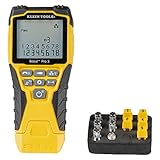
- VERSATILE CABLE TESTING: Cable tester tests voice (RJ11/12), data (RJ45), and video (coax F-connector) terminated cables, providing clear results for comprehensive testing on unenergized Ethernet cables (not designed to test PoE)
- EXTENDED CABLE LENGTH MEASUREMENT: Measure cable length up to 2000 feet (610 m), allowing for precise cable length determination
- COMPREHENSIVE FAULT DETECTION: Test for Open, Short, Miswire, or Split-Pair faults, ensuring thorough fault detection and identification
- BACKLIT LCD DISPLAY: Backlit LCD screen displays cable length, wiremap, cable ID, and test results, ensuring easy readability in various lighting conditions
- EFFICIENT CABLE TRACING: Trace cables, wire pairs, and individual conductor wires using the multiple style tone generator (requires analog probe Cat. No. VDV500-123, sold separately), simplifying cable tracing tasks
Step replay versus whole-run replay
History replay targets eligible failed steps, but it does not replay Filter or Paths steps. A failed run may also be ineligible after certain structural changes to the Zap. The Zap must be on, replay must occur within 60 days of the trigger, and failed steps use available task allowance. If a connection has expired, reconnect it before replaying the affected step.
Whole-run replay from the editor is different: it starts at the trigger and runs every step using the currently published workflow. That can repeat steps that already succeeded, including actions with external side effects. Before using it, check whether sending a message, creating a record, charging an account, or another downstream action could happen twice.
Rank #3

- Multifunctional Network Cable Tester: TESMEN TLP-123A Supports RJ45 and RJ11, enabling rapid detection of line connectivity, short circuits, open circuits, miswiring, and cable shielding status. An essential tool for troubleshooting line faults and network maintenance, it effectively boosts your work efficiency
- Convenient and Efficient: Featuring one-button operation and a test speed adjustment gear on the main control unit for enhanced flexibility. Clear LED indicators provide intuitive test result displays, making it easy for both professionals and home users to operate
- Portable and Durable: Compact and lightweight design for easy portability. Constructed with high-quality plastic housing for robust structure, ensuring both durability and stability. Ideal for home wiring, IT equipment setup, electrical maintenance, and LAN DIY projects
- Detachable design: The main control unit and remote unit can be separated and used independently, allowing you to test both ends of long cables. This makes it ideal for wall-mounted ports, long-distance cabling, or structured cabling systems, perfect for homes, offices, or professional IT environments
- What you will get: 1 * TLP-123A Network Cable Tester, 1 * user manual, 2 * AAA batteries
Custom error handling and Autoreplay
A custom error handler creates an alternative branch when an eligible action step errors. Later steps in that branch can use the error message to route or report the failure. You cannot attach a handler to a trigger or a Paths step. Publishing a custom handler turns off Autoreplay for that Zap, and Zapier documents limits on manual replay for runs with handlers. Choose between automatic retries and a custom failure path based on what the workflow needs; do not assume both are available together in every configuration. See Zapier’s custom error-handling instructions.
How n8n handles failed executions
In n8n, you can assign an error workflow in Workflow Settings. It runs when an execution fails, must start with the Error Trigger node, and can be shared by multiple workflows. The error workflow can notify a person or system—for example, by sending an email or Slack message—rather than continuing the failed workflow as though its work had succeeded.
Rank #4

- The LAN cable tester can test both of the RJ11 telephone cable and RJ45 network cables such as RJ45 Cat5 Cat6 Cat7. Built-in high performance chip, which provide faster test results when checking wires and data points.
- The network provides the verification detail of wires to ensure that your networking is flowing optimally. And it will inform you whether the cables are paired and connected correctly or not.
- The network cable tester features a nice LED display which indicates. And the results that are easy for anyone to understand. It can be used by both professionals and unskilled home-users.
- Note: The cable tester needs a 9-volt battery to function. The battery is not included in the package at the time of purchase.
- If you are not satisfied with this Ethernet cable tester, please feel free to contact us. We will solve all your problems well.
For diagnosis, n8n recommends reviewing an individual execution or all accessible workflow executions and enabling log streaming. These documented features support failure response and investigation. The cited n8n error-handling guide does not provide enough detail to compare its node-level retry behavior directly with Make’s or Zapier’s.
Independent reader supportYour contribution helps us test, update, and keep practical guides available for everyone.Choose by the failure you need to recover from
Temporary service or rate-limit problem
A retry or replay may help when the input and workflow are sound but a connection or service temporarily failed. Make explicitly describes temporary connection and rate-limit errors as plausible retry cases. For Zapier, use Autoreplay or an eligible failed-step replay where the Zap’s configuration and task allowance permit it. A retry does not repair a revoked connection or persistent service failure.
Quick wins for a faster PC:
Repair Windows errors before they cause bigger problemsFix Now →Scan for outdated or missing drivers - takes under a minuteDriver Scan →Best Value

- Comprehensive Cable Testing: Includes a tester box with a detachable remote unit for in-place testing of Cat 5, Cat 5e, Cat 6, Cat 7 RJ45 Ethernet and RJ11 telephone cables; ideal for networks up to 300m/1000ft
- Efficient Crimping & Stripping: Features a solid-build crimper with textured handles for secure wire and connector crimping; comes with mini-blades for easy wire snipping and stripping
- Versatile Punch Down Tool: Krone-style punch down tool offers quick and lightweight block termination, perfect for setting up or repairing network connections
- Precision Coax Stripping: Rotary coaxial cable stripper with an interchangeable head for RG59 and RG58 cables; adjustable blades for precise stripping with minimal effort
- Accessories & Carry Case: Includes full-length screwdrivers for panels and covers, and a handy box of spare connectors; all kept tidy and organized, with strong elastic straps, in a professional-looking zipper case of splash-proof Oxford weave cloth
Invalid data or a workflow configuration problem
Correct the input or workflow before retrying. Make’s stored retry uses the original input and same module configuration, so replaying without fixing the underlying cause can fail again. Zapier likewise requires an expired connection to be reconnected; structural changes can also affect whether a history replay is available. An error branch can be useful when the workflow should report or route a failure rather than keep attempting an operation.
Need to continue despite a failed step
Make’s Resume handler can provide substitute output and continue, while Skip disregards an error so later bundles can be processed. Those choices are different from retrying the failed operation and require you to decide whether downstream steps can safely use missing or substitute data. Zapier’s custom error branch offers a way to route or report eligible action-step errors. n8n’s documented error workflow provides a separate response to the failed execution.
Risk of duplicate actions
Before replaying, identify which operations will run again and whether they are safe to repeat. Zapier’s whole-run replay reruns successful as well as failed steps. For any platform, consider the consequences of duplicate external actions and use workflow design that can recognize or safely handle repeated requests where possible.
What the comparison does—and does not—establish
Make and Zapier document retry or replay mechanisms with different scopes and constraints; n8n’s cited guide documents an error workflow, execution review, and log streaming. Those are not equivalent measures of recovery capability. In particular, the available n8n documentation here does not establish a like-for-like node-level retry policy, so it would be misleading to rank the three platforms on which retries best overall.
Quick Recap
Product prices and availability are accurate as of the date/time indicated and are subject to change. Any price and availability information displayed on Amazon at the time of purchase will apply.

