
Protecting a website from automated scanning and exploitation takes more than blocking bots. Map the endpoints attackers can target, fix exploitable weaknesses, apply rate limits appropriate to each action, and combine edge, application, and backend monitoring. Legitimate crawlers and accessibility tools also automate requests, so controls should distinguish harmful behavior without indiscriminately blocking automation.
1. Map exposed routes and the threats they face
Start with an inventory of public routes and sensitive flows. Automated threats include both probing for software weaknesses and abusing normal application features at scale. OWASP’s automated threat catalog provides a shared vocabulary for these behaviors, including vulnerability scanning.


- Authentication: credential stuffing, password guessing, and attempts to enumerate accounts.
- Signup and account recovery: fake-account creation, bulk requests, and recovery-flow abuse.
- Search and public APIs: scraping, excessive queries, and attempts to discover or exploit input-handling flaws.
- Checkout and uploads: transaction abuse, oversized or malicious submissions, and attempts to bypass business rules.
For each route, identify what could be exposed, changed, or abused, and which signals are available to detect it. An endpoint that serves public information has different risks from one that changes account details or places an order. OWASP’s Automated Threats to Web Applications catalog and Bot Management and Anti-Automation Cheat Sheet are useful references for threat modeling.
2. Find and remediate vulnerabilities
Scanning is a way to find possible weaknesses, not a way to fix them. Run authorized security scans against your own application, review third-party dependencies, assess findings in context, then patch vulnerable components or change unsafe code and configuration. Retest to confirm the fix and check for regressions.
Quick wins for a faster PC:
Fix the driver behind crashes, sound loss and screen glitchesFind Drivers →Clear out junk files and repair common Windows errorsFree Scan →Scan for outdated or missing drivers - takes under a minuteDriver Scan →#1 Best Overall
- Scan: use a web application scanner such as OWASP ZAP within an authorized testing process.
- Review: validate findings and review dependency risks; prioritize issues by exposure and likely impact.
- Fix: update affected components or correct the application logic or configuration.
- Retest and monitor: verify remediation and make security checks part of ongoing development and deployment.
OWASP’s Secure My App guidance describes automated scanning with ZAP, dependency review, implementing fixes, and continued CI/CD monitoring. A clean scan does not establish that a site is secure: scanners can miss flaws, and business-logic abuse may not be detectable as a conventional vulnerability.
3. Rate-limit high-risk actions
Set limits around actions and identities that matter, rather than relying on one site-wide request threshold. Useful keys can include source IP, session, authenticated account, and endpoint. An IP-only limit can be evaded by distributing requests across addresses; identity-only limits can miss anonymous abuse or attacks spread across many accounts.
Rank #2
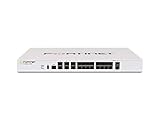
- Protects against known exploits, malware and malicious websites; detects unknown attacks; identify thousands of applications
Use separate limits for login patterns
For login, consider independent buckets for the account name and source IP. A username-based limit can detect many sources targeting one account, while an IP-based limit can detect one source trying many accounts. Avoid revealing whether a username exists through different responses or timing.
Choose an algorithm and tune it
OWASP recommends token-bucket or sliding-window approaches for rate limiting. These can avoid the sharp boundary behavior of a fixed window, where a client may send bursts on both sides of a window reset. Tune thresholds by endpoint and user experience, then monitor both abuse and false positives. A limit that blocks legitimate customers can become an availability problem of its own.
Rank #3

- Fortinet Web Application Firewall - virtual appliance for all supported platforms. Supports up to 1 x vCPU core
- Fortinet HW FWB-VM01
- Manufacturer Part: FWB-VM01
Apply proportionate responses: slow or throttle suspicious traffic first, and use stronger controls when the signals justify them. Ensure that legitimate usage patterns, including accessibility tools and known search crawlers, have a considered route rather than being caught by blanket bot blocking.
4. Combine edge, application, and backend controls
Edge services such as a CDN, WAF, or anti-bot service can contribute network and request signals, reputation checks, and basic throttling. Application-level controls can account for sessions, authenticated identity, and behavior across actions. Backend monitoring can reveal unusual account creation, authentication, or transaction velocity that a request-level rule may not see.
OWASP’s cheat sheet warns that “A single control is brittle.” Treat this as a layered design: an edge rule can reduce noisy traffic, while application checks and operational monitoring address abuse that passes through or uses valid features. Do not assume that a WAF or bot detector makes the application invulnerable.
Evaluate WAF fit and operations
OWASP lists ModSecurity and Coraza as WAF engines and the OWASP Core Rule Set as generic attack-detection rules for compatible engines. They are implementation options, not evidence of universal protection or comparative effectiveness. Before adopting any WAF, assess whether it fits your deployment, how its rules are maintained and tuned, how false positives are handled, and who owns ongoing operations. Review alerts and test rule changes against real application behavior.
5. Monitor signals and respond carefully
Log events that help explain what happened and what the application did in response. Useful signals include unusual authentication activity, repeated validation failures, authorization denials, and request patterns that differ from a route’s normal baseline. Correlate relevant events across edge, application, and backend systems so an apparent burst can be evaluated in context.
- Establish a baseline for normal traffic and business activity by endpoint.
- Review unusual authentication, validation, authorization, and transaction patterns.
- Use throttling or step-up challenges when appropriate before resorting to hard blocks.
- Keep a route for legitimate crawlers and accessible use; do not treat all automated requests as hostile.
- Minimize retained fingerprinting data, set short retention periods where feasible, and document third-party anti-bot data processing.
Define who reviews alerts and what response follows. A detection that nobody investigates does not reduce risk, while an overly aggressive automated block can disrupt valid users and services.
6. Check whether CISA scanning is available to your organization
CISA’s Cyber Hygiene Services describe vulnerability scanning and web application scanning for eligible U.S.-based government and critical-infrastructure organizations. CISA describes monthly reporting for web application scanning and on-demand reports; eligibility and service details should be confirmed directly with CISA Cyber Hygiene Services. This option is limited by eligibility and is not a substitute for your own remediation and monitoring process.
Quick Recap
Product prices and availability are accurate as of the date/time indicated and are subject to change. Any price and availability information displayed on Amazon at the time of purchase will apply.
The Tool Desk
Outbyte PC Repair FREERepair Windows errors before they cause bigger problemsFix Now →Outbyte Driver Updater FREEFix the driver behind crashes, sound loss and screen glitchesFind Drivers →
