
The Tool Desk
Outbyte PC Repair FREEClear out junk files and repair common Windows errorsFree Scan →Outbyte Driver Updater FREEFix the driver behind crashes, sound loss and screen glitchesFind Drivers →Choose a counter-drone detection system by starting with the facility’s threat and response plan—not a vendor’s headline range or a supposedly “best” sensor. Match the system to the site’s layout, environment, staffing, and aviation context; require a demonstration and acceptance test under representative conditions. Treat detection and mitigation as separate decisions, and get legal review before considering any capability that interferes with a drone or its communications.
Start with the facility’s threat and response plan
Before comparing equipment, define what the facility needs to detect and what staff should do when an alert appears. A sensor can report an observation or track; it cannot, on its own, establish a drone operator’s intent or the threat level. The FAA’s airport detection guidance states that “Detection systems do not have the ability to determine intent or the level of threat posed by UAS.” Plan for a trained person to review alerts and follow a documented response procedure.
- Identify the drone activity that matters to the facility, the areas that need coverage, and the hours the system must operate.
- Map buildings, terrain, likely obstructions, sightlines, and places where a sensor could be installed.
- Define who receives alerts, how they verify them, how incidents are documented, and when they are escalated.
- Determine whether the facility is at or near an airport or otherwise needs aviation coordination.
These decisions define the system’s job. Without them, it is difficult to judge whether a claimed detection capability, coverage area, or alerting workflow is useful at this particular site.
Compare the sensor options
Radar, passive radio-frequency (RF), electro-optical/infrared (EO/IR), and acoustic sensors observe different characteristics. No modality guarantees a particular range or performance by itself: system design and site conditions matter. Multiple sensors can provide cross-checks, but combining them adds integration and operating requirements and does not eliminate blind spots.
Free tools Windows power users keep installed
One-click scans. No signup required.
#1 Best Overall
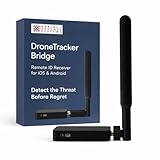
- ⚠️ Important Notice: Important: This device detects compatible Remote ID broadcasts only. It will not detect every drone. Drones that are not transmitting Remote ID, have Remote ID disabled, or use an unsupported transmission method will not be detected. Actual reception range varies based on the transmitting drone, signal strength, terrain, buildings, interference, receiver placement, and environmental conditions. A compatible phone or tablet and supported application are required to display detection information. This is expected behavior and not a malfunction. Learn more about remote ID here before buying at drone-remote-id.com
- Portable Remote ID Detection – Receives compatible Remote ID broadcasts from nearby drones to provide real-time airspace awareness through a supported application.
- View Available Drone Information – Displays available broadcast data that may include drone location, altitude, movement, identification information, and operator or control-station location when transmitted.
- Wireless Passive Receiver – Receives compatible wireless Remote ID signals without transmitting commands, controlling drones, interfering with communications, or providing jamming capabilities.
- Works With Compatible Phones and Tablets – Detection information is displayed through a supported Remote ID application on a compatible mobile device; the receiver itself does not contain a display.
| Option | What it detects | Key constraints to test | Potential role |
|---|---|---|---|
| Radar | Returns from objects detected by an active sensing system. | Performance depends on system design, site layout, environment, and clutter. Do not infer range from the modality alone. | Potential primary detection, with other sensors or operator review used for verification. |
| Passive RF | RF activity associated with a drone or controller. | Weak received signals and background RF interference can limit detection. Some systems provide coarse source direction or limited tracking. | Detection and potentially useful operational information when relevant signals are present. |
| EO/IR | Visible imagery or thermal signatures. | Needs suitable visibility, line of sight, and sensor placement; obstructions can prevent inspection. | Visual inspection or classification of a cue, often as a secondary validation layer. |
| Acoustic | Sound signatures. | Usefulness depends on the drone being audible at the required distance and on ambient noise. | A possible supplementary cue if testing confirms the target types can be heard at the site. |
| Sensor fusion | Inputs from multiple sensor types, correlated by a system or operator. | Requires integration and an operating plan; individual site-specific gaps remain. | Cross-checking alerts and potentially improving detection, localization, or tracking in some circumstances. |
The FAA airport guidance describes “primary detection sources” as sensors with greater system autonomy that generate alerts and prompt further investigation by an operator. That describes an alerting role, not an automatic threat judgment. Decide which sensors generate primary alerts, which validate them, and what staff do if a sensor is unavailable.
Account for the site, not a brochure range
Buildings, terrain, line-of-sight limits, weather, birds and other clutter, and electromagnetic interference can all affect performance. RF detection in particular depends on receiving a relevant signal amid other RF activity; visual and thermal checks depend on visibility and unobstructed views. A result from a demonstration elsewhere does not establish coverage at this facility.
Rank #2
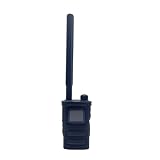
- Wide Frequency Detection: Covers 0-6GHz frequency range, enabling detection of various UAV signals for comprehensive monitoring.
- Dual-Language Support: Compatible with Russian and English, facilitating operation for users of different language backgrounds.
- Handheld Portable Design: Compact and lightweight, easy to carry for on-site UAV detection tasks and mobile monitoring.
- Drone Alarm Function: Triggers timely alarms upon detecting UAV signals, providing quick alerts for potential drone presence.
- UAV Detection Tool: Specialized for identifying drone signals, suitable for scenarios requiring UAV activity monitoring.
Ask vendors to conduct a site survey and demonstrate the proposed configuration against realistic scenarios. Agree in advance on written pass/fail criteria for required areas, alert quality, track continuity, verification, and handling of false alerts. Include obstructions and likely clutter, and ask what the system does when conditions or sensor availability change. Avoid accepting a single headline range as proof of usable coverage.
Compare finalists against operational requirements
Use the same criteria for each bidder so a more complete system is not confused with a better marketing claim. Ask for evidence from representative conditions, and record exceptions rather than treating untested claims as established.
Recommended Free Tools
Rank #3

- [Design] Radiation dosimeter is easy to use, intuitive, small size Dia 5/8'' * L 4 1/8 ''(15.3mm*108mm), portable, and handy GM tube. Audible and visual alarm. High sensitivity, measuring range 0.05uSV-50mSv.High-power rechargeable battery, Tiny Pen Shape Inspiration with TYPE-C interface, screen sleep lasts for 50 hours measurement.
- [Application] Geiger counter radiation detector can detect the radiation level of any environment such as living, medical, high-risk environment, and any object at any time, such as detecting radiation of toys, antiques, building materials, furniture, decorations, food, etc, and personal protection, who are easily exposed to radiation such as supervisors, pregnant women, etc, health insurance and a good gift for a friend.
- [Function] The Geiger radiation detector can detect beta rays, gamma rays and X-rays almost instantaneously, and the radiation dose data is updated in real time every second. The electric radiation detector has an excellent detection range of 0.01-999 uSv/h. This range can be used to detect up to 999 Sieverts or 99,900 rem. and geiger counter with OLED display. Smart, bright, energy saving, safe.
- [How GM works]Geiger counters are designed according to the principle of the ionization properties of rays to gases. From Geiger and Müller in 1928. Technological advancement, now, you can put this compact GM tube size and dual mode Geiger counter/dosimeter in your pocket, just flick the switch, maybe it will help you avoid unseen harm.
- [Service&Certificate] provides one-year warranty service, please contact us if you have any questions after receiving the Geiger Counter Nuclear Radiation Detector, and we will answer your confusion one by one.emf radiation meter with FCC, CE, ROSH etc certifications
- Coverage and continuity: What areas are covered, where are the gaps, and how well can a track be maintained across the site, including behind obstructions?
- Detection and verification: Which modalities raise the first alert, and what secondary evidence is available to help an operator inspect it?
- Environmental resilience: How does the system behave amid RF noise, weather, birds, and other clutter that are plausible at this location?
- False-alert workflow: How are alerts reviewed, categorized, and escalated, and what workload does that create for operators?
- Integration: Can the system work with the facility’s cameras, security operations, communications, and incident procedures?
- Data and privacy: What data is collected, where does it flow, how long is it retained, who can access it, and what controls protect it?
- Operations and support: What staffing, training, network connectivity, maintenance, and recurring support are needed for the intended hours of operation?
- Deployment and lifecycle: What installation, upkeep, and support obligations apply over the system’s service life?
- Coordination: What aviation, radio, privacy, or local approvals and coordination are relevant to this site?
Ask vendors for evidence, not just claims
Put these questions in the request for information, demonstration plan, or procurement checklist:
- Which drone types and operating conditions were included in your performance demonstrations, and which were not?
- What coverage and track quality can you demonstrate across this facility, including behind buildings and other obstructions?
- How does the system distinguish drone-like detections from birds or other clutter, and how are false alerts reviewed?
- Which modalities provide primary alerts and which provide secondary validation? What happens when one sensor is unavailable?
- What are the system’s data flows, retention settings, access controls, and privacy safeguards?
- Does the quoted configuration include any mitigation capability, including a function described as optional or disabled?
- What staffing, training, maintenance, network connectivity, and recurring support are required for the planned operating schedule?
- What airport, airspace, radio, privacy, or local approvals and coordination may apply at this site?
- Will you provide a site survey and acceptance test using facility-specific scenarios and written pass/fail criteria?
Keep detection and mitigation as separate decisions
Detection means identifying or tracking possible drone activity. Mitigation can involve disrupting or taking over control, disabling or destroying an aircraft, or issuing alternate flight instructions. Do not assume that purchasing a detection system authorizes any of those actions, or that a mitigation function is lawful because a vendor offers it.
Rank #4

- Good texture and have long service life.
- To ensure the practicality and durability.
- Small and exquisite appearance, with beautiful design.
- Convenient to use and with good performance.
- Great workmanship, perfect replacement for the old or damaged.
For U.S. private facilities and local governments, property ownership does not by itself establish permission to intercept communications, jam signals, take over, or disable an aircraft. The August 2020 FAA, DOJ, DHS, and FCC interagency advisory recommends that entities conduct their own legal and technical analysis and not rely solely on vendor representations. It addresses federal laws, recommends counsel experienced in federal and state criminal, surveillance, and communications law before testing, acquisition, installation, or use, and does not address state and local law or all potential civil liability. Obtain independent legal review of the exact functions and operating methods before procurement or testing.
The FAA says it does not support C-UAS system use by entities outside the federally authorized departments it identifies. CISA’s authorities factsheet describes particular statutory DHS authority for covered facilities and assets; that authority should not be generalized to ordinary private facilities. Confirm whether a proposed system contains mitigation features, even if they are optional or disabled, and assess those features separately from detection.
Best Value

- [Impressive frequency range] – Scan and diagnose any frequency starting in low frequency 50KHz up to high frequency 4GHz, with no gaps or limitations. Offering this wide operating range, it can detect all WiFi, cell stations and phones, IoT, HAM bands, Digital radio and TV, ISM bands, Drone links and pretty much all wireless technologies used in todays demanding communications world.
- [Robust design and instant power up] – A fully armored metallic enclosure provides robust mechanical strength and the high quality baked varnished paint provides a unique glossy finish. The device is designed and manufactured to last many years of demanding usage in the field, with internal rechargeable Lithium battery for hours of continuous usage.
- [Advanced features] – Included advanced high-resolution Spectrum Analyzer mode, WiFi Analyzer mode, Tracking SNA. Internal firmware is continuously updated with additional features and functions to improve the device capabilities.
- [Free Computer software] - When connected to a Windows, Linux or Mac computer the analyzer can display advanced high resolution graphics, including Power Meter and Spectrum Analyzer real time charts, historical charts, save data to CSV files and export to other tools such as WW6 or MatLab, define markers and limit lines and much more. Free open source API and libraries are available to customize your own applications and services.
- [Tracking mode enabled] – When combined with RF Explorer Signal Generator the analyzer can perform full tracking SNA to define Gain, Attenuation and SWR for 1 and 2 port RF devices such as filters, amplifiers and antennas.
Coordinate early if the facility is near an airport
Facilities at or near airports should engage the relevant airport and FAA processes early, before selecting a configuration or planning a demonstration. Aviation and radio considerations can affect what may be tested and how a system can be operated at the site.
A 2022 Department of Transportation Office of Inspector General report found that FAA had not completed necessary testing at that time to fully assess technology impacts on aviation safety. The report page records its recommendations as closed in September 2026. That dated audit finding is not evidence that testing remains incomplete today; it is a reason to coordinate for the current site and proposed system rather than assume approval or safety impacts.
Make the selection conditional on a site acceptance test
Choose the option that best meets the facility’s documented requirements in a representative demonstration—not simply the one with the most sensor types or the longest claimed range. Make acceptance contingent on agreed test scenarios and written results, including how alerts are verified, false alerts are handled, and coverage gaps are recorded. If no finalist meets the criteria, revise the configuration or response plan rather than treating unproven performance as adequate.
The right sensor mix, coverage threshold, cost, product model, and approval path cannot be determined without the facility’s location, site plan, threat profile, operating concept, and vendor-specific evidence. Treat those as open procurement questions until assessed for the actual facility.
Quick Recap
Product prices and availability are accurate as of the date/time indicated and are subject to change. Any price and availability information displayed on Amazon at the time of purchase will apply.

