
Do these 3 things before closing this tab:
1Clear out junk files and repair common Windows errors2Fix the driver behind crashes, sound loss and screen glitches3Repair Windows errors before they cause bigger problemsYes—local AI can help search, summarize, organize, and compare legal documents without sending their contents to an AI provider, if the entire workflow is configured to stay local. But running a model on your computer does not, by itself, guarantee that files stay private, preserve attorney-client privilege, or make the model’s answers accurate. Treat it as a first-pass assistant, not an unsupervised legal analyst.
What does “local AI” mean for legal documents?
Local AI means that the model runs on a computer or other environment you control rather than sending each prompt and document to an external model provider for inference. The American Bar Association’s article on local AI describes this as an alternative for working with sensitive material and notes that open models can run on modern computers. Speed and capability depend on the hardware and model size.
The important question is not just where the model runs. It is whether the whole document workflow—including prompts, source files, indexes used to retrieve passages, and generated answers—stays within the intended environment. A local model does not automatically make the surrounding application, operating system, backups, or network storage local.
What can local AI usefully do with legal files?
With documents you supply, a model can assist with bounded tasks such as finding passages, summarizing a document, listing names or dates, organizing a file set, comparing two passages, or drafting a first-pass outline. These are ways to navigate and work with text—not guarantees that the system has found every relevant fact or interpreted a provision correctly.
Free tools Windows power users keep installed
One-click scans. No signup required.
#1 Best Overall

- FAST SPEEDS - Scans color and black and white documents a blazing speed up to 16ppm (1). Color scanning won’t slow you down as the color scan speed is the same as the black and white scan speed.
- ULTRA COMPACT – At less than 1 foot in length and only about 1. 5lbs in weight you can fit this device virtually anywhere (a bag, a purse, even a pocket).
- READY WHENEVER YOU ARE – The DS-640 mobile scanner is powered via an included micro USB 3. 0 cable allowing you to use it even where there is no outlet available. Plug it into you PC or laptop and you are ready to scan.
- WORKS YOUR WAY – Use the Brother free iPrint&Scan desktop app for scanning to multiple “Scan-to” destinations like PC, Network, cloud services, Email and OCR. (2) Supports Windows, Mac and Linux and TWAIN/WIA for PC/ICA for Mac/SANE drivers. (3)
- OPTIMIZE IMAGES AND TEXT – Automatic color detection/adjustment, image rotation (PC only), bleed through prevention/background removal, text enhancement, color drop to enhance scans. Software suite includes document management and OCR software. (4)
- Search and retrieval: Ask a focused question about the supplied material and request the passages or pages that support the answer.
- Summaries and outlines: Use a summary to orient yourself, then check its important statements against the source pages.
- Extraction and organization: Ask it to identify items such as named parties, dates, or specified terms, and verify the results against the originals.
- Comparison: Ask it to identify differences between selected passages or documents, then inspect both versions to confirm what changed and what the comparison may have missed.
The National Center for State Courts warns that generative AI can produce fabricated legal citations, distorted descriptions of holdings, and false procedural information. There is no established, topic-specific figure here for how accurate local models are on legal documents, and no controlled performance comparison establishes that a particular local setup is dependable for these tasks. Do not infer legal accuracy from the fact that processing is local.
What does local processing change—and what does it leave unresolved?
Local inference can reduce one kind of exposure: document contents need not be sent to an AI provider’s servers for the model to process them. That benefit depends on the software and its configuration, not just on the model being installed on your computer. Check the application’s documentation and settings for connected features, and consider whether files or generated content could also be copied through other services.
- Connected services: Downloads, optional cloud features, telemetry, operating-system sync, remote backups, or network-accessible storage may still involve other systems.
- Access to the device: Local processing does not control who can use the computer or account, or whether the storage is protected against unauthorized access.
- Retention and reuse: Check whether the product saves inputs and outputs, how long it keeps them, who can access them, and whether they are used for training or affect answers shown to other users.
- Handling obligations: Client agreements, workplace policies, and professional duties still apply to the way documents are stored and used.
For a local-versus-hosted choice, assess the actual product and setup rather than treating either label as a guarantee:
Rank #2

- Scanner type: Document
- Connectivity technology: USB
- With Auto Scan Mode, the scanner automatically detects what you're scanning
- Digitize documents and images
| Question | Local setup | Hosted setup |
|---|---|---|
| Where does inference occur? | On the user’s computer or another controlled local environment, if configured that way. | On the provider’s service infrastructure. |
| Does document content reach an AI provider? | It may not need to for inference, but connected features and the rest of the workflow must be checked. | Documents or prompts may be sent to the service; check its terms, settings, and architecture. |
| What practical trade-offs should be assessed? | Hardware, speed, model capability, document parsing and retrieval, and maintenance. | Provider data controls and safeguards, document handling, capability, and access to current information. |
| Does the approach establish privilege or accuracy? | No. Neither follows from local operation alone. | No. Neither follows from using a hosted service alone. |
The American Bar Association’s local-AI discussion notes that local models may lack current internet information and that performance depends on hardware and model size. A hosted or legal-specific service may offer different capabilities, but its data controls and terms still need review. No single comparison point decides which approach is suitable.
Does using local AI protect confidentiality or privilege?
These are related but separate questions. Confidentiality concerns how information is handled, who can access it, and whether it is retained or reused. Privilege and work product concern whether a particular disclosure, in its specific legal and factual context, preserves an applicable protection. A technical architecture can inform those questions, but it cannot settle them by itself.
Ethics guidance also varies by jurisdiction. The American Bar Association’s July 29, 2024 summary of Formal Opinion 512 says lawyers using generative AI must “fully consider their applicable ethical obligations,” including duties relating to competence, client information, communication, and reasonable fees. The ABA Model Rules are not automatically the rule in every jurisdiction; lawyers must check the rules that apply to their practice.
Rank #3

- PORTABLE SCANNER FOR USE ON-THE-GO — The fastest and lightest mobile single-sheet-fed compact document scanner in its class¹
- QUICK DOCUMENT SCANNING ― This Epson ultra-fast scanner scans a single page as quickly as 5.5 seconds²; Windows and Mac compatible
- VERSATILE PAPER HANDLING ― Portable scanner scans documents up to 8.5 x 72 in; Also easily digitizes receipts and ID cards to make accounting, bookkeeping, and organizing simpler
- INTUITIVE, HIGH-SPEED SOFTWARE — Epson ScanSmart Software³ is a smart tool allowing you to easily scan, review, and save; Stay organized easily with the help of this Epson scanner
- EASY SETUP — USB-powered connect to your computer for quick and simple scanning; No batteries or external power supply required to operate portable document scanner; Standard Connectivity: USB 2.0
D.C. Bar Ethics Opinion 388 advises lawyers to determine whether inputs are saved and whether interactions affect the system’s answers to future users. It states: “A lawyer should be reasonably satisfied that her interaction with the GAI will not reveal Client Confidential Information to future users of the GAI.” That is D.C.-specific ethics guidance, not a universal ruling on privilege.
North Carolina Formal Ethics Opinion 2024-1 says third-party AI use with client information may be permissible if the lawyer is satisfied that the service is sufficiently secure against inadvertent disclosure or unauthorized access. It expressly does not decide whether sharing information with an AI tool violates privilege and says that issue should be researched before client-specific information is submitted.
Recommended Free Tools
For solicitors regulated in England and Wales, the Solicitors Regulation Authority warns that both free and paid AI systems can present confidentiality risks depending on their terms, settings, and architecture. Its guidance calls for appropriate contractual, technical, and organisational safeguards. These U.S. and UK sources address distinct professional contexts; none should be treated as a universal legal conclusion for every reader or matter.
Rank #4
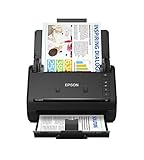
- FAST DOCUMENT SCANNING — Document scanner with feeder allows you to speed through stacks with a 50-sheet Auto Document Feeder (ADF); Efficient office scanner to help you scan more productively
- INTUITIVE, HIGH-SPEED SOFTWARE — Quickly scan with this desktop document scanner; Epson ScanSmart Software lets you easily preview scans, email files, upload to the cloud, and more; Plus, automatic file naming saves even more time
- SEAMLESS INTEGRATION — Easily incorporate your data into most document management software with the included TWAIN driver; Office document scanner integrates seamlessly with business workflows
- EASY SHARING — Duplex scanner allows you to scan straight to email or popular cloud storage2 services like Dropbox, Evernote, Google Drive, and OneDrive for simple storage and sharing
- SIMPLE FILE MANAGEMENT — Scanner allows the creation of searchable PDFs with Optical Character Recognition (OCR) and convert scans to editable Word or Excel files effortlessly; Designed for home and office document scanning
How should you verify an AI-assisted document review?
Use a short, traceable review loop. The goal is to make it easy to check what the model relied on and to catch omissions or errors before anyone relies on its output.
- Choose a narrow question. Ask about a defined issue or a specific set of documents rather than requesting a sweeping legal conclusion.
- Request supporting passages or pages. Ask the system to identify where its answer comes from in the supplied files. Treat those references as directions for review, not proof.
- Inspect the original documents. Check quotations, names, dates, amounts, clauses, page references, and surrounding context in the source files. Look for qualifiers the summary may have omitted.
- Verify external law independently. Check every generated legal citation, quotation, procedural statement, and claim about current law against authoritative sources for the relevant jurisdiction and date. Do not rely on a citation just because it looks plausible.
- Record corrections and escalate uncertainty. Keep track of material corrections; refer uncertain or high-stakes issues to qualified counsel rather than treating the model’s answer as resolved.
This is a practical review approach, not a tested guarantee that every error will be caught. Lawyers remain responsible for evaluating AI-produced work: North Carolina Formal Ethics Opinion 2024-1 says the lawyer is individually responsible for reviewing and evaluating work produced by an AI process.
Independent reader supportYour contribution helps us test, update, and keep practical guides available for everyone.What should a lawyer check before putting client material into a system?
Assess the specific product, configuration, and matter. A “private” or “local” label is not a substitute for checking how the system works and what obligations apply.
Quick wins for a faster PC:
Repair Windows errors before they cause bigger problemsFix Now →Scan for outdated or missing drivers - takes under a minuteDriver Scan →Clear out junk files and repair common Windows errorsFree Scan →Best Value

- OUR MOST ADVANCED SCANSNAP. Large touchscreen, fast 45ppm double-sided scanning, 100-sheet document feeder, Wi-Fi and USB connectivity, automatic optimizations, and support for cloud services. Upgraded replacement for the discontinued iX1600
- CUSTOMIZABLE. SHARABLE. Select personalized profiles from the touchscreen. Send to PC, Mac, mobile devices, and clouds. QUICK MENU lets you quickly scan-drag-drop to your favorite computer apps
- STABLE WIRELESS OR USB CONNECTION. Built-in Wi-Fi 6 for the fastest and most secure scanning. Connect to smart devices or cloud services without a computer. USB-C connection also available
- PHOTO AND DOCUMENT ORGANIZATION MADE EFFORTLESS. Easily manage, edit, and use scanned data from documents, receipts, photos, and business cards. Automatically optimize, name, and sort files
- AVOIDS PAPER JAMS AND DAMAGE. Features a brake roller system to feed paper smoothly, a multi-feed sensor that detects pages stuck together, and skew detection to prevent paper damage and data loss
- Where prompts, documents, indexes, and outputs are processed and stored.
- Whether data is saved, for how long, and who can access it.
- Whether client information is used for training or can affect answers to future users.
- Which connected services, backups, sync settings, or telemetry could move or expose information.
- Whether the setup has appropriate contractual, technical, and organizational safeguards for the information involved.
- Whether use is consistent with applicable professional rules, client instructions or agreements, and the lawyer’s duties to supervise and review the work.
For a local model, practical checks also include whether the computer can handle the chosen model and document workflow, and how files are parsed and retrieved. The model’s location is only one part of the system. Requirements vary by model and software, so consult their current documentation rather than assuming a particular computer or configuration will suffice.
When is local AI a reasonable fit?
Local AI may be worth considering when reducing exposure to an external model provider matters and the user can verify that the complete workflow stays within the intended environment. It can also be useful for first-pass assistance on supplied text when a person has time and expertise to review the result against the originals.
It is a poor substitute for a current legal source, a lawyer’s judgment, or a privilege analysis. If an issue is high-stakes, a document set is incomplete, or a conclusion depends on current law, use authoritative sources and qualified legal review. Local processing can change where some data goes; it cannot make the legal or factual judgment on your behalf.
Quick Recap
Product prices and availability are accurate as of the date/time indicated and are subject to change. Any price and availability information displayed on Amazon at the time of purchase will apply.

