
The Tool Desk
Outbyte PC Repair FREEClear out junk files and repair common Windows errorsFree Scan →Outbyte Driver Updater FREEFix the driver behind crashes, sound loss and screen glitchesFind Drivers →A PC crashing during a demanding game does not, by itself, identify a failed component. Possible causes include driver or Windows problems, overheating, unstable overclocking, BIOS configuration, and unsupported or faulty hardware. The first useful step is to identify exactly what “crash” means—game closes, display flickers, Windows shows a stop code, the system freezes, or the PC powers off or restarts—then follow the clues that match that failure.
First identify what happened
Record the game, approximate time of the failure, whether it repeats, and any recent driver, Windows, hardware, or tuning changes. If Windows displayed a stop code or named a module, write it down before changing settings. Microsoft notes that unexpected restarts can involve a hardware device, its driver, or software, and that stop codes and module names provide diagnostic clues (Microsoft’s Windows stop-code guidance).
- Only the game closes: The failure may be limited to the game or its software environment; this symptom alone does not identify the cause.
- The display flickers or becomes scrambled: Treat this as a display symptom and use the display-specific checks below.
- Windows shows a blue screen or stop code: Note the code and any named module, then inspect Windows records around that time.
- The PC freezes: Note whether it recovers, whether sound or input continues, and whether you must force a shutdown.
- The whole PC powers off or restarts: Record whether Windows showed a stop code or the power loss appeared immediate. Repeated restarts can have hardware, driver, or software causes.
These distinctions help choose an investigation; none proves that a particular part has failed.
What can cause a crash under gaming load?
Gaming can expose a stability problem because it places sustained demands on the system, but the timing is not a diagnosis. AMD lists several possible contributors to system instability: outdated or incorrectly configured BIOS, unstable overclocking, overheating, unsupported or faulty hardware, and operating-system or driver issues. Its guidance recommends systematic isolation and returning settings to stock rather than assuming one component is responsible (AMD stability troubleshooting).
What’s actually slowing this PC down?
Pick the symptom - the matching free tool is one click away.
#1 Best Overall

- Fearless ROG Design – The G700’s dual-glass chassis showcases iconic ROG design with the ROG Slash and Aura Sync RGB lighting. Its 58L capacity supports triple-slot GPUs.
- Unstoppable Power – Equipped with the Intel Core Ultra 7 265F processor, NVIDIA GeForce RTX 5070 GPU, 16GB DDR5 RAM, and 1TB SSD PCIe 4.0 storage for seamless gaming and multitasking.
- Optimized Thermals – Stay cool with a quad-fan system, while dust filters and efficient airflow ensure long-term reliability.
- Advanced Connectivity – Game without lag with 2.5Gbps Ethernet, Wi-Fi 6, and versatile ports. Dolby Atmos audio and AI noise cancellation enhance sound and communication.
- Ready for Upgrades – Designed with tool-less access, easily swap out components, ensuring future-proof performance for years to come.
- Driver or Windows issue: A driver or operating-system problem can coincide with a game failure. A recent update is a useful clue, not proof.
- Unstable tuning: Overclocking or other custom settings can contribute to instability. Returning to stock configuration helps determine whether a change is involved.
- Heat or hardware condition: Overheating and faulty or unsupported hardware are possible factors, but a crash alone does not establish either one. Check for supporting symptoms before considering repairs or replacements.
- BIOS configuration: An outdated or incorrectly configured BIOS is among AMD’s listed possibilities. BIOS changes are model-specific; do not update or alter settings without checking guidance for the exact system or motherboard.
Use Windows records for a blue screen or recurring restart
For a stop-code failure or repeated restart, check the time of the incident and inspect nearby events in Event Viewer. Microsoft recommends reviewing system-log errors around a blue screen and checking Device Manager for device problems as part of investigating unexpected restarts (Microsoft’s stop-code guidance). An event can help narrow the investigation, but an error recorded at the same time is not automatically the root cause.
Windows Memory Diagnostic is another available check when memory is a relevant possibility in a blue-screen investigation. Review its result in the system log. A diagnostic result is evidence to interpret, not by itself a definitive diagnosis that a particular memory module is defective (Microsoft’s blue-screen guidance).
Rank #2
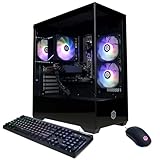
- System: AMD Ryzen 5 5500 3.6GHz 6 Cores | AMD B550 Chipset | 8GB DDR4 | 500GB PCIe 4.0 NVMe SSD | Windows 11 Home
- Graphics: AMD Radeon RX 6500 XT 4GB Graphics | 1x HDMI | 1x DisplayPort
- Connectivity: 4 x USB-A 3.2 | 4 x USB-A 2.0 | 1 x LAN | WiFi 5 | Bluetooth 5.0 | 7.1 Channel Audio
- Tempered Side Case Panel | Custom RGB Lighting | Keyboard and Mouse
- 1 Year Parts & Labor Warranty, Free Lifetime Tech Support
If the screen flickers after a display-driver change
Microsoft’s flicker guidance offers a way to distinguish a likely display-driver problem from an incompatible app: compare whether Task Manager flickers along with the rest of the display. Depending on what changed recently and what that comparison shows, Microsoft’s guidance includes updating, rolling back, or uninstalling the display driver (Microsoft’s screen-flicker troubleshooting).
This check is specifically for flickering. It is not a general test for every game crash, freeze, restart, or power-off.
Rank #3

- 8-Core 16-Thread Processing Power – Powered by the Ryzen 7 4700LE processor with Zen 2 architecture, delivering 8 cores and 16 threads with a boost clock up to 4.2GHz. Effortlessly handle multitasking, streaming, content creation, and demanding applications simultaneously without slowdowns.
- GeForce RTX 3050 8GB Graphics – Equipped with 8GB GDDR6 dedicated VRAM and real-time ray tracing support. Experience smooth 1080p gaming at 55-60 FPS in AAA titles like Cyberpunk 2077, 70+ FPS in Fortnite, and 90-100 FPS in Apex Legends with DLSS enabled. The 8GB buffer handles modern game textures comfortably – a step above 6GB variants
- High-Speed Memory & Storage – Paired with 16GB of DDR4 3200MHz dual-channel RAM (16GB), the PC ensures responsive multitasking—whether streaming while gaming or editing videos. It also includes a 512 GB NVMe M.2 SSD for lightning-fast boot times, quick game loads, and ample storage for your game library, creative projects, and files.
- Next-Gen WiFi 6 Connectivity – Stay connected with the latest WiFi 6 technology for faster speeds, lower latency, and improved network efficiency. Whether you're gaming online, streaming 4K content, or joining video conferences, enjoy stable, high-speed wireless connectivity.
- Ready-to-Use Value Desktop – Pre-built and ready to go right out of the box. Perfect for gamers, students, content creators, and home office users seeking reliable performance without the hassle of building a PC themselves. The mature AM4 platform with DDR4 memory offers excellent value and proven stability.
Return custom tuning to stock and isolate changes
If the PC uses overclocking or other custom tuning, AMD recommends returning to stock configuration and isolating changes systematically. Change one relevant setting at a time and observe whether the same failure returns; changing several things at once makes it harder to tell what affected stability (AMD stability troubleshooting).
Investigate cooling or hardware condition when the observed symptoms point in that direction. The official guidance cited here does not set universal temperature limits or provide a model-specific stress-test procedure, so use the system or component maker’s documentation for those details. Avoid treating a stress test, BIOS update, or component swap as a universally safe or necessary first step.
Rank #4

- POWERHOUSE 8-CORE GAMING PERFORMANCE — Driven by the AMD Ryzen 7 8700F with 8 cores and 16 threads, boosting up to 5.0 GHz for smooth, responsive gameplay and the ability to handle AAA titles, streaming, and background tasks all at once
- NEXT-GEN BLACKWELL ARCHITECTURE — The NVIDIA GeForce RTX 5070 is powered by NVIDIA's cutting-edge Blackwell GPU architecture, delivering a massive generational leap in rasterization and ray tracing performance so you can experience your games the way they were meant to be played.
- Simplistic Design: Enjoy the latest generation of Windows 11 Home for your everyday needs. *MSI recommends Windows 11 Pro for business use.
- Cool While Gaming: In conjunction with an ARGB fan Air Cooler, the Codex R2 features four system cooling fans; three in the front and one in the rear to pull in cool air and push heat out of the PC.
- Turn on the Bright Lights: With the built-in RGB lighting, take your gaming experience to the next level by pressing the MSI LED button to cycle through lighting options. Customize lighting even further with MSI Center software.
Choose the next check from the evidence
| Observed pattern | Useful next step | What it can establish |
|---|---|---|
| Game closes, with no stop code or whole-PC restart | Record timing and recent game, driver, or Windows changes; see whether the failure repeats. | Helps define the pattern, but does not by itself identify a failed part. |
| Blue screen or recurring restart | Record the stop code and any module name; review Event Viewer around the incident and check Device Manager. Consider Windows Memory Diagnostic where relevant. | Provides clues about recorded errors or device issues; memory results require interpretation. |
| Display flicker, especially after a driver change | Compare Task Manager’s behavior with the rest of the display, then follow Microsoft’s driver guidance based on the result. | Can help distinguish a likely display-driver issue from an incompatible app in the flicker scenario. |
| Failure while overclocked or custom-tuned | Return to stock settings and isolate changes systematically. | Helps assess whether custom tuning contributes to instability. |
| Evidence points toward heat or a particular device | Investigate that cooling or hardware path using documentation for the exact system and components. | Supports a targeted diagnosis; a crash alone is not enough to justify a replacement. |
When to consider replacing hardware
Do not replace a GPU, power supply, memory kit, or cooler solely because the PC crashed during a game. First match the suspected part to the failure pattern and available evidence, including logs, device status, recent changes, tuning state, and signs of a cooling problem. The cited official guidance identifies possible causes and diagnostic avenues; it cannot diagnose an individual PC or establish a universally correct first component to replace.
Quick Recap
Best Value

- POWERED BY RTX 5070 12GB + RYZEN 7 9700X - The GeForce RTX 5070 12GB GDDR7 graphics card pairs with an 8-core AMD Ryzen 7 9700X processor to drive smooth 1440p and 4K gameplay, giving this gaming PC the headroom for modern titles, streaming, and creative work.
- 32GB DDR5 6000MHz MEMORY & 1TB NVMe SSD - 32GB of high-speed DDR5 memory and a 1TB PCIe 4.0 NVMe solid state drive deliver quick load times, smooth multitasking, and generous storage, keeping this prebuilt gaming desktop responsive under heavy workloads.
- BUILT-IN 11.3-INCH Smart DISPLAY - An integrated smart screen shows real-time CPU and GPU temperatures, usage, and weather while you play, adding a distinctive and functional touch to your battlestation.
- 850W 80+ GOLD POWER SUPPLY, 360MM LIQUID COOLING & WiFi 7 - An 850W 80 Plus Gold certified power supply provides stable, efficient power with headroom for future upgrades, while a 360mm AIO liquid cooler, WiFi 7, and an ARGB mid-tower case keep the Ryzen 7 CPU cool and connected in a clean build.
- READY TO PLAY OUT OF THE BOX - Arrives fully assembled and tested with Windows 11 Home pre-installed, so your prebuilt gaming computer is ready to set up in minutes. Assembled in the USA, and backed by a one-year limited warranty and lifetime free technical support.
Product prices and availability are accurate as of the date/time indicated and are subject to change. Any price and availability information displayed on Amazon at the time of purchase will apply.

