
Quick wins for a faster PC:
Clear out junk files and repair common Windows errorsFree Scan →Fix the driver behind crashes, sound loss and screen glitchesFind Drivers →Repair Windows errors before they cause bigger problemsFix Now →A drop in crude oil prices can put downward pressure on gasoline prices, but it does not guarantee an immediate or equal drop at the pump. U.S. retail gasoline prices also reflect refining margins, the availability of finished gasoline, transportation and retail costs, and taxes. Those factors can move differently from crude, sometimes offsetting its decline.
What makes up the price at the pump?
A useful way to think about U.S. gasoline prices is:
Pump price = crude oil input + refining cost and margin + distribution and marketing cost and margin + taxes.
This is a conceptual breakdown, not a fixed formula. The U.S. Energy Information Administration (EIA) identifies crude as the largest component in most periods, but its share changes over time and by region. Taxes and local delivery and retail costs do not necessarily fall when crude does. See the EIA’s explanation of factors affecting gasoline prices.
Recommended Free Tools
#1 Best Overall
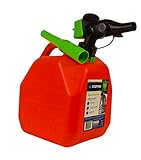
- 2 GALLON GAS CAN: The Scepter SmartControl fuel container features squeeze-control flow for spill-free filling; Easily refill lawnmowers, chainsaws, yard tools, recreational vehicles, cars, ATVs, motorcycles, and other gas-powered equipment
- CONTROLLABLE FLOW WITHOUT SPILLS: SmartControl controllable flow rate means no spilling, allowing you to squeeze less for a little, or squeeze more for a lot; bonus funnel with convenient storage ring making filling cars, ATVS or other equipment easier
- HEAVY DUTY GAS CONTAINER: High-density polyethylene construction prevents corrosion, denting, and breakage; The 5-layer HDPE design prevents vapor leaks and preserves gasoline longer; Storage ring conveniently holds the bonus funnel when not in use
- FAST FILLING JERRY CAN: Integrated air vent in the spout and included funnel provide fast flows saving time and hassle; SmartControl controllable flow rate means you squeeze less for a little gas, or squeeze more for a lot
- SAFETY FEATURES: EPA / CARB & Child Safety Compliant with child safety lock; Flame mitigation device prevents internal vapor ignition for added protection; Dust cap protects spout during storage
Why crude and gasoline prices can move differently
Gasoline is a refined product with its own market
Drivers buy gasoline, not crude oil. After crude is processed, the price of finished gasoline responds to its own supply, demand, and inventory conditions. A tight gasoline market can keep wholesale prices firm even while crude becomes cheaper.
The EIA uses the term crack spread for the difference in its forecast chart between the wholesale gasoline price and the crude oil price. If gasoline prices hold steady or rise as crude falls, that spread widens. Refiners then receive a larger spread per unit, which can absorb some of the crude-price savings before they reach wholesalers and stations. The spread is not the same as net profit: it does not by itself account for all refinery operating costs. The EIA described rising refinery margins as an offset to falling crude prices in its 2025–2026 gasoline-price outlook.
Outages and delivery problems can restrict local supply
A refinery outage reduces the amount of gasoline available, while a pipeline disruption can delay deliveries to a region. Either can push up local wholesale prices independently of crude. When inventories fall, buyers may also bid more for available gasoline if they are concerned that incoming supplies will not meet demand. The EIA lists refinery and gasoline-pipeline disruptions among the causes of rapid price changes in its overview of gasoline-price fluctuations.
Rank #2

- Fits Your Needs - Type I safety cans have a single opening for filling and pouring fluids. They are used to safely store, transport, and dispense flammable liquids.
- Easy to Use - Comes with a funnel to help with filling and pouring. The gasketed spout cap self-closes to prevent leaks or spills, and the cap assembly opens automatically to vent internal vapors
- Safe - Features a fixed handle, double interlock no-weld bottom seam, and a non-sparking flame arrestor that helps prevent liquid inside the can from igniting and keeps flames from spreading
- Compliant - Meets OSHA Standard 1910.106 and NFPA code 30 requirements, FM, UL and ULC approved; lead-free technology featuring environmentally friendly hot dipped 24-gauge galvanized steel
- Made in America - US-Made from galvanized steel which resists rust, dents, and certain chemicals. Has a baked on powder-coat finish that resists scratches, chipping, fading, and other wear
Seasonal gasoline can cost more to produce
In warm weather, gasoline must meet different evaporative-emissions specifications. Making the required blend can mean replacing less expensive components with more expensive ones, raising production costs even if crude prices are declining. Seasonal demand can add pressure as well. The EIA reports that average U.S. retail regular gasoline prices over 2004–2023 were about 40 cents per gallon higher in August than in January. That is a historical monthly average, not a prediction that gasoline will rise by that amount every year.
The Tool Desk
Outbyte PC Repair FREEClear out junk files and repair common Windows errorsFree Scan →Outbyte Driver Updater FREEScan for outdated or missing drivers - takes under a minuteDriver Scan →Why the same crude-price drop does not affect every station equally
Regional prices reflect where gasoline is produced, how it reaches consumers, local competition, and the fuel specifications required in that market. State and local taxes also differ. A station’s price can respond to its delivery schedule and the cost of replacing the gasoline it sells, not just to the latest crude quote. As a result, two regions—or two stations in one region—may see different prices and timing after the same change in crude.
For scale, the EIA reported an average of 33.55 cents per gallon in U.S. state gasoline taxes and fees in January 2026. This is a dated national average, not a current rate for every location; federal taxes and other price components are separate. The EIA’s price-component overview explains how taxes fit into the pump price.
Rank #3

- EASY TO POUR GAS CAN – Amazon exclusive, 5-gallon fuel container for easy refilling of lawnmowers, chainsaws, yard tools, recreational vehicles, ATVs, motorcycles, and other gas-powered equipment
- CONTROLLABLE FLOW WITHOUT SPILLS – SmartControl controllable flow rate means no spilling, allowing you to squeeze less for a little, or squeeze more for a lot; bonus funnel with convenient storage ring making filling cars, ATVS or other equipment easier
- FAST FILLS – Integrated air vent in spout and included funnel makes for fast flows of up to 3 gallons per minute, saving you time and hassle
- FLAME MITIGATION DEVICE – Flame mitigation device helps prevent internal vapor ignition to provide an added layer of protection for a cleaner, safer experience
- SAFE & DURABLE – EPA / CARB & Child Safety Compliant, the 5-layer construction prevents vapor leaks and preserves gasoline longer
Why lower prices may take time to reach the pump
Retail prices do not have to change at the same moment as crude or wholesale prices. Distributors and stations buy and sell fuel on different schedules, and retailers consider replacement costs and local competition when setting prices. The result can be a delay between a crude decline and a change on a street sign.
A U.S. Bureau of Labor Statistics analysis of the 2014–2015 crude-price decline found that crude fell faster than pump prices, and that lower prices took time to pass through. It also found a spike in retail margins while crude and pump prices were falling. The analysis cautioned that ordinary pass-through delays alone did not explain why declines passed through more slowly than increases. That episode is historical evidence, not a fixed rule for how long a current price change should take. See the BLS article, “As crude oil plunges, retail gasoline margins spike, then retreat.”
Economists and regulators have examined the pattern sometimes called “rockets and feathers”—the observation that retail prices may rise quickly when wholesale costs rise but fall more slowly when costs decline. The phrase alone does not prove collusion or establish a universal pattern; outcomes depend on the market and period. The Federal Trade Commission’s report on gasoline prices and the petroleum industry discusses margins and this pass-through question.
Rank #4

- 5 Gallon Capacity: This Type II utility container offers a generous 5-gallon capacity, providing dependable storage space for a wide range of household, workshop, indoor, and outdoor needs.
- Easy Use & Controlled Dispensing: Designed with an ergonomic thumb-trigger system that allows smooth, controlled dispensing. Its portable design makes filling and handling simple and convenient.
- Rotating Spout for Accessible Pouring: Features a downward-rotating spout that helps direct flow where needed, supporting clean, spill-controlled transfers into compatible openings and containers.
- Durable Construction: Constructed from high-quality materials to withstand regular use. Built for long-lasting reliability whether stored on a shelf, in a garage, or on the go.
- Self-Venting Type II Design: Type II design includes a built-in self-venting mechanism that supports steady dispensing and reduces splashing. Backed by manufacturer support and a 3-year limited warranty.
How to tell what is driving a price change
To compare gasoline prices meaningfully, use the same grade, geography, and dates. A crude-price decline by itself cannot show whether consumers are seeing the savings at the pump. Check the other links in the price chain:
- Crude: Compare the same crude benchmark and date range; different benchmarks need not move by identical amounts.
- Wholesale gasoline and the crack spread: If wholesale gasoline is not falling alongside crude, a wider spread may be limiting the decline passed through to retailers.
- Refinery operations: Check for outages or lower utilization that could reduce finished-gasoline supply.
- Inventories and delivery routes: Falling stocks, pipeline constraints, or import limits can tighten local availability.
- Seasonal fuel requirements: Account for changes in gasoline specifications that affect production costs.
- Taxes and local distribution: These vary by place and are not necessarily linked to crude prices.
The EIA’s gasoline-price fluctuation guide covers inventories, seasonal requirements, and supply disruptions; its outlook illustrates how refinery margins can offset lower crude prices.
What this means outside the United States
The evidence and figures above describe the U.S. market. In other countries, taxes, subsidies, price controls, and the role of state-owned marketers can change how crude-price movements reach consumers. The sources cited here do not establish a general international pass-through pattern, so U.S. timing and component shares should not be assumed to apply elsewhere.
Forecasts are not pump-price guarantees
The EIA’s 2025 Short-Term Energy Outlook projected annual U.S. retail gasoline averages of $3.10 per gallon in 2025, $3.70 in 2026, and $3.46 in 2027. These were forecasts in a particular release, not confirmed annual averages; later outlooks may revise them. They illustrate that a forecast depends on multiple market conditions, rather than providing a guaranteed one-for-one link between crude and retail prices. See the EIA Short-Term Energy Outlook.
Quick Recap
Product prices and availability are accurate as of the date/time indicated and are subject to change. Any price and availability information displayed on Amazon at the time of purchase will apply.

