
Quick wins for a faster PC:
Clear out junk files and repair common Windows errorsFree Scan →Scan for outdated or missing drivers - takes under a minuteDriver Scan →Repair Windows errors before they cause bigger problemsFix Now →Build a conventional RAG chatbot when most questions can be answered with one predictable search against a known index. Consider an AI research agent—often called agentic RAG—when answering reliably requires choosing among sources, searching again after reviewing results, breaking a question into parts, or combining research with actions. The right choice depends on your workload, not on which architecture sounds more advanced.
What separates a RAG chatbot from an AI research agent?
Conventional RAG follows a fixed retrieval path
A conventional retrieval-augmented generation (RAG) system takes a user query, searches a selected index, assembles relevant context, and asks a language model to generate an answer grounded in that context. The team chooses this sequence at design time. It is a good fit when the likely question types and the relevant source collection are known. Microsoft’s RAG design and evaluation guidance describes the work involved in building and assessing that pipeline.

An agent can decide what to retrieve while working
An AI research agent can select a retrieval tool or source at runtime, inspect what it finds, and make another search if the answer still needs evidence. It may also decompose a broad question into narrower searches or combine retrieval with an action. The defining difference is not that an agent has access to search: a fixed RAG system does too. It is that the agent decides whether and how to use retrieval during the task. Microsoft’s agentic RAG guidance and AWS’s agentic AI definitions describe this runtime decision-making distinction.
The two designs are not mutually exclusive. An agent can call a conventional RAG retriever as one of its tools. In that arrangement, the retriever still handles a defined search operation; the agent determines when to call it and whether further work is needed.
#1 Best Overall

- High-Performance AI Processor:The MS-02 Ultra features an Intel Core Ultra 9 285HX (24C/24T, up to 5.5 GHz, 13 TOPS NPU), delivering fast and efficient performance for AI inference, algorithm development, and media workloads. A PCIe x16 expansion slot supports desktop-class GPU upgrades for advanced model training and accelerated computing tasks. It's ideal for creators, engineers, and teams handling intensive parallel workloads.
- 4 × M.2 PCIe 4.0 + 4 × DDR5 SODIMM slots:Four DDR5 SODIMM slots support up to 256 GB of memory, while ECC helps maintain data integrity in mission-critical environments. Four PCIe 4.0 M.2 slots support up to 24 TB of storage, supporting RAID 0/1/5/10, combining high-speed performance with data protection. It allows for the creation of independent scratch disks, media libraries, and project drives, providing high-throughput for production workflows.
- PCIe & USB 4.0 v2: Up to three PCIe slots can be equipped, including a dual-slot x16 GPU. The main slot supports PCIe 5.0, meeting the needs of high-bandwidth creative and computing workloads. USB 4.0 v2 (80Gbps) supports high-bandwidth external storage and displays.
- Ultra-fast Networking: Wi-Fi 7 further enhances wireless performance with next-generation speeds and low-latency stability. Intelligent bandwidth switching optimizes throughput in different network environments, ensuring optimal performance for enterprise or local networks. Dual 25GbE ports (providing up to approximately 3.125 GB/s bandwidth, about 25 times faster than traditional 1GbE), enabling seamless large-scale file transfers and parallel computing. 10GbE and 2.5GbE ports, with support for Intel vPro technology, ensure enterprise-grade remote management and deployment flexibility.
- Server-grade thermal architecture: Utilizing a dedicated CPU/GPU airflow design, equipped with a 6-pipe dual-fan cooler, it maintains stable performance even under sustained loads, delivering up to 140W Turbo power while maintaining a 100W TDP, and operating with noise levels as low as 36 dB. An integrated 350W power supply ensures stable and reliable output for demanding computing tasks and fully loaded extended configurations.
Which approach fits your workload?
| Decision factor | Conventional RAG chatbot | AI research agent / agentic RAG |
|---|---|---|
| Control flow | A fixed retrieval sequence selected during design | The agent chooses tools and can repeat retrieval at runtime |
| Best-fit questions | Predictable requests answerable with a search against one known index | Multi-step, ambiguous, or multi-source requests that may need follow-up searches |
| Source selection | Sources and search path are configured in advance | The agent can route work among available sources or tools |
| Flexibility | More constrained and predictable | Can decompose questions and refine retrieval based on intermediate results |
| Latency and model use | Often fewer orchestration steps | Reasoning and additional retrieval steps can add latency and model or token consumption |
| Operational work | Requires retrieval and answer evaluation | Also requires oversight of tool selection, repeated calls, stopping behavior, and execution traces |
| Evaluation scope | Retrieval quality and grounded final answers | Those same checks, plus tool choice, intermediate decisions, loop termination, and synthesis |
The speed and model-use differences are qualitative expectations, not guaranteed outcomes. A well-tuned agent may suit some workloads better than a poorly configured fixed pipeline, and vice versa. Google Cloud’s agentic AI design-pattern guidance likewise frames the choice around system needs rather than a universal winner.
Choose fixed RAG when the search path is already clear
- Most user questions target the same knowledge base or index.
- A single retrieval pass usually returns enough context to answer.
- You need a predictable response path and want to avoid unnecessary orchestration.
- There is no meaningful benefit to an agent choosing tools or taking actions.
Consider an agent when the question needs research decisions
- The answer depends on different sources for different questions, and the relevant source cannot always be selected in advance.
- A first search often reveals what the system should look for next.
- Questions need decomposition, iterative refinement, or synthesis across multiple retrieval steps.
- The workflow combines information gathering with a follow-on action that the system is authorized to perform.
These are reasons to test an agent, not proof that one will be more accurate. The added flexibility is useful only if the workload needs it and the system can control its extra steps.
How should you decide before building?
Start with actual user questions and required sources. Do not select an architecture from a demo or from the label “agentic”; compare both designs against the same representative workload.
- List representative questions and the evidence each requires. Include ordinary queries, ambiguous questions, and cases where relevant material may be spread across sources.
- Mark what a fixed retrieval pass can answer. For each question, determine whether one configured search returns sufficient, relevant context without a follow-up decision.
- Identify where runtime decisions matter. Record cases that require query decomposition, a choice among sources, another search after inspecting results, or retrieval combined with action.
- Run both candidate designs on the same test set. Compare answer quality, whether retrieved context is sufficient, latency, model or token consumption, reliability, and the amount of human oversight required. Set acceptance criteria before interpreting the results.
- Use the least complex design that meets those criteria. Add agentic control where it addresses a demonstrated need; keep deterministic workflow steps in ordinary application code when the agent does not need to decide them.
Microsoft’s evaluation guidance recommends evaluating stages of the RAG solution as well as the user-visible response, using representative source material and test queries, and documenting experiment settings. Google Cloud’s design-pattern guidance also supports choosing an architecture based on workload requirements. Neither source establishes a universal numeric cost, speed, or accuracy advantage for one approach.
Rank #3

- Professional AI & Creator Workstation: AMD Radeon AI PRO R9700 GPU with 32GB GDDR6 is engineered for AI development, professional content creation, and compute-intensive workloads.
- Massive 32GB Memory Capacity: 32GB of GDDR6 memory on a 256-bit bus provides ample bandwidth for large AI models, 8K video editing, and complex 3D rendering.
- Advanced RDNA 4 with AI Accelerators: 64 Compute Units with 3rd Gen Ray Tracing and dedicated 2nd Gen AI Accelerators for groundbreaking AI performance and visual computing.
- Professional Blower Cooling: Efficient single blower design exhausts heat directly out of the chassis, ideal for multi-GPU workstation and server configurations.
- Enterprise-Grade Thermal Solution: Vapor chamber heatsink with industrial Honeywell PTM7950 thermal interface material ensures reliable cooling under sustained professional loads.
What should you evaluate in a RAG pipeline?
Check the path from source documents to answer
- Source preparation: Use representative documents and check whether parsing preserves the information needed to answer queries.
- Chunking and metadata: Test whether document boundaries and chunk sizes make useful passages retrievable, and add metadata that helps filter or interpret them.
- Embeddings and retrieval: Assess whether relevant material is found for the test queries; compare retrieval methods and settings rather than assuming a single configuration will work.
- Grounded answers: Check whether the final response uses the retrieved evidence appropriately and satisfies your acceptance criteria.
- Experiment records: Record settings and aggregate results so comparisons between versions or designs are interpretable.
This evaluation is needed for either architecture: an agent that can search repeatedly cannot compensate reliably for poorly prepared sources or retrieval that fails to find relevant evidence.
Evaluate the agent’s decisions as well as its answers
For an agentic design, add tests that reveal whether it selected an appropriate tool, used intermediate results sensibly, stopped when it had enough information, and synthesized evidence accurately. Inspect failed and unnecessary tool calls, not just successful final responses. Microsoft recommends exposing retrieval as a clearly described tool, with its data source, required and optional parameters, and return schema made explicit. Include useful result metadata—such as source titles, dates, or document IDs—so the agent and people reviewing its work can identify the evidence.
Rank #4
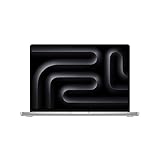
- FAST RUNS IN THE FAMILY — The 16-inch MacBook Pro with the M5 Pro or M5 Max chip brings next-generation speed and powerful on-device AI to personal, professional, and creative tasks. With all-day battery life, double the starting storage,* and a breathtaking Liquid Retina XDR display, it’s pro in every way.*
- BUCKLE UP — Along with a next-generation CPU, faster unified memory, and up to 2x faster SSD storage,* M5 Pro and M5 Max feature a more powerful GPU with a Neural Accelerator built into each core, delivering faster AI performance and on-device training capabilities. So you can blaze through demanding workloads at mind-bending speeds.
- BUILT FOR AI — Apple silicon, and every major component that powers it, is designed to run demanding on-device AI workloads like LLM inference and training. And Apple Intelligence helps you write, express yourself, and get things done effortlessly with groundbreaking privacy protections at every step.*
- ALL-DAY BATTERY LIFE — MacBook Pro delivers the same exceptional performance whether it’s running on battery or plugged in.*
- MACOS RUNS APPS FAST — All your go-to apps run lightning fast in macOS, including built-in apps like FaceTime and Messages. Plus, built-in virus protection and free software updates help keep your Mac running smoothly and securely.
Microsoft suggests starting with three to five context results per tool call and adjusting based on evaluation. Treat that as a starting recommendation from its guidance, not a universal optimum for every index or question type. Reuse existing, tuned search logic where it fits, including hybrid search, ranking, and filters, rather than rebuilding those capabilities just to make them agent-accessible. Microsoft’s agentic RAG guidance covers these tool-design considerations.
Independent reader supportYour contribution helps us test, update, and keep practical guides available for everyone.What can go wrong with an agent, and how do you control it?
Repeated searches that do not converge
An agent may keep retrieving without improving its answer. Define explicit stopping conditions, cap repeated calls where appropriate, and monitor whether each iteration adds useful evidence. A system should have a clear way to finish when it has enough context or when it cannot make progress.
Best Value

- 【High-Performance APU】The MS-S1 MAX features an AMD Ryzen AI Max+ 395 APU, integrating a Zen 5 architecture CPU (up to 5.1GHz, 16C/32T, 64M L3 Cache), an RDNA 3.5 GPU, and an NPU (50 TOPS). The total system output is 126 TOPS. It provides powerful parallel computing capabilities for demanding AI workflows. It is ideal for running local LLMs, multimodal models, and computationally intensive tasks
- 【128GB UMA Memory】Equipped with up to 128GB of LPDDR5x-8000MT/s unified memory, it enables the CPU and GPU to access a shared, high-bandwidth memory pool with extremely low latency. Ideal for large-scale AI inference, 3D workloads, and complex timelines in video editing. It eliminates traditional VRAM bottlenecks, ensuring smoother data transfer during high-intensity computations. The UMA design maximizes performance stability under high loads
- 【Flexible Expansion】The MS-S1 MAX features USB4 V2 (up to 80Gbps), dual 10GbE LAN, HDMI 2.1 (up to 8K60), a full-length PCIe x16 expansion slot, and dual M.2 slots supporting up to 16TB RAID 0/1. Wi-Fi 7 provides stronger signal coverage and a more stable wireless experience. The slide-out design facilitates upgrades and maintenance. It easily adapts to personal, studio, or rack-mount enterprise environments
- 【High-Efficiency Cooling System】Utilizing an aerospace-grade aluminum alloy chassis, copper base plate, six heat pipes, dual turbine fans, and advanced PCM thermal conductive material, it maintains stable cooling performance even under continuous load. This system supports 130W continuous power and 160W peak power operation, with a built-in 320W power supply. It boasts multiple global certifications including CCC, FCC, UL, CE, and UKCA, ensuring stable and reliable operation in various environments
- 【Cluster Design】Two MS-S1 MAX units can be configured as a dual-unit cluster to run a large 235B Q4 model locally, achieving an output speed of 10.87 tok/s. Supporting 2U rack deployment, multiple MS-S1 MAX units can be cascaded into a distributed cluster to create a high-efficiency AI computing center. A cluster of four MS-S1 MAX units successfully ran a DeepSeek-R1 671B Q4 large model. A reserved cluster power-on interface allows for unified start-up and shutdown
Execution that is difficult to reconstruct
More runtime choices make failures harder to diagnose than a fixed sequence. Preserve an audit trail of tool calls, inputs, outputs, and their order so a reviewer can reconstruct what happened and identify whether the fault lay in retrieval, the agent’s decision, or answer synthesis.
Weak or biased source material
Repeated retrieval does not make a knowledge base authoritative. Validate and refresh source data, and consider whether low-quality or biased material could shape multiple steps of the agent’s answer.
Model changes that alter behavior
Re-evaluate the workflow when changing the underlying model. Tool choices, iteration behavior, and bias profiles can differ, so results from one model should not be assumed to carry over unchanged.
These controls and risks are also discussed in the Government Digital Service’s AI Insights: Agentic RAG, updated 3 August 2026. Its guidance makes an important qualification: “Traditional RAG systems work extremely well over a great many use cases.”
Is agentic RAG always better than a chatbot?
No. The cited guidance provides design recommendations, not a head-to-head benchmark establishing a universal winner. A fixed RAG pipeline is a sound choice for many workloads; an agent is worth the added complexity when dynamic retrieval or other runtime decisions materially improve task coverage. Establish which design meets your quality, latency, budget, reliability, and oversight requirements by evaluating the same representative questions against both.
Quick Recap
Product prices and availability are accurate as of the date/time indicated and are subject to change. Any price and availability information displayed on Amazon at the time of purchase will apply.

