
The Tool Desk
Outbyte Driver Updater FREEScan for outdated or missing drivers - takes under a minuteDriver Scan →Outbyte PC Repair FREERepair Windows errors before they cause bigger problemsFix Now →For a casual party game with friends or a mixed group, room-code or link-based guest entry is usually the easier way to get everyone playing. Player accounts are more useful when a specific game ties identity to saved progress, friends, or other account-based features. They are not mutually exclusive: some games let guests join a code-based room while still offering account-linked benefits.
What is the difference?
A room code is a session locator: it directs a player to a particular game lobby. It does not, by itself, establish a lasting player identity. Guest entry often lets someone join with a nickname instead of creating an account.
An account identifies a player beyond the current session. Depending on the game, signing in may retain progress or connect the player to friend-based access. Those benefits are title-specific, so check what the particular game saves and requires rather than assuming every account works the same way.
Which option is better for your group?
| What matters | Room code or guest entry | Player account | Best fit |
|---|---|---|---|
| Getting started | Players may enter a current code, open a link, or scan a QR code without registering. Host settings can add steps such as a nickname or security check. | Signing in or linking a profile can add setup. | Guest entry suits a one-off group session when the game supports it. |
| Keeping identity or progress | A code usually points to a session, which may be temporary. | A linked identity may retain progress or other title-specific data. | Use an account if continuing progress matters, after checking what that game actually saves. |
| Controlling who joins | Anyone who gets a code or link may be able to try to join, depending on the game. | Some games may use account or friend restrictions. | Look for room passcodes, friend-only settings, moderation, and the ability to lock joining. |
| Devices and setup | Joining may work in a browser or app on a phone or tablet. | The platform account or game installation may be required. | Check host and guest device requirements, browser support, and whether the host needs a second device. |
How room-code games work in practice
Jackbox: one host, guests with phones
For a Jackbox game, the host purchases and installs a Party Pack, starts a game lobby, and shares the displayed room code. Guests go to jackbox.tv and use their phones as controllers. Jackbox says one person in the group needs to own a product to host; guests do not each need to buy a copy.
#1 Best Overall

- Hot or cold. Soft or hard. Wizard or…not a wizard? Work together to decide where your clue falls on the spectrum in this telepathic party game.
- POLYGON: “One of the best party games we’ve ever played.”
- NYT WIRECUTTER: Featured in “The best board games”
- Works in groups from 2-12+ people. Great for large parties, offsites, family gatherings, and anywhere you need instant fun.
- 5 seconds to set up, 1 minute to learn, 30 minutes to play
Jackbox’s FAQ says players do not need a Jackbox account. After entering the code, they use a display name; the FAQ also says past games are stored via cookies on the controller device without login. That cookie detail is specific to Jackbox’s described flow, not a general rule for other games. The answer was provided by Evan Jacover, Jackbox Games Support, on July 14, 2023: Jackbox account FAQ.
Kahoot: several ways to reach a live session
Kahoot says players usually do not need an account to join. Depending on the host’s settings, they can enter a game PIN, use a direct link, or scan a QR code; the host may also require an identifier, nickname, or security step. A PIN belongs to a particular session and may stop working if the session restarts. Players who disconnect may be able to rejoin if the game offers a resume option. See Kahoot’s joining instructions.
Rank #2
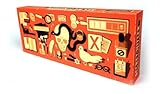
- A fast-paced game of deception and betrayal
- Beautiful wooden components
- Solid game boards with foil inlay
- Hidden roles and secret envelopes for five to ten players
When room access needs extra controls
A code, link, or QR code is a convenient route into a room, not a guarantee that only invited people can enter. What matters is how the specific game lets the host restrict or moderate access.
Kahoot live-game safeguards
Kahoot’s optional 2-Step Join asks players to reproduce a pattern shown on the host screen. Its instructions say the pattern refreshes roughly every 10 seconds. Kahoot describes this as effective against most known bot services but says it cannot guarantee a bot-free game. It recommends pairing the feature with lobby moderation and locking joining once expected players are present. Details are in Kahoot’s 2-Step Join guide.
Rank #3

- Two teams race to identify their agents from a 5×5 grid, guided by a spymaster who knows each card’s identity
- Spymasters give one-word clues and a number to link multiple cards, encouraging creative thinking
- Teammates guess words matching the clue while avoiding the other team’s agents, bystanders, and the assassin
- Revealing the assassin ends the game instantly, adding high-stakes tension
- Teams may guess up to the clue number plus one, allowing strategic risks or revisiting old clues
Mario Party Superstars: room settings and guest play
Nintendo’s instructions for Mario Party Superstars describe rooms with Friends Only or Open to All access, searching by Room ID, and an optional passcode. The same game allows additional players to link an account or enter as Guests; linked players retain certain coins and Mario Party Lv. points in their own User save data, while unlinked players appear as Guests. These are rules for this title, not a promise about other Nintendo games. See Nintendo’s Mario Party Superstars room guide.
Does guest entry mean more privacy?
Not necessarily. Avoiding an account sign-up does not mean a game collects no data. Jackbox’s current privacy policy says its games generally do not collect Personal Information, while identifying technical information such as IP addresses and account creation as exceptions. It also notes that platform owners may share information such as online ID, country, language, and parental controls, and that third-party services can involve profile or user ID information. Guest access and data collection are separate questions; consult the particular game and platform’s policies. Jackbox privacy policy.
Rank #4

- FAST-PACED FUN - Flip a card, think quickly, and race to grab the foam microphone to sing a lyric containing the revealed word. It's a fast-paced game that keeps everyone on their toes!
- HILARIOUS MOMENTS - Watch as your friends try to recall lyrics under pressure, resulting in hilarious renditions of popular songs. It's guaranteed to have everyone laughing and singing along!
- VERSATILE GAMEPLAY - Featuring a game board with multiple game modes, Grab The Mic offers various levels of challenge and keeps the fun fresh every time, Switch up the board for a new experience, creating endless musical battles that never get old!
- WHAT’S INSIDE - With 120 word cards, a foam microphone, game board, player tokens, and easy-to-follow instructions, everything you need for a memorable game night is included.
Check these details before choosing a game
- Join method: Can guests use a code, link, or QR code, or must they sign in?
- Host requirements: Does the host need to own and install the game, and what device or platform can run it?
- Guest setup: Can players join on their existing phones or browsers, or do they need an app, account, or compatible device?
- Room control: Are there passcodes, friend-only options, moderation tools, or a way to stop new players joining?
- Persistence: Does the game save anything to a player profile, and what is lost by choosing Guest?
- Session behavior: Does the code expire or change if the host restarts the game?
There is no universal winner across party games: documented examples show different combinations of guest entry, account features, and host controls, rather than one standard design. Choose based on the joining steps and persistence your group needs in the particular title.
Quick Recap
Best Value

- How to Play: Who knew therapy could be so funny? In this adult card game, you'll create a comic about therapy with a Question, Answer, and Treatment card. Whoever plays the funniest Treatment card wins a point. The first player to earn 3 points wins. It's fast to learn, endlessly replayable, and guaranteed to have everyone laughing.
- Who's It For? Perfect for ages 17+ and 3–8 players. Can you make it through a round without ugly laughing? Whether you're hosting game night, hanging out with friends, or looking for something hilariously inappropriate, this adult card game delivers unforgettable laughs every time.
- What's Included: Endless laughs and replayability. With 80 Question Cards, 158 Answer Cards, and 200 Treatment Cards, every round creates a brand-new comic. No two games are ever the same, making this a favorite adult card game you'll want to play again and again.
- Where to Play: Looking for the ultimate icebreaker? This hilarious card game is perfect for game nights, road trips, vacations, weekend getaways, or as a gift for anyone who appreciates questionable humor (or who probably needs therapy!). Easy to bring anywhere and fun with any group.
- Our Story: Unique art from a viral webcomic. Every card is written and illustrated by The Oatmeal, creator of one of the internet's most beloved comics and cofounder of Exploding Kittens, the record-breaking Kickstarter game that became the most-backed crowdfunding campaign of its time.
Product prices and availability are accurate as of the date/time indicated and are subject to change. Any price and availability information displayed on Amazon at the time of purchase will apply.

