
What’s actually slowing this PC down?
Pick the symptom - the matching free tool is one click away.
Self-hosting gives you more control over where budgeting data is held, but it does not make that data safe by itself. Start by deciding what you need to protect—such as transaction descriptions, account balances, exports, database backups, API tokens, or stored bank-connection credentials—and from whom. Then reduce what you retain, restrict access, choose encryption for the threats it actually addresses, and make sure you can restore protected backups.
Start with the threats and data you actually have
OWASP’s Cryptographic Storage Cheat Sheet says to begin by considering the application’s threat model: who or what you are protecting data against. That matters because the controls for a stolen, powered-off server differ from those for an attacker who can reach a running web application.
List the sensitive information your setup holds, including data outside the app’s main screens:
- Transaction descriptions, balances, account names, and imported records.
- CSV exports, database snapshots, and application configuration.
- API tokens and any bank-connection credentials you elected to store.
- Encryption keys, recovery material, and secrets used by the app or its integrations.
Next, identify the failure or attacker you are planning for: physical theft of the server or backup media, remote compromise of the app or host, exposed credentials or keys, unauthorized access by household or internet users, or accidental data loss. No single control covers all of these.
Do these 3 things before closing this tab:
1Fix the driver behind crashes, sound loss and screen glitches2Clear out junk files and repair common Windows errors3Scan for outdated or missing drivers - takes under a minute#1 Best Overall

- Hardware encrypted drive
- Simple to use pin access. RPM-5400
- Administrator password feature
- Bus powered
- Utilizes Military Grade FIPS PUB 197 Validated Encryption Algorithm
Reduce stored data and limit who can reach it
Do not retain sensitive information your budgeting workflow does not need. OWASP recommends avoiding storage of sensitive data where possible; less retained data means less to expose in a compromise. Keep the app and its dependencies maintained, expose only necessary services, restrict administrative access, and use strong authentication and least privilege. Review integrations and revoke API tokens that are no longer needed.
Self-hosting changes who is responsible for operating the service; it is not a security audit or a guarantee. For example, Firefly III describes itself as self-hosted and says it will not contact external servers until the operator explicitly tells it to. Its repository also lists two-factor authentication. Those project statements do not establish that a particular installation is securely configured or specify which authentication methods are available.
Firefly III’s security policy warns that its default settings are not secure-by-default and that operators need to configure security settings and role-based access controls. The policy also says only the latest release is maintained. These are Firefly III-specific statements, not rules that apply to every budgeting app; check the maintenance and security documentation for the project you run.
Rank #2
- Utilizes Military Grade FIPS PUB 197 Validated Encryption Algorithm
- Super fast USB 3.0 Connection - Data transfer speeds up to 10X faster than USB 2.0
- Software Free Design - With no admin rights needed
- Sealed from Physical Attacks by Tough Epoxy Coating
- Brute Force Self Destruct Feature
Choose encryption by the threat it addresses
Encryption can protect different data at different points, but “encrypted” does not mean protected from every attacker. Transport encryption protects data moving between a browser and server. Encryption at the application, database, filesystem, or hardware level applies to stored data in different ways. Which layer is useful depends on where plaintext can appear and who can access the running system.
The Tool Desk
Outbyte Driver Updater FREEScan for outdated or missing drivers - takes under a minuteDriver Scan →Outbyte PC Repair FREEClear out junk files and repair common Windows errorsFree Scan →| Layer or control | What it can help protect | What it does not establish |
|---|---|---|
| Transport encryption | Data in transit between a browser and server. | It does not by itself protect stored database files, exports, or backups. |
| Application or database encryption | Specified stored fields or records, depending on the app’s design. | Do not assume a particular budgeting app encrypts its database; verify its current documentation. |
| Filesystem, full-disk, or hardware encryption | Can help if a powered-off server or storage device is physically stolen. | It does not protect a running service from an attacker who has compromised the host or can access decrypted data. |
| Encrypted backup | Can reduce exposure if backup media or copies are accessed without authorization. | It does not help with recovery if the required key is lost, or prove that the backup can be restored. |
OWASP recommends selecting encryption in light of the threat model, using authenticated modes where available, and relying on established libraries and configurations rather than custom cryptography. Its guidance also cautions that encrypted data still needs other protections, including strong access control. Encryption at rest is one layer, not a substitute for patching and controlling a reachable application.
Keep keys and secrets out of the wrong places
Encryption is only as useful as the handling of its keys. Avoid placing secrets in source repositories, container images, build artifacts, or configuration files exposed to routine users. A dedicated secret manager or vault can help where you can operate it reliably. For a simpler home server, protect configuration files with restrictive permissions and understand which files contain keys or credentials.
Rank #3
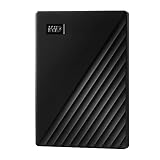
- Slim durable design to help take your important files with you
- Vast capacities up to 6TB[1] to store your photos, videos, music, important documents and more
- Back up smarter with included device management software[2] with defense against ransomware
- Help secure your important files with password protection and hardware encryption
- 3-year limited warranty
- Where feasible, keep keys separate from the encrypted data they unlock.
- Limit which accounts and services can read secrets, and avoid granting broad administrative access by default.
- Document how authorized recovery works before relying on encryption; OWASP warns that data cannot be recovered without its key.
- Plan key rotation and ensure the process remains compatible with restoring older backups.
Dedicated key-management systems can improve separation and control, but they add operational complexity. Choose an approach you can maintain, and secure recovery copies of key material when your design requires them.
Make backups isolated, protected, and restorable
Back up the database and the application configuration needed to bring the service back. Set a schedule based on how much transaction data you can afford to lose; there is no universally correct interval or retention period. Keep at least one copy isolated from routine access by the live host, restrict access to the copies, and encrypt them where appropriate. An external backup drive is one possible destination, but the device alone does not make a backup secure.
NIST’s SP 800-209, Security Guidelines for Storage Infrastructure covers storage security measures including access control, data protection, isolation, encryption, incident response, and recovery assurance. Apply that recovery emphasis in practice: periodically restore a backup in a controlled environment, including the configuration and key-recovery steps needed to make the records usable. A backup you have never restored is an unverified recovery plan.
Rank #4

- Easily store and access 2TB to content on the go with the Seagate Portable Drive, a USB external hard drive
- Designed to work with Windows or Mac computers, this external hard drive makes backup a snap just drag and drop
- To get set up, connect the portable hard drive to a computer for automatic recognition no software required
- This USB drive provides plug and play simplicity with the included 18 inch USB 3.0 cable
- The available storage capacity may vary.
Use a layered plan you can keep operating
Compare safeguards by the scenario they address, where plaintext may appear, where keys are kept, who can access the service, whether backup copies are isolated, and whether a restore has been tested. A manageable baseline is to minimize retained data, maintain the app and host, limit exposure and privileges, use encryption suited to the threat, secure keys, and rehearse recovery. Tailor implementation to the app, host OS, database, reverse proxy, authentication setup, and backup system; exact settings depend on that stack.
This is general security guidance, not an audit or configuration recipe for a particular installation. Product-specific encryption-at-rest behavior and bank-credential handling should be verified in current documentation for the chosen app and integration rather than assumed.
Quick Recap
Product prices and availability are accurate as of the date/time indicated and are subject to change. Any price and availability information displayed on Amazon at the time of purchase will apply.

