
For most buyers focused on lower water and energy use, a front-load washer is the strongest starting point. ENERGY STAR says certified front-loaders use about 50% less energy and water than top-load agitators, and about 25% less than top-load impeller washers. But “top-load” covers two different designs, and access, cycle time, laundry habits, maintenance, and installation space can make an impeller or agitator model a better fit.
This U.S.-oriented guide compares the three washer types and gives you a practical way to shortlist models. It does not rank ten named machines: available category guidance does not establish ten current best models or verify their prices and availability.

What is the difference between front-load and top-load washers?
A front-loader holds laundry behind a front-facing door and tumbles it through the wash. A top-loader opens from above, but it may use either a central agitator or a low-profile impeller. That mechanism matters: an HE top-loader without a central agitator is not the same kind of machine as a traditional agitator washer.
| Decision point | Front-load | Top-load agitator | HE top-load impeller |
|---|---|---|---|
| Water and energy | ENERGY STAR says certified front-loaders use about 50% less energy and water than top-load agitators, and about 25% less than top-load impellers. These are category comparisons, not a guarantee for each model or household. | Generally the least efficient of the three categories in ENERGY STAR’s comparison. | Generally more efficient than traditional agitator models, though ENERGY STAR puts certified front-loaders about 25% ahead in energy and water use. |
| Loading and reach | Front opening may mean bending or reaching through a low door; a pedestal may change the height. Some models can be stacked, subject to model and installation requirements. | Load from above, avoiding a front opening, but a deep tub can still require reaching. | Also loads from above; tub depth and reach depend on the model. |
| Typical cycle range in Consumer Reports’ indexed buying guide | 65–120 minutes for normal/heavy cycles. | 35–105 minutes. | 35–105 minutes. |
| Cleaning and fabric handling | Generally gentle and extracts more water in the spin, which can reduce dryer time. | Agitators can be rougher on clothing; Consumer Reports says this category may be less effective on heavy soil or stains. | Can clean well, but Consumer Reports’ indexed 2026 summary says some models may clean inconsistently or twist and tangle items. |
| Category capacity figures in Consumer Reports’ indexed guide | Up to 5.8 cu. ft. | Up to 5.4 cu. ft. | Up to 5.5 cu. ft. |
| Moisture care | Door seal can retain moisture; follow the manual and allow the interior to dry after use. | Follow the specific model’s care instructions. | Follow the specific model’s care and detergent instructions. |
| Purchase and running cost | Compare the exact price and installation costs with labeled consumption and local utility rates. Efficiency can offset some upfront premium, but the result depends on use and local costs. | Often a lower purchase-cost category, though individual model and utility costs vary. | May be a middle-ground option; compare the actual purchase price and energy and water labels. |
The cycle ranges and maximum capacities above are broad category guidance, not specifications for a particular washer. The Consumer Reports buying guide was updated May 26, 2026, and Consumer Reports’ indexed summaries were not available as full pages during this review. Confirm cycle options, capacity, and installation requirements in the exact model’s documentation. Consumer Reports’ washing-machine buying guide; ENERGY STAR clothes washer guidance.
What’s actually slowing this PC down?
Pick the symptom - the matching free tool is one click away.
#1 Best Overall
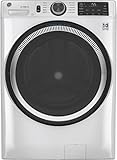
- Large 4.8 Cu. Ft. Capacity : Wash more in fewer loads—perfect for families and busy households with heavy laundry demands.
- UltraFresh Vent System with OdorBlock: Helps eliminate excess moisture after each wash cycle, keeping your washer interior fresh between uses.
- Built-In WiFi with SmartHQ App Integration: Remotely control your washer from your phone—start, stop, monitor, and receive alerts anytime, anywhere.
- Quick Wash Cycle (20 Minutes): Perfect for lightly soiled clothes, this cycle delivers a fast and efficient clean when time is limited.
- Time Saver Mode (35 Minutes): Enjoy a full, deep clean in just 35 minutes—ideal for mixed loads on busy days.
Which washer type fits your laundry and home?
Choose a front-loader if efficiency and spin extraction lead
A front-loader is a sensible first choice if you run frequent loads, want to reduce water and energy use, or value stronger spin extraction that can leave laundry less wet for the dryer. ENERGY STAR says certified clothes washers use about 20% less energy and 30% less water than regular washers; its full-sized certified washers use 14 gallons per load compared with 20 gallons for a standard machine. These are program comparisons, not promises for every cycle. ENERGY STAR also estimates that certified models can save about $530 in energy costs over a product’s lifetime; that is an estimate, not an individual savings guarantee. ENERGY STAR’s washer guidance.
Before choosing one, make sure the front door can open fully and that the height works for the person loading it. Check whether a pedestal or stacking setup is allowed for the exact model and fits your installation space.
Choose a top-load agitator if simple top access matters most
A traditional agitator model loads from above and may suit a household that prefers that access or values a shorter cycle option. Its tradeoffs include generally higher water and energy use than the other categories, plus more potential fabric wear from the central agitator. A top opening does not guarantee easy access if the tub is deep.
Choose an HE impeller top-loader if you want top access without a central agitator
An impeller washer keeps the top-opening layout while removing the traditional central agitator. It generally uses less energy and water than an agitator model, but ENERGY STAR’s comparison still favors certified front-loaders. Check the model’s cleaning performance, detergent guidance, tub depth, and cycle choices rather than assuming all impeller washers behave alike.
Quick wins for a faster PC:
Scan for outdated or missing drivers - takes under a minuteDriver Scan →Repair Windows errors before they cause bigger problemsFix Now →Fix the driver behind crashes, sound loss and screen glitchesFind Drivers →How to shortlist models without relying on a “top 10” label
A credible model ranking needs exact model numbers and comparable evidence, including current price and stock, dimensions, warranty, and model-level performance. Category-level comparisons alone cannot establish ten current best washers. Use this checklist to compare candidates available in your area:
- Measure the route and installation space. Check the laundry area, doorway and delivery route, door swing, hose clearance, ventilation where relevant, and any counter or stacking constraints. Verify the manufacturer’s installation dimensions for the exact model.
- Match capacity to real loads. Consider how often you wash, whether you can run full loads, and whether you need room for bedding. Consumer Reports’ indexed guide says at least 4.5 cu. ft. is needed for a king-size comforter; confirm that the specific washer’s manual permits the item and load.
- Compare efficiency labels for like-sized candidates. Read the EnergyGuide label for estimated energy use and annual operating cost. ENERGY STAR identifies higher IMEF and lower IWF as efficiency signals. Its criteria effective April 22, 2021, for residential washers above 2.5 cu. ft. set front-load thresholds at IMEF ≥ 2.76 and IWF ≤ 3.2; top-load thresholds are IMEF ≥ 2.06 and IWF ≤ 4.3. Those certification thresholds are not a direct prediction of which individual model will perform better in your home. ENERGY STAR washer criteria.
- Check certification status against the current listing. ENERGY STAR certification and “ENERGY STAR Most Efficient” are not interchangeable: Most Efficient is a subset of recognized products. Verify a specific model’s listing and the applicable program dates before relying on either designation.
- Compare ownership terms. Check the model’s warranty, delivery and installation fees, haul-away charges, local repair access, and retailer return terms. These costs and terms vary, and a washer category does not establish them.
- Review detergent and cycle instructions. Use the manufacturer’s guidance for the model and selected cycle; detergent quantities and cycle options are not universal across washer types.
What should you know about cycle time and cleaning?
Consumer Reports’ indexed guide lists normal/heavy cycle ranges of 65–120 minutes for front-loaders and 35–105 minutes for both agitator and HE impeller top-loaders. A range is not a forecast for your load: the selected program, options, and machine affect the actual duration. Check the cycle display and manual if turnaround time is important.
Rank #3

- CHOOSE YOUR CYCLE—Our phenomenal BLACK+DECKER washing machine has 16 cycles you can choose: My Cycle, Quick Wash, Delicates, Wool, Baby Wear, Sanitary, Cold Wash, Tub Clean, Normal/Cotton, Permanent Press, Heavy Duty, Bulky/Large, Sports Wear, Spin Only, Drain Only and Rinse & Spin.
- IMPRESSIVE CAPACITY—With an interior stainless steel tub that is 2.7 cu. ft., this front loader washing machine (23.4” x 23.1” x 33.5”) is your solution to fresh laundry week after week. Simply load clothing, select your cycle and let this compact washer (160.9 lbs.) do all the work for you.
- ADDITIONAL CYCLE FEATURES—Additional highlights of this fantastic clothes washer is auto unbalance detection, a 1300 RPM max spin speed, easy-to-read LED control panel along with Add a Garment & Extra Rinse selections.
- SAFETY FIRST—With a Child Lock and Door Lock safety features, you can rest assured you are using a washing machine that values the well-being of others. The transparent front loading lid allows you to see your laundry cleaned in real time, spin by spin.
- QUALITY GUARANTEED—This phenomenal front load washer offers the highest quality.
ENERGY STAR says cold water generally cleans well except when treating oily stains, and that water heating accounts for about 90% of the energy used to operate a washer. That is useful operating guidance, not a guarantee that every fabric and stain will respond identically to a cold cycle. Follow garment-care labels and the washer manual. ENERGY STAR operating tips.
How do you prevent moisture and mildew in a front-loader?
Front-loader seals can hold moisture while the machine is idle. ENERGY STAR’s practical advice is: “Leave the door open after use.” It recommends leaving the door ajar for an hour or two so moisture can evaporate, while making sure children cannot climb inside. Follow the washer manual’s maintenance instructions; some manufacturers recommend a monthly cleaning cycle, but the appropriate product and method depend on the model. ENERGY STAR care guidance.
The risk is not universal, but it is worth weighing. Consumer Reports says that in its 2025 survey, 13% of front-load washer owners reported mold or mildew buildup, compared with 3% of HE top-load owners and 1% of top-load agitator owners. These are Consumer Reports survey results, reported in an article updated June 14, 2026—not population-wide incidence rates. Consumer Reports’ front-loader overview.
So, are front-load washers worth it?
They are often worth considering if lower resource use, gentle handling, and spin extraction suit your priorities and your space can accommodate a front door. A top-load agitator may be preferable when above-loading and shorter cycle choices matter more than efficiency; an HE impeller offers above-loading without a central agitator. To make the decision, compare exact models’ dimensions, labels, full installed cost, and care instructions rather than choosing by loading style alone.
Quick Recap
Product prices and availability are accurate as of the date/time indicated and are subject to change. Any price and availability information displayed on Amazon at the time of purchase will apply.

