
Recommended Free Tools
The community-made SupraGSX Forceware 382.69 package is the relevant option documented for the NVIDIA TITAN Xp on 32-bit Windows XP. Its README includes the card in added desktop INF entries, but the maintainer cautions that this is not individual validation: the available sources do not confirm that a TITAN Xp installs, runs stably, or delivers working graphics output with this driver. If you proceed, use the project’s release page, follow its installer steps, and test the result before relying on it.
What the package supports—and what that does not prove
SupraGSX describes Forceware 382.69 as an unofficial, custom 32-bit Windows XP release based on NVIDIA 368.81. The project README, updated 2026-10-03, lists the TITAN Xp among added desktop INF entries. An INF entry associates a hardware identifier with a driver package so that an installer can recognize the device; it is not proof of a successful installation, stable operation, hardware acceleration, or working display outputs.

The README states: “These are INF additions, not individual validation of every model.” The sources reviewed do not establish a TITAN Xp-specific installation or stability test. Treat compatibility as unconfirmed, and check the SupraGSX Forceware 382.69 project page for its current package and documentation.
Before you install
- Confirm your Windows edition. This package is documented for 32-bit Windows XP. It is not an XP x64 driver. NVIDIA keeps a separate Windows XP/2000 driver archive; that historical archive does not establish official XP support for TITAN Xp.
- Understand that this is not an NVIDIA release. The package modifies NVIDIA driver files. Its guide says the modified display files no longer carry the original NVIDIA catalog authentication. Do not treat the package as NVIDIA-certified or independently security-audited.
- Get the package from the project release page. Check that you have the intended current build rather than a repackaged download; the project documentation can change.
- Plan to verify the result. Being recognized during setup is only one check. You will need to inspect Device Manager and test display and graphics behavior on your own system.
NVIDIA’s TITAN Xp user guide describes NVIDIA’s usual driver workflow, not a Windows XP-specific installation procedure. It should not be read as official confirmation of XP compatibility.
Quick wins for a faster PC:
Repair Windows errors before they cause bigger problemsFix Now →Scan for outdated or missing drivers - takes under a minuteDriver Scan →Install Forceware 382.69 on Windows XP 32-bit
- Download the package from the SupraGSX project release page and check the project documentation for the current build.
- Run the downloaded outer executable and proceed through the NVIDIA installer. Alternatively, extract the package and run
setup.exefrom the extracted folder, as described in the project guide. - Complete setup and restart Windows XP.
- After the restart, open Device Manager and check whether the TITAN Xp is listed without an error. Then test basic display output and the graphics functions you intend to use. Do not assume that a completed installer or device listing demonstrates stable operation.
How to interpret installation problems
- The installer does not recognize the card: Recognition depends on the device identifier matching an entry in the package. Confirm that you are using the documented 32-bit XP build and consult the project’s current documentation; do not assume the INF listing guarantees that every card variant will match.
- Setup completes, but Device Manager shows an error or graphics features fail: Installation completion is not the same as functional validation. Record the reported device status and test basic output separately before relying on the system.
- The display works but performance or stability is uncertain: The available project documentation does not establish a model-specific TITAN Xp result. Validate the applications and graphics behavior you need on the actual machine.
The project’s rebuild guide describes build inputs drawn from NVIDIA 368.81 for XP 32-bit and selected firmware/resource donor modules from x86 Quadro 376.84 and GeForce 378.78 packages. Those donor modules are build inputs; they are not instructions to install the Windows 7/8 donor driver stacks on XP.
Independent reader supportYour contribution helps us test, update, and keep practical guides available for everyone.Official driver versus the community package
| Approach | What the sources establish | What they do not establish |
|---|---|---|
| NVIDIA’s XP/2000 archive | It contains historical official XP/2000 driver packages. | It does not establish official NVIDIA TITAN Xp support on XP. |
| SupraGSX Forceware 382.69 | The project documents a custom 32-bit XP package based on NVIDIA 368.81 and lists TITAN Xp in added desktop INF entries. | The INF listing is not individual validation; a TITAN Xp-specific successful install or stable-operation test is not established. |
For the official archive, see NVIDIA’s Windows XP/2000 driver archive. For the custom package’s scope and caveats, see the SupraGSX README and its rebuild and installation guide.
Quick Recap
Best Value
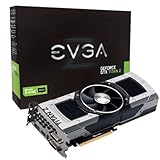
- Base Clock: 705 MHZBoost Clock: 876 MHzMemory Clock: 7000 MHz EffectiveCUDA Cores: 5760Bus Type: PCI-E 3.0Memory Detail: 12288MB GDDR5Memory Bit Width: 768 BitMemory Speed: 0.28nsMemory Bandwidth: 672 GB/s
- NVIDIA SLI ReadyNVIDIA SMX EngineNVIDIA GPU BoostNVIDIA Adaptive Vertical SyncNVIDIA SurroundSupports four concurrent displaysMicrosoft DirectX 12 API (feature level 11_0)Support
- NVIDIA 3D Vision ReadyNVIDIA CUDA TechnologyPCI Express 3.0 SupportOpenGL 4.4 SupportOpenCL SupportNVIDIA FXAA TechnologyNVIDIA TXAA Technology
- Recommended PSU: 700W or greater power supply with a minimum of 42 Amp on the +12 volt rail
Rank #4

- OS Certification : Windows 7 (64 bit), Windows 10 (64 bit) (April 2018 Update or later), Linux 64 bit
- 4609 NVIDIA CUDA cores running at 1770 MegaHertZ boost clock; NVIDIA Turing architecture
- New 72 RT cores for acceleration of ray tracing
- 577 Tensor Cores for AI acceleration; Recommended power supply 650 watts
Rank #3

- [Engine Specs] CUDA Cores: 3072 | Base Clock (MHz): 1000 | Boost Clock (MHz): 1075 | Texture Fill Rate (GigaTexels/sec): 192
- [Memory Specs] Memory Clock: 7.0 Gbps | Standard Memory Config: 12 GB | Interface: GDDR5 | Interface Width: 384-bit | Bandwidth (GB/Sec): 336.5
- [Display Support] Max Digital Resolution: 5120x3200 | Max VGA Resolution: 2048x1536 | Standard Display Connectors: Dual Link DVI-I, HDMI 2.0, 3x DisplayPort 1.2 | Multi Monitors: 4 Displays | HDCP: Yes | Audio Input for HDMI: Internal
- [Graphic Card Dimensions] Height: 4.376 Inches | Length: 10.5 inches | Width: Dual-Width
- [Thermal & Power Specs] Max GPU Temperature (in C): 91 C | Graphics Card Power (W): 250 W | Recommended System Power (W)**: 600 W | Supplementary Power Connectors: 6-pin + 8-pin
Rank #2
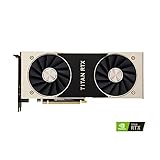
- OS Certification-Windows 7 64-bit, Windows 10 64-bit (April 2018 Update or later),Linux 64-bit
- 4608 NVIDIA CUDA cores running at 1770 MHz boost clock. NVIDIA Turing architecture
- New 72 RT cores for acceleration of ray-tracing
- 576 Tensor Cores for AI acceleration
Product prices and availability are accurate as of the date/time indicated and are subject to change. Any price and availability information displayed on Amazon at the time of purchase will apply.

