
To detect malicious OAuth apps in Microsoft 365, treat an alert, unusual permission, or unexpected app activity as a lead—not proof. Validate what was consented to, who authorized it, how the app is configured, and whether its observed activity fits its stated purpose. Microsoft describes this work as investigating risky OAuth apps and finding illicit consent grants.
What turns an OAuth alert into a validated incident?
An app can request powerful permissions for a legitimate reason, and unusual activity can have a benign explanation. Build a case from several kinds of evidence: the app’s stated purpose and identity, the permissions granted, who consented, configuration changes, and the data and activity associated with the app. Microsoft’s guidance says an app should require only permissions related to its purpose; a mismatch is a reason to investigate, not a verdict by itself. See Microsoft’s guidance for investigating and remediating risky OAuth apps.

Before disabling anything, establish whether the consent and activity were expected. Contact the authorizing user or app owner when appropriate, and record why the evidence does or does not fit legitimate use.
How do you find candidate apps?
Start with the alert or activity that raised concern, then look for related apps and permissions in Microsoft Defender for Cloud Apps. Review OAuth app alerts and app permissions; policy conditions can help surface apps with higher permission levels or other risk indicators. Microsoft’s OAuth app permission policy guidance explains how to create policies to control OAuth apps.
Free tools Windows power users keep installed
One-click scans. No signup required.
#1 Best Overall

- Designed for Your Windows and Apple Devices | Install premium Office apps on your Windows laptop, desktop, MacBook or iMac. Works seamlessly across your devices for home, school, or personal productivity.
- Includes Word, Excel, PowerPoint & Outlook | Get premium versions of the essential Office apps that help you work, study, create, and stay organized.
- 1 TB Secure Cloud Storage | Store and access your documents, photos, and files from your Windows, Mac or mobile devices.
- Premium Tools Across Your Devices | Your subscription lets you work across all of your Windows, Mac, iPhone, iPad, and Android devices with apps that sync instantly through the cloud.
- Easy Digital Download with Microsoft Account | Product delivered electronically for quick setup. Sign in with your Microsoft account, redeem your code, and download your apps instantly to your Windows, Mac, iPhone, iPad, and Android devices.
- Prioritize alerts and apps with permissions that appear excessive for the app’s claimed function.
- Use rare community use or a high permission level to prioritize triage, not as proof of compromise.
- Check whether App governance is enabled in your tenant. Depending on feature availability, the relevant investigation may be in the OAuth apps view or on the App governance page.
Microsoft notes that some app-related actions can be recorded as user-performed activity and may not appear in the app activity view. Do not stop at that view: check consent records and related user activity as well. The location and caveat are covered in Microsoft’s OAuth app investigation guidance.
How do you verify consent and determine its scope?
Search Microsoft Purview Audit for the Consent to application activity. Inspect the event details, including IsAdminConsent, and identify who authorized the app, which permissions were granted, and when the grant occurred. Use those details to establish which users and data might have been exposed. Microsoft’s guidance on detecting and remediating illicit consent grants describes this audit-based investigation.
- Distinguish an individual user’s consent from admin consent; the latter may grant access more broadly.
- Record the granted permissions and the identities associated with the consent rather than relying on the app’s display name alone.
- Check audit coverage before drawing conclusions. Retention and searchability depend on the Microsoft 365 subscription and the licenses assigned to users.
Microsoft says an audit event can take 30 minutes to 24 hours to appear in search results. This is a documented operational range, not a guarantee for every event; an event missing from an immediate search does not establish that consent did not occur. The same Microsoft guidance notes that mailbox and activity auditing must have been enabled before an incident for certain scope analysis.
How do you check the app’s identity and configuration?
Compare the app’s name, publisher, website or URL, API permissions, and redirect URLs with its claimed purpose and known organizational use. Look for inconsistent identity details, irrelevant permissions, or configuration that does not fit the business function. Microsoft’s compromised and malicious applications investigation playbook recommends inspecting app identity and configuration as part of the investigation.
The Tool Desk
Outbyte PC Repair FREEClear out junk files and repair common Windows errorsFree Scan →Outbyte Driver Updater FREEScan for outdated or missing drivers - takes under a minuteDriver Scan →Rank #3
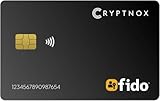
- FIDO2 CERTIFIED: FIDO Alliance Certified FIDO2 v2.1 and CTAP Level 1 for 2FA and MFA on Google Microsoft Apple GitHub login.gov AGOV SwissID and any WebAuthn service
- PASSKEY READY: Works as a hardware passkey for passwordless sign-in where the service enables it and as a U2F and WebAuthn security key everywhere else
- CERTIFIED SECURITY: NXP JCOP 4.5 secure element rated Common Criteria EAL6+ (augmented)
- TAP OR INSERT: Dual NFC ISO 14443 and contact ISO 7816 interface in an ID-1 format smart card that is passive and battery-free
- BUILT TO LAST: Passive smart card made in Switzerland designed by Swiss company Cryptnox and backed by a 2 year manufacturer warranty
Review application and service principal changes as well as the current configuration. In particular, inspect Update Application and Update Service Principal events for unexpected changes. A legitimate app can change over time, so compare the event and its timing with the app owner’s expected deployment or maintenance activity.
How do you correlate app activity with the consent?
Review activities related to the app and the consent, then compare the activity, source patterns, and accessed data with the app’s normal purpose. For App governance alerts, Microsoft recommends examining CloudAppEvents in Advanced Hunting, the granted scopes, user activity, and the data accessed. See Microsoft’s App governance alert investigation guidance.
Rank #4

- STREAMLINED & INTUITIVE UI, DVD FORMAT | Intelligent desktop | Personalize your experience for simpler efficiency | Powerful security built-in and enabled.
- OEM IS TO BE INSTALLED ON A NEW PC with no prior version of Windows installed and cannot be transferred to another machine.
- OEM DOES NOT PROVIDE SUPPORT | To acquire product with Microsoft support, obtain the full packaged “Retail” version.
- PRODUCT SHIPS IN PLAIN ENVELOPE | Activation key is located under scratch-off area on label.
- GENUINE WINDOWS SOFTWARE IS BRANDED BY MIRCOSOFT ONLY.
Ask the authorizing user or app owner whether the grant and subsequent activity were expected. Their confirmation is useful context, but assess it alongside the audit record, app configuration, and observed activity. An unexplained mismatch across these sources is stronger evidence than an isolated alert or unusual permission.
Interpret anomaly alerts in light of their learning periods. Microsoft says alerts for unusual OAuth-app credential additions may be elevated during a seven-day learning period, and unusual-ISP-for-an-OAuth-app detection has a 30-day learning period. These are product detection behaviors, not measures of prevalence or proof that an alert is false; consult Microsoft’s anomaly detection alert investigation guidance.
Best Value

- POWERFUL SECURITY KEY: The Security Key C NFC is the essential physical passkey for protecting your digital life from phishing attacks. It ensures only you can access your accounts.
- WORKS WITH 1000+ ACCOUNTS: Compatible with Google, Microsoft, and Apple. A single Security Key C NFC secures 100 of your favorite accounts, including email, password managers, and more.
- FAST & CONVENIENT LOGIN: Plug in your Security Key C NFC via USB-C and tap it, or tap it against your phone (NFC) to authenticate. No batteries, no internet connection, and no extra fees required.
- TRUSTED PASSKEY TECHNOLOGY: Uses the latest passkey standards (FIDO2/WebAuthn & FIDO U2F) but does not support One-Time Passwords. For complex needs, check out the YubiKey 5 Series.
- BUILT TO LAST: Made from tough, waterproof, and crush-resistant materials. Manufactured in Sweden and programmed in the USA with the highest security standards.
How should you assess whether an app is risky?
Use multiple dimensions to prioritize and validate an app. No single score, permission, or alert establishes maliciousness.
| Dimension | What to examine | What it can tell you |
|---|---|---|
| Purpose and permissions | Do the requested scopes fit the function the app claims to provide? | A mismatch merits investigation; Microsoft says permissions should relate to the app’s purpose. Microsoft guidance |
| Consent breadth | Who authorized the app, how many users did so, and was admin consent granted? | Shows which identities may be affected and whether the grant may be broad. Microsoft guidance |
| Identity and reputation | Are the publisher, website, name, and app details credible and consistent? Are permissions suspicious or irrelevant? | Inconsistencies can help distinguish a plausible business app from one that needs closer scrutiny. Microsoft guidance and Microsoft investigation playbook |
| Observed behavior | Do activities, source patterns, and accessed data match expected use? | Corroborates or challenges the app’s stated purpose. Microsoft guidance and Microsoft anomaly alert guidance |
| Organizational context | Is there a valid business purpose, and would disabling the app disrupt a critical workflow? | Informs the urgency and proportionality of containment. Microsoft guidance and Microsoft guidance |
How do you contain confirmed malicious activity?
If the investigation confirms malicious behavior, remove the access path and choose controls that match the scope and business impact. Microsoft’s illicit consent response guidance and App governance alert guidance describe revoking consent or service app role assignments and disabling the app as appropriate.
- Revoke the grant: remove the OAuth consent or service app role assignment associated with the confirmed malicious access.
- Disable the app when warranted: consider business criticality and the evidence before disabling it.
- Limit an affected account if needed: disabling sign-in can be a short-term way to limit access, but may disrupt the user.
- Avoid disproportionate tenant-wide action: disabling integrated apps tenant-wide is drastic and can have broad productivity consequences.
What should you document when scoping the incident?
Preserve a concise record that lets another administrator understand the exposure and response. Capture the affected identities, granted scopes, relevant activity, the incident time window, and remediation performed. Use audit coverage that was already in place to establish scope; do not treat missing historical records as evidence that an action did not happen when the required auditing was not enabled or retained.
Quick Recap
- Link each affected identity to the relevant consent and app permissions.
- Note the activity and data that supported the incident determination, including evidence that did not match expected use.
- Record containment actions and any business impact, such as an account or app being disabled.
Product prices and availability are accurate as of the date/time indicated and are subject to change. Any price and availability information displayed on Amazon at the time of purchase will apply.

