
Sometimes, but Intel does not support or validate the Optane Memory M10 for standalone use. An operating system may detect it as a PCIe NVMe storage device and allow data to be saved to it, but that does not guarantee reliable operation, boot support, or compatibility with a particular computer. Intel designed the M10 primarily to cache and accelerate another drive.
What the Intel Optane M10 is designed to do
The M10 is a cache module, not a conventional large-capacity SSD. Intel describes it as an accelerator paired with a supported storage drive—such as a hard drive, SATA SSD, or specified Intel QLC NVMe SSD—and managed with Intel Rapid Storage Technology (RST) software. The software learns which tasks and data are used frequently so the M10 can help speed access.

In this configuration, the M10 and the drive it accelerates remain two physical devices. Intel RST can present them to the operating system as one drive, but the M10 does not add its capacity to the other drive or become a separate large SSD. Intel distinguishes this arrangement from its H10 and H20 products, which combine Optane media and SSD media on one M.2 module. Intel explains the product distinction.
Can it work as standalone storage?
Intel support says an Optane Memory device can be detected and enumerated by an operating system as a standard PCIe NVMe storage device, and that saving data to it can function. Intel also explicitly says standalone use is not supported or validated and results are not guaranteed. The supported use remains caching or accelerating another drive. Intel’s support explanation therefore distinguishes what an OS may allow from what Intel supports.
#1 Best Overall
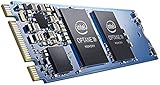
- Snappy PC experience with short boot times, fast application launches, extraordinary gaming experience and responsive browsing
- Pair Intel Optane memory with storage media (HDD, SSD), to get amazing performance and responsiveness without compromising storage capacities
- Supported on 7th Gen Intel Corei3 processor and above
- Requires Optane Ready Motherboard and storage drive such as HDD and/or SSD
- A computer with Intel Optane memory adapts to your everyday computing activities to make your repetitive tasks increasingly faster, smoother and easier to accomplish
In practical terms, the M10 might appear as a block device on some systems, but the available evidence does not establish that it will boot an operating system, work reliably with every OS or motherboard, or operate in a particular USB or M.2 enclosure. Detection alone is not proof of those capabilities. If a module is already configured as a cache, do not assume that simply changing a setting or moving it to another system is a safe conversion procedure.
M10 capacity and hardware specifications
Intel lists the M10 in 16 GB, 32 GB, and 64 GB capacities. Those sizes are small for a general-purpose system drive, especially if you need room for an operating system, applications, and personal files. The module specification is M.2 2280-S3-B-M with a PCIe 3.0 x2 NVMe interface. A matching-looking M.2 slot is not enough to establish compatibility: the computer must support the module’s dimensions, keying, interface, and intended drive configuration.
Rank #2

- UPC 735858397070
- Weight 0 200 lbs
Intel’s 2018 product brief reports up to 1,450 MB/s sequential read and 640 MB/s sequential write, plus up to 250,000 read and 40,000 write IOPS for 4 KB random operations at queue depth 4. These are Intel test results in the brief’s specific test context, not a promise of performance in a reader’s computer. Intel cautions that hardware, software, and configuration differences affect actual performance. See Intel’s M10 product brief.
Intel’s current specification page for the 64 GB SKU lists 365 TBW and a five-year warranty period. The 365 TBW figure applies to that 64 GB SKU; do not assume it applies to the 16 GB or 32 GB models. Warranty terms are separate from whether a particular use is supported. Intel’s 64 GB M10 specifications.
Rank #3
Compatibility and support limitations
For any physical installation, check the exact M10 SKU against the computer or motherboard maker’s documentation. Confirm that the slot supports PCIe NVMe, the module’s 2280 dimensions and keying, and the relevant drive configuration. Intel’s supported caching setup has additional platform and Intel RST software requirements; the product brief lists Windows 10 64-bit and specified 7th- or 8th-generation Intel Core platforms in that accelerator context. Those details are not a guarantee of standalone compatibility.
The M10 is discontinued. Intel lists its end-of-life date as January 13, 2021, and its end of interactive support as March 15, 2024. Intel says interactive-support end means technical assistance through web tickets, phone, chat, forums, or email is no longer available; this is separate from any applicable warranty term measured from the date of sale. Intel’s support-status notice.
Rank #4

- OEM PRODUCT, NO PACKAGING.
Intel also states that Intel RST version 19.0 or later no longer supports these Optane Memory models. A platform that requires RST 19.0 or later is therefore incompatible with M10 caching. This limitation concerns the supported cache configuration; it does not establish whether standalone device detection will work on a given system. Intel’s RST compatibility notice.
Independent reader supportYour contribution helps us test, update, and keep practical guides available for everyone.Which option makes sense?
| Option | Best suited to | Main trade-off |
|---|---|---|
| Use the M10 as an Intel RST cache | Accelerating a supported slower drive on a compatible legacy platform | It matches the M10’s intended use, but depends on compatible hardware, storage configuration, and a supported RST version. |
| Try the M10 as standalone storage | Reusing the module as a small NVMe device | The OS may detect it and data storage may function, but Intel does not support or validate this use; listed capacities are only 16 GB, 32 GB, and 64 GB. |
| Install a regular M.2 NVMe SSD | Adding dependable, larger-capacity standalone storage | Choose a drive that matches the specific computer’s supported dimensions, keying, interface, and configuration. |
If you need ordinary storage for a computer, a compatible higher-capacity M.2 NVMe SSD is the straightforward choice. Verify the host’s documentation before buying; M.2 describes a form factor, not a guarantee that every M.2 drive will work in every M.2 slot.
Recommended Free Tools
Quick Recap
Best Value
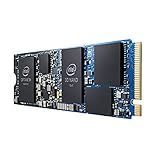
- INTEL OPTANE H10 32GB + 512GB SSD M.2
- Compatible devices: Desktop
- Memory storage capacity: 512.0
- Package Dimensions: 1.8 L x 13.4H x10.6W(centimeters)
Product prices and availability are accurate as of the date/time indicated and are subject to change. Any price and availability information displayed on Amazon at the time of purchase will apply.

