
GaN can improve power-converter efficiency and enable smaller designs when its fast switching and low switching-related losses suit the circuit. It is not automatically more efficient, cooler, or cheaper than silicon: the converter topology, load, switching frequency, device, thermal design, and production economics determine the result.
GaN vs. silicon: which is more efficient?
There is no technology-wide efficiency winner. A power converter’s efficiency depends on the device and circuit together, and on the input voltage, output voltage, load, switching frequency, and operating conditions. GaN’s low capacitance and near-zero reverse-recovery charge can reduce switching-related losses, especially in designs that switch rapidly or operate where switching losses are a substantial part of total loss. Silicon MOSFETs and IGBTs remain suitable where their characteristics meet the design’s requirements.
Power switches lose energy in two main ways: conduction loss while a device is on, and switching loss as it turns on and off. A design that reduces one loss can still incur more of another. Compare complete converters at matched input and output conditions, load, temperature, topology, and test method; a device-level claim or unmatched reference design cannot establish a universal advantage.
What the published examples show—and do not show
- Texas Instruments’ 2018 test report for its specific 0.8 V, 8 W GaN-versus-silicon reference-design comparison reported a 5% increase in GaN efficiency after dead-time optimization. That is a result for that design and optimization, not a general efficiency advantage for GaN converters.
- Infineon’s white paper, “Scaling AI Data Center Power Delivery with Si, SiC and GaN,” includes roadmap examples around 97.4–97.5% efficiency for specified data-center supply power levels. These are vendor roadmap or design figures for distinct configurations, not an independent matched test of GaN against silicon.
- An IEA 4E PECTA report published March 18, 2024 estimated more than 120 TWh in annual energy savings from wide-bandgap commercial power converters across the applications it studied. The estimate covers wide-bandgap devices, including GaN and SiC; it is not a GaN-only result or a product-level comparison with silicon. The report page notes a December 2025 update adding motor-drive calculation detail and references, so the original estimate should not be presented as the updated report’s final figure.
Do GaN chargers use less electricity?
They can, if the complete charger is more efficient at the power level and conditions at which it is used. For the same power delivered to a device, a more efficient charger draws less input power and loses less energy in conversion. But the word “GaN” alone does not establish a charger’s efficiency: circuit design, components, load, and operating point matter, and efficiency can vary as a device draws more or less power.
Do these 3 things before closing this tab:
1Fix the driver behind crashes, sound loss and screen glitches2Repair Windows errors before they cause bigger problems3Scan for outdated or missing drivers - takes under a minute#1 Best Overall

- [One Charger. Less to Carry] Nearly 30% smaller than Apple’s 70W charger, it stays snug without blocking nearby outlets. Charge 3 devices at once; foldable prongs tuck away to prevent snags and scratches.
- [65W Laptop-Ready Power] Charge a 14" MacBook Pro to 52%, iPhone 17 Pro to 67%, or Galaxy S26 Ultra to 78% in 30 min. Ready for cameras, drones, handhelds, and more.
- [A Complete Pro Charging Kit] Includes a 5ft 100W nylon-braided USB-C cable built for everyday bends and pulls, with extra reach for desks, bedsides, hotels, and travel.
- [Smart Power, Port by Port] USB-C1 delivers 65W solo; C1+C2 gives 45W+20W, C1+A 45W+18W, C2+A shares up to 15W, and all 3 run at 45W + 15W shared.
- [Stable Power, Without the Guesswork] TempGuard checks heat 1,000×/sec to help reduce heat-related slowdowns and interruptions, limiting excess heat exposure for more battery-friendly charging.
Texas Instruments identifies USB Type-C adapters among GaN application areas, and Infineon describes consumer chargers as an application for GaN-on-silicon. Those category examples do not mean every charger in either category uses GaN or that a GaN-labeled model necessarily uses less electricity than a particular silicon-based model. To compare two chargers, look for efficiency measurements made at comparable output loads and input conditions, rather than relying on the semiconductor material or maximum wattage alone.
Does GaN run cooler than silicon?
Lower losses at a particular operating point mean less heat is generated by the converter there. That does not guarantee a lower device junction temperature. Temperature also depends on the package, electrical and thermal layout, circuit board, heatsink or other cooling, ambient temperature, and load. The official sources cited here do not establish a universal GaN-versus-silicon junction-temperature ranking across products.
Rank #2

- the Only Charger You Need: Say goodbye to your old chargers. Anker 735 Charger (Nano II 65W) has the power you need to fast charge your phone, tablet, and USB-C notebook from a single charger.
- High-Speed Charging: Connect a single device to get a 65W max charge—that’s enough to power up a 2020 MacBook Pro 13″ at full speed. And when you connect three devices, power will be distributed efficiently between ports to ensure you get the best charge.
- Compact Design: Power up to 3 devices with a charger that’s roughly the size of an AirPods Pro case.
- Powered by GaN II Technology: With a 100% increase in operating frequency, an innovative stacked design, and an upgraded circuit board structure, GaN II technology makes our latest charger smaller without sacrificing a drop of power.
- What You Get: Anker 735 Charger (Nano II 65W) / PowerPort III 3-Port 65W Pod, welcome guide, our worry-free 18-month warranty, and friendly customer service.
Higher switching frequency may let a designer use smaller magnetic components and reduce system volume, but it brings additional demands on layout, parasitics, gate drive, electromagnetic interference (EMI), and switching transitions. A smaller converter is not automatically a cooler one, nor does a change of semiconductor material alone guarantee a better thermal result.
Is a GaN power supply worth the extra cost?
It depends on the complete system’s cost and the value of its size, efficiency, and thermal performance. A GaN device may cost more, but a successful design might offset some of that expense by reducing magnetics or cooling requirements. Conversely, design and qualification effort, package and gate-drive choices, and manufacturing scale can make an established silicon solution more economical. GaN-on-silicon can use mature silicon manufacturing infrastructure, as Infineon notes, but that does not establish the price of a specific device or finished supply.
What’s actually slowing this PC down?
Pick the symptom - the matching free tool is one click away.
Rank #3
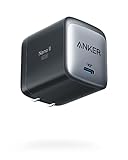
- The Only Charger You Need: Say goodbye to your old power bricks. Anker 715 Charger (Nano II 65W) has the power you need to fast charge your phone, tablet, and USB-C notebook from a single tiny charger.
- High-Speed Charging: Charge a 2020 MacBook Air in less than 2 hours, a MacBook Pro 13ʺ at full speed, an iPhone 13 up to 3× faster than with an original 5W charger, and charge the latest Samsung phones at full speed with Samsung Super Fast Charging.
- Downsized Design: At 58% smaller than an original 61W USB-C charger, and with a foldable plug, Anker Nano II takes up less space while giving you just as much power.
- Powered by GaN II Technology: With a 100% increase in operating frequency, an innovative stacked design, and an upgraded circuit board structure, GaN II technology makes our latest charger smaller without sacrificing a drop of power.
- What You Get: Anker 715 Charger (Nano II 65W) / Anker Nano II 65W, welcome guide, our worry-free 18-month warranty, and friendly customer service (cable not included).
No current apples-to-apples retail or volume prices for equivalent GaN and silicon devices are established in the cited material. Compare system bill of materials and engineering costs, not just device prices. If the supply will operate for long periods, include energy use over its expected operating profile in the decision, using measured efficiency at relevant loads; do not assume a theoretical efficiency gain will repay a price difference without doing that calculation.
Where are GaN and silicon power devices used?
Texas Instruments lists consumer electronics, data centers, grid and telecom infrastructure, automotive power electronics, motor drives, and USB Type-C adapters among GaN application areas. Infineon also identifies consumer chargers and data centers for GaN-on-silicon. These are applications, not claims that every product in those categories uses GaN.
Rank #4

- Ultra-Compact Design: Experience exceptional power in a remarkably compact charger that is 51% smaller than the original 67W MacBook charger—ideal to bring anywhere you go.
- Fast Charging for 3 Devices: With 2 USB-C ports and 1 USB-A port, effortlessly charge your phone, tablet, and notebook all at once from a single charger. Connect a single device to charge up to 67W.
- 65W Max Two-Port Charging: Whether you use both USB-C ports or a combination of USB-C and USB-A ports, enjoy fast and efficient charging with a maximum output of 65W.
- Comprehensive Safeguards: The upgraded ActiveShield 2.0 system provides secure charging with built-in protections for added peace of mind.
- What You Get: Anker Prime 67W GaN Wall Charger (3 Ports), welcome guide, our worry-free 24-month warranty, and friendly customer service.
GaN is relevant when its switching behavior and potential for compact conversion match the voltage, power, topology, performance, and qualification requirements. Silicon remains relevant in established power-conversion designs where it meets requirements and its ecosystem, cost, availability, or qualification advantages make it the practical choice. A technology label alone does not determine whether a device suits a particular supply, motor drive, or vehicle system.
How to compare devices or finished converters
- Match the application. Compare devices or supplies intended for the same voltage and power class, topology, input and output conditions, and operating environment. A low-voltage, low-power reference design is not a direct proxy for a data-center supply or motor drive.
- Compare efficiency at the load that matters. Use measurements made at comparable input conditions and output loads, and consider how the load changes in real use. Do not treat one peak-efficiency figure as performance across the full operating range.
- Account for both major switch losses. Consider conduction and switching losses together, including whether the intended circuit can make use of GaN’s switching characteristics. Device data and circuit implementation both matter.
- Evaluate the whole design. Include magnetics, cooling, layout, EMI management, gate drive, and design complexity. Higher switching frequency can reduce magnetic-component size while increasing implementation demands.
- Compare total cost and qualification needs. Consider device and system costs, production scale, design work, qualification, availability, and any displaced components. Do not infer a finished product’s cost or reliability from the switch material alone.
What the manufacturer sources establish
Texas Instruments’ August 2022 application briefs explain switching-loss mechanisms and GaN device characteristics, including the absence of a silicon MOSFET-style body diode and the described zero reverse-recovery charge. Its brief “How GaN Enables More Efficient and Reduced Form Factor Power Supplies” discusses how GaN can support smaller power-supply form factors; “GaN FET Benefits Over Silicon” describes the technology as an alternative in higher-density applications. These are manufacturer technical sources, so their device and design claims should be read within the stated context rather than as neutral, universal benchmarks.
Best Value

- 160W High Power PD Fast Charging Technology: Premium GaN laptop charger delivers total 160W overall output, C1 & C2 single port supports up to 140W max PD rapid charging, fully boost MacBook Pro 16 inch M4 Max to 56% battery within 30 minutes, ideal high wattage USB C fast charger for gaming laptops and large-screen notebooks
- 5-In-1 Multiport USB Charging Block: All-in-one charging station comes with 4 USB-C ports plus 1 USB-A port, enables simultaneous multi-device charging for MacBook, iPhone, Galaxy, AirPods and tablets, replaces multiple bulky wall chargers to organize your desktop clutter perfectly
- Smart Rotatable Touch Digital Display Design: Unique real-time monitor screen multiport charger features rotatable touch control panel, intuitively displays total output wattage, per-port power data, active charging protocol and internal temperature status, the fun animated emoticon adds extra user-friendly experience for daily use
- Premium Compact Travel-Friendly Construction: Space-saving GaN wall charger adopts foldable US AC plug design paired with intelligent automatic power allocation system, compact exterior saves luggage space, perfect portable travel charging adapter for home, office, business trip and outdoor camping scenarios
- All-Round Safety Protection & Broad Device Compatibility: Certified multi-protection USB C charger built-in overheat, overvoltage, overcurrent and short-circuit prevention circuitry with dual smart temperature control modes. Widely compatible with more than 1000 types of electronic devices including iOS, Android, Windows powered phones and laptops
For engineering readers, TI’s GaN power stages, application briefs, and reference designs provide design-specific information; Infineon’s CoolGaN materials address GaN-on-silicon and applications including data-center conversion. A reference design can show what a particular implementation achieves, but it cannot substitute for a matched comparison of the intended finished systems.
Quick Recap
Product prices and availability are accurate as of the date/time indicated and are subject to change. Any price and availability information displayed on Amazon at the time of purchase will apply.

