
Free tools Windows power users keep installed
One-click scans. No signup required.
Start with the exact model file, not the Q3, Q4, or Q5 label. On a 24GB GPU, a Q4 build is a practical first candidate when its file size leaves room for the runtime, context, and other GPU use. Q5 can leave too little headroom; Q3 may make more room at a likely precision cost. These are starting points, not fit guarantees: test the exact file and workload in your chosen runtime.
What determines whether a 27B model fits?
VRAM must accommodate more than model weights. The runtime also needs memory, and the key-value (KV) cache used to process context takes additional space. Longer contexts and multiple simultaneous sequences increase that demand. Other GPU processes or display use can reduce what is available to the model.
Quantization reduces memory requirements by lowering model precision, but the result depends on the method and the specific build. A Q4 label does not guarantee exactly four bits per parameter: mixed-precision schemes can use different bit widths across tensors. The vLLM quantization documentation describes the general precision-versus-memory trade-off, while its Qwen3.8-27B recipe warns that its quantized builds are not uniformly 4-bit.
On-disk file size is therefore a useful first filter, not a promise that the file will load into the remaining VRAM. Nor does a smaller file establish how much quality or speed you will trade away; the cited sources do not provide a controlled, general Q3-versus-Q4-versus-Q5 quality comparison for 27B models.
#1 Best Overall

- System Compatibility Note: 2-slot card, 271x112x39mm, single 8-pin power, 200W TDP. Verify chassis clearance and PSU capacity before purchase.
- Dedicated Support: Please contact us directly through Amazon for any product questions or assistance you may require.
- 24GB GDDR6 on 192-Bit Bus: Massive 24GB memory with 456 GB/s bandwidth – ideal for LLMs, AI inference, 3D rendering, and generative design.
- Intel Xe2-HPG Architecture: Built on Intel's next-gen architecture with 20 Xe cores and 160 XMX engines for AI acceleration (197 INT8 TOPS).
- PCIe 5.0 Support: PCI Express 5.0 x16 interface for maximum bandwidth with the latest workstation platforms.
Compare actual files, not quantization labels
The following are examples from two repositories for Qwen3.8-27B, not standard sizes for all 27B models. Their different values show why you should inspect the exact artifact you plan to run.
| Repository and build | Listed file size | How to interpret it |
|---|---|---|
| byteshape: 2.56 bits per weight | 8.8 GB | Repository-specific GGUF example; the repository describes its labels as approximate size classes for hybrid per-tensor quantizations. |
| byteshape: 3.84 bits per weight | 13.1 GB | Repository-specific GGUF example, not a universal Q4 or 27B size. |
| PocketWeights: Q3_K_M | 13.5 GB | Specific repository build. |
| PocketWeights: Q4_K_S | 15.8 GB | Specific repository build. |
| PocketWeights: Q4_K_M | 16.8 GB | Specific repository build. |
| PocketWeights: Q5_K_M | 19.5 GB | Specific repository build; leaves less nominal capacity for runtime and cache than the smaller listed files. |
For scale, the vLLM recipe lists its BF16 checkpoint at 55.6 GB on disk and 51.7 GiB for weights, with a 67 GB minimum VRAM for that recipe. Those are figures for that particular deployment, not a general hardware requirement for every full-precision 27B model.
Rank #2

- Item Package Dimension - 15.0L x 12.25W x 4.25H inches
- Item Package Weight - 6.0 Pounds
- Item Package Quantity - 1
- Product Type - VIDEO CARD
Choose a build for your context and workload
Begin with the context you actually need
Set a target context length and decide whether you need concurrent sequences before selecting the largest file that appears to fit. Both affect cache memory. The cited sources do not establish a single context-to-VRAM formula that applies across model architectures and runtimes, so a file-size calculation alone cannot determine your usable context.
Use Q4 as a candidate, not a guarantee
For a typical single-user local setup, evaluate an exact Q4 build first if its size leaves plausible headroom. If it fails to load, runs out of memory at your intended context, or cannot support your desired concurrency, try a smaller Q4 variant or Q3, lower the context or concurrency, or use a memory-saving feature supported by your runtime. If you have memory to spare and want to compare a higher-precision option, test a specific Q5 build. No universal quality winner or exact quality penalty is established by the available comparisons.
Rank #3
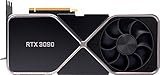
- Chipset: NVIDIA GeForce RTX 3090
- Video Memory: 24GB GDDR6X
- Memory Interface: 384-bit
- Output: DisplayPort x 3 (v1.4a) / HDMI 2.1 x 1
- Nvidia India 3 Year *
Account for optional components
The byteshape repository recommends choosing its largest build that leaves room for context and, when enabled, approximately 1.2 GB for that repository’s optional Q4_K_M DFlash2 draft model. That additional figure applies to this named setup, not to quantization generally.
Validate the exact configuration on your GPU
- Identify the artifact: record the model revision, repository, exact file name, quantization format, and runtime. Do not compare only labels such as “Q4” or “4-bit.”
- Check the available budget: inspect current GPU memory use and the file’s actual size. Leave room for runtime allocations, context/KV cache, and any other GPU workloads rather than assigning all nominal 24GB to weights.
- Set the intended workload: configure the context length and number of simultaneous sequences you expect to use. Include optional draft models or other components if enabled.
- Load and exercise it: run the exact file in the intended runtime, then observe GPU memory use while processing a prompt and context representative of your workload. A successful load alone does not establish that longer prompts or more concurrent sequences will fit.
- Adjust one constraint at a time: if memory is insufficient, reduce context or concurrency, choose a smaller quant, or enable a supported memory-saving option. Confirm support in the runtime’s current documentation before relying on a feature.
What the 24GB RTX 3090 measurements can—and cannot—tell you
Chin Keong’s Qwen3.8-27B report measures settings, speeds, and energy on one 24GB RTX 3090 setup. It can inform readers considering that reported configuration, but it does not establish the speed or fit of a different GPU, runtime, model build, context, or workload. Treat it as a setup-specific report rather than a general 24GB performance benchmark.
Quick Recap
Best Value

- KEY FEATURE NVIDIA Ampere Streaming Multiprocessors 2nd Generation RT Cores 3rd Generation Tensor Cores Powered by GeForce RTX™ 3090 Integrated with 24GB
Rank #4
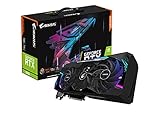
- NVIDIA Ampere Streaming Multiprocessors
- 2nd Generation RT Cores
- 3rd Generation Tensor Cores
- Powered by GeForce RTX 3090
- Integrated with 24GB GDDR6X 384-bit memory interface
Product prices and availability are accurate as of the date/time indicated and are subject to change. Any price and availability information displayed on Amazon at the time of purchase will apply.

