
The Tool Desk
Outbyte Driver Updater FREEFix the driver behind crashes, sound loss and screen glitchesFind Drivers →Outbyte PC Repair FREERepair Windows errors before they cause bigger problemsFix Now →Before buying a humanoid robot, verify that it can perform a defined job in your workplace, with acceptable safety, reliability, and total cost. A humanlike shape, vendor demonstration, announced order, or pilot does not establish that the robot can do your task. Start with the work to be done, then assess the complete system—including tools, software, safeguards, integration, and support—in the conditions where it will operate.
Define the job before comparing robots
Describe the task in operational terms so vendors can show whether their system fits. “Move boxes” is not specific enough: identify the items, where they start and finish, how they are presented, and what happens when the normal sequence breaks.
- Objects and loads: dimensions, weight, packaging, variability, grip points, and whether items can be fragile, unstable, or damaged.
- Work cycle: each step, required cycle time, handoffs, quality checks, and how many tasks must be completed per shift.
- Work area: routes, aisle width, floor condition, doors, workcell layout, nearby machinery, pedestrian traffic, and environmental conditions.
- Operating pattern: shifts, breaks, charging or battery-change windows, and how the robot should behave during pauses or shift changes.
- Exceptions: blocked routes, misplaced items, failed grasps, equipment faults, emergency stops, and any case requiring a person to intervene.
Ask the vendor to demonstrate the specified work in the intended environment, not only in a prepared showroom. Include representative shifts and normal variations. If the task, route, tooling, or surroundings change, performance and risk may change too.
Assess the complete application, not just the robot
Workplace suitability depends on the system around the robot: end effectors, task software, layout, nearby equipment, safeguards, procedures, and training. A robot that can perform a motion in isolation may not be able to complete a production task reliably once it must interact with people, materials, and existing equipment.
Free tools Windows power users keep installed
One-click scans. No signup required.
#1 Best Overall

- Three models, one lightweight platform R1 Air (20 DOF, monocular camera), R1 (26 DOF, binocular camera, head+waist joints), and R1 Edu (26 DOF + SDK/API for programming). All weigh ~29kg / 123cm – one person can lift, move, and fit into a car trunk.
- Easy setup – no coding required for basic use Unbox, power on, and start. Manual teaching feature: physically pose the robot, and it replays the motion. Graphical drag-and-drop programming also available.
- More DOF = more expressive movement 26‑DOF models (R1 / R1 Edu) add head and waist articulation for smoother dance and running. For safety reasons, only basic actions are currently available; advanced movements are not yet released.
- Voice interaction + two color options Responds to English voice commands (music, conversation, photo). Choose Gold or Blue‑White with automotive‑grade gloss paint.
- R1 Edu adds open development SDK/API access for custom programming, simulation platforms, and future Unistore content downloads. Adult use only – under 18 requires adult supervision.
For each shortlisted system, establish:
- Which end effectors are included, how they change, and whether the vendor has demonstrated them with your objects.
- How tasks are programmed and updated, and what integration is needed with existing equipment or software.
- What happens when an object is absent, a grasp fails, a route is blocked, or the robot stops unexpectedly.
- What data the system collects, where it is handled, and who can access it.
- Which site modifications, safety measures, operating procedures, and worker training are required.
Fraunhofer IPA announced a modular benchmark in May 2026 for independently analyzing humanoid-robot capabilities, safety, and operational suitability. Its listed criteria include energy efficiency, cleanroom compatibility, and data security. That announcement supports asking for measurable, application-specific evidence; it does not establish that every product has been assessed or certified.
Require a task-specific safety assessment
Do not assume that a robot is safe because it is designed to work near people, or that a particular standard automatically covers it because it looks humanoid. Determine the robot’s classification, intended use, and applicable requirements for your jurisdiction with qualified safety personnel.
Understand the standards boundary
For U.S. workplaces, OSHA says there are currently no specific OSHA standards for the robotics industry. That does not exempt an employer from workplace safety duties: OSHA points employers to relevant general-industry requirements and consensus standards, and its standards page notes that State Plans may have different or more stringent requirements.
Rank #2

- Three models, one lightweight platform R1 Air (20 DOF, monocular camera), R1 (26 DOF, binocular camera, head+waist joints), and R1 Edu (26 DOF + SDK/API for programming). All weigh ~29kg / 123cm – one person can lift, move, and fit into a car trunk.
- Easy setup – no coding required for basic use Unbox, power on, and start. Manual teaching feature: physically pose the robot, and it replays the motion. Graphical drag-and-drop programming also available.
- More DOF = more expressive movement 26‑DOF models (R1 / R1 Edu) add head and waist articulation for smoother dance and running. For safety reasons, only basic actions are currently available; advanced movements are not yet released.
- Voice interaction + two color options Responds to English voice commands (music, conversation, photo). Choose Gold or Blue‑White with automotive‑grade gloss paint.
- R1 Edu adds open development SDK/API access for custom programming, simulation platforms, and future Unistore content downloads. Adult use only – under 18 requires adult supervision.
ISO 10218-1:2025 addresses safety requirements for industrial robots as machines; ISO 10218-2:2025 addresses integration of robots into complete systems. ISO’s listing says Part 1 does not cover several areas, including healthcare, public-access service or consumer products, lifting or transporting people, and certain mobile-platform hazards and other specialized conditions. OSHA’s standards page says ISO 10218 does not apply to non-industrial robots, although its principles may be used for them. Do not treat these standards as a universal fit for every humanoid application.
Review risks and safeguards for the actual task
OSHA’s technical manual says integrators should carry out a comprehensive hazard analysis and risk assessment for each application, ideally involving the employer and affected workers. It also says the employer should ensure safe design and implementation and verify this, typically during site acceptance.
NIOSH identifies struck-by or caught-between incidents, crushing and trapping, slips, trips and falls, and electrical hazards. It also flags concerns in close human-robot interaction, including unexpected contact, distraction from hazards, and worker stress. The risks will depend on the application, so involve the people who will work near the system and review hazards in its planned operating area.
Rank #3
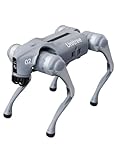
- 【Next-Generation Robotic Companion: Meet the Unitree Go2 Robotic Dog】 The Unitree Go2 Air is an intelligent quadruped robot, perfect for beginners and tech lovers. It measures 27.6"x12.2"x15.7" and weighs just 33 lbs, yet carries up to 15.4 lbs and reaches speeds of 2.5 m/s. Its advanced joint mobility allows it to climb 30° slopes and overcome 5.9" obstacles. An 8000 mAh battery provides 1–2 hours of operation.
- 【Intelligent Navigation with 3D LiDAR & Obstacle Avoidance】 Featuring ultra-wide 3D LiDAR with 360°x96° perception, the Go2 Air detects obstacles as close as 2 inches for reliable all-terrain navigation and real-time avoidance. Note: Obstacle avoidance must be manually enabled.
- 【High-Definition Vision & Seamless App Integration】 A front HD camera streams 1280x720 video to the app. Control the robot, view real-time data, use graphical programming, and update firmware via OTA. Connectivity includes WiFi6 and Bluetooth 5.2. *Note: Voice/GPT features are Pro/X-exclusive; 4G modules are unavailable in North America.*
- 【Advanced Joint & Cooling Design for Enhanced Durability】 Joints provide 45 N·m peak torque for dynamic, precise movement. Internal wiring reduces wear, and an integrated knee heat pipe improves thermal management for stable extended use. Warning: Not waterproof. Avoid rain or water.
- 【Complete Package & Important Guidelines】 Each Go2 Air comes with a handheld remote control and a 33.6V/3.5A standard charger. Please note that this product is non-returnable and non-exchangeable once activated, except for quality-related issues. We strongly recommend reviewing all specifications before purchase. Warranty: Go2 Air – 6 months; Go2 Pro/Go2 X – 12 months. The warranty does not cover damage caused by modifications, disassembly, or misuse. Users are advised to operate the robot responsibly and in compliance with local regulations.
Put the required safety documentation and work into the integration statement of work. Specify who owns the application risk assessment, which safeguards and procedures must be in place, how emergency stops and isolation will work, what training is required, and what checks must pass at commissioning or site acceptance. Agree on who can stop the test and how the system can be made safe before a person enters or works on it.
For context, NIOSH’s 2024 workplace robotics overview reports 41 robot-related fatalities in the United States from 1992 through 2017, citing Layne (2023). This is historical data about workplace robotics generally, not a humanoid-specific fatality rate.
What’s actually slowing this PC down?
Pick the symptom - the matching free tool is one click away.
Check what is available now—and what is still a pilot or announcement
Ask vendors to identify the exact product configuration they can supply, its current availability, and what has actually been demonstrated. Distinguish an available product from a prototype, pilot, early-access program, or future availability target. Also ask whether the task you need has been demonstrated by the vendor, an independent assessor, or only described as a potential use.
Rank #4

- Sleek & Durable Design: Standing at 132cm tall and weighing only approx. 35kg, the G1 is constructed with aerospace-grade aluminum alloy and carbon fiber. It features a full joint hollow internal wiring system, dual encoders, and a localized air-cooling system, ensuring high operational precision, stability, and resistance to impact from falls.
- High Flexibility & Safe Movement: Boasting 23 joint degrees of freedom (6 per leg, 5 per arm), it offers an extensive range of motion. For safety, it currently supports basic movements like walking, rotating, and handshakes, with plans to expand the movement library via future OTA updates.
- Smart Interaction & Connectivity: Powered by an 8-core high-performance CPU and equipped with a depth camera and 3D LiDAR. It supports Wi-Fi 6 and Bluetooth 5.2 for fast data exchange and features voice interaction, making it ideal for demonstrations, entertainment, and companionship.
- Ready to Use & Upgradeable: Comes with a smart quick-release battery (approx. 2h endurance), a handheld remote control, and a charger. It supports intelligent OTA upgrades, allowing the robot's capabilities to grow over time.
- Important Purchase Note: This G1 model does NOT support secondary development or programming. If you require SDK/API access or programmable features, please do not purchase this version. Contact our customer service to inquire about the "G1 Edu" customized version.
| Public announcement | What it establishes as of October 4, 2026 | What it does not establish |
|---|---|---|
| Agility Robotics, Digit 5 announcement, September 15, 2026 | Agility described Digit 5 as intended for manufacturing, warehouse, and distribution work and described swappable end effectors. The company said early access was expected in the first half of 2027 and general availability by the end of 2027. | Those are company-stated future timelines, not proof of general availability on October 4, 2026, or independent evidence of performance on your task. |
| Apptronik and Jabil collaboration announcement, February 2025 | The companies announced a pilot and strategic collaboration to build Apollo humanoid robots and integrate them into specific Jabil manufacturing operations. | The announcement does not establish broad commercial availability or general performance results. |
These announcements describe different kinds of evidence and are not an apples-to-apples production comparison. The 2024 research paper surveying humanoid-robot companies discusses maturity, technical challenges, operation and maintenance, and pilots; its authors describe their company comparison as subjective and frame pilots as a way to test feasibility before mass deployment. Use that work as context for the questions to ask, not as a current product ranking.
Fraunhofer IPA Senior Manager Simon Schmidt said in the organization’s May 27, 2026 press release: “For end users and manufacturers alike, it is essential to look behind the facade sometimes constructed by marketing agencies.” Treat that as his attributed statement, not an independent finding about any particular vendor.
Independent reader supportYour contribution helps us test, update, and keep practical guides available for everyone.Run a pilot with measurable acceptance criteria
Use a pilot to test feasibility under defined conditions, not as a substitute for deciding what success means. Before it begins, record the baseline process, set acceptance thresholds, identify who can stop the test, and agree how exceptions and safety concerns will be handled. A practical scorecard can include:
Best Value

- 【Humanoid Robot with ESP32】 Powered by ESP32 and 17 intelligent servos, Tonybot smart humanoid robot delivers smooth, dynamic performance. Use the app to easily control it for walking, dancing, kicking, and more. Tonybot can stand up automatically, which is great for playing football and performing gymnastics.
- 【Multimodal Large AI Models】Powered by an AI model module that combines language, voice, and vision models, Tonybot Ultimate Kit unlocks advanced embodied AI functions such as natural conversation and scene understanding. (Ultimate Kit Only)
- 【AI Vision & Voice Interaction】Equipped with an ESP32-S3 vision module and voice interaction module, Tonybot AI robot enables offline face recognition, target tracking, visual line following, voice control, and more. Customize commands and train it to be your AI assistant.
- 【Expandable AI Development with Sensors】 Tonybot robot kit comes with an ultrasonic sensor, IMU sensor, buzzer, and supports modules like dot matrix display, fan, temp/humidity sensors, and WiFi for endless AI-driven development.
- 【3 Programming Options & Comprehensive Tutorials】Tonybot smart AI robot supports Arduino, Python, and Scratch programming, with open-source low-level code and step-by-step tutorials covering everything from beginner learning to advanced humanoid robot development.
- Task output: completed tasks per shift and task success during normal work and defined exception cases.
- Availability: uptime and time lost to charging, battery exchange, resets, and maintenance.
- Human involvement: number of interventions, reasons for them, and recovery time.
- Quality and flow: errors, dropped or damaged items, and disruption to downstream work.
- Safety: events and near misses, including unintended contact and interference with pedestrian routes.
- Workforce impact: worker feedback, training required, and effects on nearby work.
- Actual cost: integration and operating costs compared with the vendor’s assumptions.
Compare the results with the acceptance thresholds and the baseline, rather than relying on a successful demonstration or a single best-case shift. This is a practical evaluation approach, not a universal official scorecard: OSHA’s guidance supports application-specific risk assessment and acceptance checks, NIOSH identifies workplace hazards, and the 2024 paper describes pilots as feasibility tests.
Get support and total cost in writing
Request a written, itemized proposal from the vendor and any integrator. Current purchase or lease prices, service-level commitments, integration costs, spare-parts terms, and full deployment costs are not established on a comparable basis in the available announcements and sources. Obtain current quotations for the specific configuration and site before making a cost or return-on-investment claim.
Check that the proposal accounts for:
- Robot purchase or lease and the included configuration.
- Integration, commissioning, and facility changes.
- Safety equipment, risk-assessment work, tooling, and training.
- Software, updates, maintenance, spare parts, and service response.
- Energy or battery workflow, downtime, and ongoing operating costs.
Clarify who maintains the system, who supplies replacement parts, what response times are contractually committed, and what happens if performance falls below the agreed threshold. Confirm what training is provided to operators and maintenance staff, and who is responsible for software changes and safe revalidation after a change to the application.
Quick Recap
Product prices and availability are accurate as of the date/time indicated and are subject to change. Any price and availability information displayed on Amazon at the time of purchase will apply.

