
Outdated Drivers Are Slowing You Down
One free scan finds every outdated or missing driver and matches the right update for your exact hardware.Free scan · exact hardware matchWindows Errors? Fix Them Before They Spread
Repair common Windows errors and clear accumulated junk for a smoother, more stable PC - no reinstall needed.Free scan · no reinstallFor most SaaS teams, Google is the most straightforward starting point for a broadly available, documented sign-in flow; Apple is a strong option when Apple users and platforms matter; and ChatGPT sign-in is worth considering only if ChatGPT identity is specifically useful and OpenAI has approved your access. In every case, sign-in establishes identity—it does not automatically authorize access to a provider’s APIs or give your app control of the user’s provider account.
Which OAuth provider should your SaaS use?
Choose based on who your users are, where they use your product, whether the provider is available to your team, and what information or integrations the product needs. The table compares the practical starting points described in the providers’ documentation; it is not a ranking of conversion rates or security.

| Decision | Sign in with ChatGPT | Sign in with Google | Sign in with Apple |
|---|---|---|---|
| Availability | OpenAI’s developer documentation describes commercial website sign-in as a limited trial for selected partners. Users can sign in at participating sites, subject to availability and organizational settings. | Google publishes an OpenID Connect implementation and setup guidance for developers. | Apple documents support on its listed operating systems and in browsers. |
| What sign-in can provide | Identity scopes can provide a stable account identifier and basic profile details. Using a ChatGPT plan for AI requests requires separate authorization. | OpenID Connect provides an ID token. Access to other Google APIs requires additional scopes and user consent. | Apple’s web setup guidance says the user object is returned only on first authorization; email is included in the identity token. |
| Main setup work | Obtain a client, register exact callback URLs, use Authorization Code with PKCE, validate the ID token, then create your app’s session. | Set up a Google Cloud project and OAuth credentials, configure a redirect URI and consent-screen branding, then validate ID tokens and request only needed scopes. | Follow Apple’s web and platform setup and interface guidance; handle profile details returned at first authorization. |
| Worth investigating when | Your product has a specific reason to use ChatGPT account identity or separately authorized plan usage, and you have developer access. | You need a conventional sign-in option for a broad SaaS audience or separately consented access to Google APIs. | You serve Apple users or want a sign-in option that also works in browsers and Apple environments. |
What sign-in does—and does not—authorize
OAuth is commonly used to request permission to access services or data. OpenID Connect (OIDC) adds an identity layer: it lets an application verify who signed in using identity claims. A successful sign-in is not blanket permission to read a user’s provider data.
- ChatGPT: OpenAI documents identity scopes such as
openid profile email. Those scopes do not expose conversations or OpenAI API resources. Using a ChatGPT plan for AI requests requires a separate Responses API authorization flow. - Google: An app can use OIDC identity claims without requesting access to Drive, Calendar, or other Google APIs. Those integrations need their own relevant scopes and the user’s authorization.
- Apple: Sign in with Apple supports account setup and sign-in within Apple’s stated integration guidance. Do not treat it as authorization to unrelated Apple services or data.
Request the minimum permissions needed for a feature, explain the reason when asking, and provide a way to manage or unlink a connected integration where appropriate. Google cautions: “The more scopes your application requests, the less likely it is that the user will consent, so your application should ask only for the scopes it needs.” (Google OpenID Connect documentation.)
Recommended Free Tools
When ChatGPT sign-in is a realistic choice
ChatGPT sign-in may make sense when ChatGPT account identity is relevant to your product or users need a separately authorized connection involving their ChatGPT plan. The current OpenAI developer quickstart and website guidance describe commercial sign-in as a limited trial for selected partners, so do not promise this option to users until your team has confirmed access.
End-user availability is a separate consideration: OpenAI says users can sign in at participating partner sites, and organization settings can affect access. Identity sign-in can provide name, email, and profile picture if available; it does not independently share conversations, memory, files, tokens, or billing information. Those distinctions matter when writing privacy and permission explanations.
Rank #2

- Ultra-Compact FIDO2 Security Key - Plug-and-stay or carry on a keychain. This USB-A hardware security key offers portable, always-on protection for desktop and mobile use. (Item Size: 0.75 X 0.74 IN x 0.25 IN)
- USB-A Hardware Key for All Devices - Works with USB-A ports on PC, Mac, Android, and other laptop/notebook device. Enables secure, cross-platform login with FIDO2.0 passkey support.
- FIDO Certified Security Key - Meets FIDO and FIDO2 standards. Works with Google, Microsoft, GitHub, Dropbox, and more. Please check service compatibility before purchase.
- Passwordless Login with Passkey - Supports passkey login via WebAuthn and CTAP2. Enjoy password-free sign-ins where supported. Not all websites or services currently support passkeys.
- Advanced Multi-Factor Authentication - Offers 200 FIDO2 passkey slots and 50 OATH-TOTP slots. Strong, flexible 2FA/MFA support across various apps and authentication platforms.
OpenAI’s website integration guidance calls for an OpenAI client ID, an exact registered callback URL for each environment, endpoint configuration, transaction-state handling, and secure app sessions. Its documented flow uses Authorization Code with PKCE and requires checking the ID token issuer. After token validation, your app still finds or creates its own account and issues its own session. See the OpenAI website sign-in guide, OpenAI Sign in with ChatGPT quickstart, and OpenAI Help Center availability and user FAQ.
When Google sign-in is the better fit
Google is a practical default to evaluate when you need a conventional, documented OIDC sign-in flow. Google directs website developers to Google Identity Services for the sign-in button. Setup includes a Google Cloud project, OAuth credentials, a redirect URI, and consent-screen branding. Your backend should validate the ID token before creating or starting a local account.
Rank #3

- Security Key : Protect your online accounts against unauthorized access by using FIDO2 and U2F authentication with T110. It's the world's most protective security key that works with windows, Mac OS, Linux as well as Chrome, Firefox, Edge and many other major browsers.
- Certified with the new FIDO2 standard, T110 provides the benefit of fast login and strong protection against phishing, account takeover as well as many other online attactks.
- Works with : Bank of America, Github, Google, Microsoft, DUO, Twitter, Facebook, Dropbox, Apple, ebay, BINANCE, mor and more.
- Fits USB-A port : Insert the T110 security key into the USB-A port of each service and log in conveniently with one touch
- For the driver download and user guide, please visit TrustKey Solutions Home support page.
Use the signed OIDC sub claim as the account’s provider identifier, not email: Google warns that an email address can change and should not be the primary unique identifier. If your product restricts access to a Google Workspace domain, verify the signed hd claim rather than trusting email-domain text or an account-picker hint. Consult Google’s OpenID Connect guide and Google’s ID token verification guidance.
When Apple sign-in is the better fit
Apple documents Sign in with Apple for iOS, iPadOS, macOS, tvOS, visionOS, and watchOS, and says it can also work in any browser. It is worth evaluating if your product targets Apple users or needs sign-in across those environments. Follow Apple’s interface guidance for account setup, the sign-in experience, and button use. Apple also limits the API to letting users voluntarily set up an account and sign in, and lists prohibited uses in its guidance: Apple Sign in with Apple setup and guidelines.
Rank #4
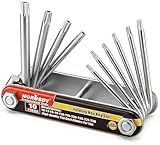
- Tamper Resistant Star Key Set Crafted with premium chrome vanadium steel, and each star tool folds neatly into the handle for quick, easy access.
- Details - The handle is engraved with size for quick identification with drilled tips to allow use.
- Portable - Keys fold compact for easy storage, Drilled tips allow use on tamper resistant security screws.
- Size:Full Size T-6, T-7, T-8, T-9, T-10, T-15 T-20, T-25, T-27 and T-30.
- And with 10 total star sizes able to match nearly all standard tamper resistant security screws on the market.
For webpages, Apple says the user object is returned only the first time someone authorizes your app. Save the supplied profile fields at that point; Apple says email remains in the identity token on later requests. Design account management around the information your app will actually receive after that first authorization. See Apple’s webpage configuration documentation.
Independent reader supportYour contribution helps us test, update, and keep practical guides available for everyone.How to implement any provider without making it your account system
- Choose the sign-in purpose. Decide whether you need identity only or a specific provider API integration. Keep API scopes separate from the sign-in request unless the feature genuinely needs them.
- Register the application correctly. Configure the provider’s client credentials and exact redirect or callback URLs for each environment. For ChatGPT, OpenAI’s website guidance specifically calls for exact registered callback URLs.
- Use the documented authentication flow. For the ChatGPT website flow, OpenAI documents Authorization Code with PKCE. Follow the relevant provider’s current setup guidance for Google or Apple.
- Validate tokens on your backend. Check provider-issued tokens before accepting an identity. Apply provider-specific checks, including issuer validation for the documented ChatGPT flow and Google’s signed claims where relevant.
- Link by stable provider identity. Store the provider and its stable identifier, such as Google’s
sub. Do not make email the sole account key. - Create your own app session and authorization rules. A provider confirms an identity; your SaaS decides which local account and permissions apply. OpenAI puts it plainly: “Your application owns account creation, enterprise sign-in policy, sessions, authorization, and connector access.” (OpenAI developer documentation.)
- Plan for account linking and recovery. Explain how users can connect or unlink an identity, change sign-in methods, or recover access if an address or provider account changes.
How enterprise sign-in and Apple distribution affect the decision
Social or provider sign-in is not a substitute for a customer’s required enterprise single sign-on (SSO) or workspace access policy. OpenAI says products that require enterprise SSO should guide users to that existing sign-in experience. Decide how provider login fits alongside your own organization access rules before presenting it as an option.
If you distribute an app through Apple platforms, separately check the current App Store Review Guidelines for requirements and exceptions that apply to your app and sign-in choices. Apple’s Sign in with Apple integration documentation alone does not settle every App Store review obligation.
Quick Recap
A practical decision rule
- Start with Google if you need a conventional OIDC route and may later offer separately consented Google API integrations.
- Prioritize Apple if your audience or product experience is centered on Apple users and platforms, and you can handle first-authorization profile data correctly.
- Evaluate ChatGPT if its account identity or separately authorized plan usage has a clear product purpose—and only after confirming your developer access.
- Offer more than one when your audience benefits from a choice, but keep account linking, recovery, enterprise policy, and app-owned sessions coherent across providers.
Product prices and availability are accurate as of the date/time indicated and are subject to change. Any price and availability information displayed on Amazon at the time of purchase will apply.

