
The Tool Desk
Outbyte Driver Updater FREEScan for outdated or missing drivers - takes under a minuteDriver Scan →Outbyte PC Repair FREERepair Windows errors before they cause bigger problemsFix Now →There is no source-supported universal winner between NVIDIA Vera and AMD EPYC Turin. Compare the exact CPU and server configuration against your workload, memory needs, accelerator connections, power and cooling limits, software requirements, and measured system cost. Vera is positioned by NVIDIA for agentic AI and reinforcement learning; AMD EPYC 9965 is a specific Turin-family processor with 192 cores and a conventional SP5, DDR5, PCIe 5.0 server platform. Those are different approaches, and core count alone cannot decide between them.
What exactly are you comparing?
“Turin” is the name of AMD’s EPYC 9005 processor family, not a single CPU. EPYC 9965 is a concrete reference point, but its specifications should not be generalized to every Turin model. NVIDIA’s Vera CPU is presented as part of NVIDIA’s accelerated-computing platform as well as a CPU for agentic AI and reinforcement learning. Compare actual products and complete systems, not a family name against one processor or a rack-scale configuration against one socket.

The figures below come from NVIDIA and AMD product materials accessed in 2026. They are vendor specifications, not independent measurements. NVIDIA’s rack specifications are preliminary and subject to change.
| Specification | NVIDIA Vera | AMD EPYC 9965 (Turin) |
|---|---|---|
| CPU cores and threads | 88 custom Olympus cores; 176 threads in NVIDIA’s Vera rack specifications | 192 cores; 384 threads |
| Memory | LPDDR5X, up to 1.5 TB using SOCAMM; up to 1.2 TB/s peak bandwidth | DDR5 on 12 channels; up to 6400 MT/s; AMD lists 614 GB/s per socket |
| Power specification | 250–450 W configurable TDP in NVIDIA’s preliminary rack specifications | 500 W default TDP |
| Platform and I/O | NVIDIA describes NVLink-C2C; confirm the exact system’s implementation | SP5, 1P/2P operation, and PCIe 5.0 |
| Other published specifications | Up to 1.5 TB memory; NVIDIA describes 1S/2S server configurations | Up to 3.7 GHz boost; 384 MB L3 cache |
Sources: NVIDIA Vera CPU product and rack specifications; AMD EPYC 9965 product specifications. “Up to” values are vendor-stated limits, not guarantees for every system. Vera’s memory capacity and TDP figures are preliminary and subject to change. The two bandwidth figures describe different memory platforms and should not be treated as results from a matched test.
#1 Best Overall

- For AMD EPYC 9754 128 Core Bergamo 2.25GHz (100-000001234) EPYC 9004 Series Socket SP5 ZEN4 256MB L3 Bulk / Tray Pack (Unlocked) Server Processor
Which CPU is better for agentic AI?
Start by defining what “agentic AI” means in your deployment. If CPU-side agents are coordinating tools, executing code, moving data, or managing many concurrent tasks, identify the specific software and measure its throughput and latency on the intended server. NVIDIA positions Vera for agentic AI and says it can host accelerated systems; that positioning is relevant, but it does not establish that Vera will outperform a particular EPYC 9965 system on your workload.
NVIDIA’s Vera page reports “up to 1.8x” on specified agentic sandbox work and makes memory-bandwidth comparisons. These are NVIDIA’s workload-specific claims against its stated baselines, not independent head-to-head results against EPYC 9965. Check the workload definition, baseline, software and system configuration before using such a figure in a purchase decision.
Rank #2
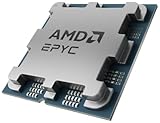
- The processor features Socket AM5 socket for installation on the PCB
- EPYC product line processor for better usability and increased efficiency
- Dodeca-core (12 Core) processor core allows multitasking with great reliability and fast processing speed
- 64 MB of L3 cache memory provides excellent hit rate in short access time enabling improved system performance
- Processor with 3.40 GHz clock speed for reliable and fast execution of instructions to ensure maximum convenience and feasibility
How should reinforcement learning and accelerator-hosting workloads affect the choice?
For reinforcement learning, separate the CPU work from the accelerator work: identify how much time goes to environment simulation, orchestration, data preparation, and accelerator execution. If the CPU mainly hosts and feeds accelerators, a CPU-only throughput comparison may not predict end-to-end training or inference performance.
NVIDIA describes Vera as a host CPU for accelerated systems and describes NVLink-C2C. AMD’s EPYC 9965 specifications list PCIe 5.0. For either platform, verify the actual server’s accelerator interconnect, PCIe lane layout, NICs, CXL requirements, and supported accelerator configuration with the system vendor. The CPU specification alone does not establish the board-level implementation or application compatibility.
Rank #3
How do Vera and EPYC 9965 memory differ?
Vera’s published design uses LPDDR5X, with NVIDIA’s rack specifications listing SOCAMM memory, up to 1.5 TB capacity, and up to 1.2 TB/s peak bandwidth. EPYC 9965 uses DDR5 across 12 memory channels; AMD lists up to 6400 MT/s and 614 GB/s per socket. These are different memory systems, so peak bandwidth numbers do not by themselves show which system is faster for a buyer’s application.
Check the workload’s working-set size and access pattern, then compare capacity, sustained bandwidth on the target system, power, and serviceability. Confirm whether the required capacity is supported in the exact server configuration rather than assuming that a processor-level “up to” figure will be available in every build.
Rank #4

- Media streaming
- Medium capacity data managementSpecifications
- No of CPU Cores: 32
- Base Clock: 2.4GHz
- Max Boost Clock: Up to 3.3GHz
What do core count and benchmarks actually tell you?
EPYC 9965 has more listed cores than Vera, but core count is not a universal measure of application performance. Results depend on the application, its parallelism, memory behavior, system configuration, software stack, and performance target. A high-core-count CPU can be a useful candidate for broad CPU throughput, but it is not automatically the better host for every accelerated or AI workload.
AMD publishes a comparison methodology covering NVIDIA Vera (88 cores) and EPYC 9965 (192 cores) across named server workloads, including Java, NGINX, Redis, Memcached, and TPC-C. Treat any results from that material as AMD-reported and specific to the stated workload and test conditions. Those workloads do not establish a general winner for agentic AI, reinforcement learning, or every AI-server deployment.
Free tools Windows power users keep installed
One-click scans. No signup required.
Best Value
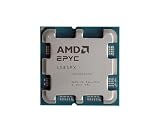
- The processor features Socket AM5 socket for installation on the PCB
- EPYC product line processor for your convenience and optimal usage
- Hexadeca-core (16 Core) processor core helps processor process data in a dependable and timely manner with maximum productivity
- 128 MB of L3 cache memory offers great system performance and avoids interruptions while executing complex and critical tasks
- Processor with 4.30 GHz clock speed for quick and dependable processing of data to ensure maximum productivity
For a decision you can rely on, benchmark the software you will run on matched, fully specified systems. Record the CPU and memory configuration, accelerators, software versions, workload settings, throughput or latency target, and wall power. Vendor results are useful context when their conditions match your use case; they are not substitutes for that comparison.
Independent reader supportYour contribution helps us test, update, and keep practical guides available for everyone.How should power, cooling, and rack density enter the decision?
EPYC 9965 has a 500 W default TDP. NVIDIA lists Vera at 250–450 W configurable TDP in preliminary rack specifications, and describes liquid-cooled rack-scale systems; individual Vera CPUs may be air- or liquid-cooled. These CPU power figures do not equal complete-server or rack power.
Compare the configured socket power alongside measured system power under your workload, cooling requirements, and the number of systems your facility can support. For rack-scale Vera configurations, do not compare aggregate rack specifications directly with one EPYC processor; first put both options at the same scale and include the server design.
What should you check before choosing a platform?
- Workload: Distinguish CPU-side agent and tool execution, reinforcement-learning simulation, analytics, web serving, virtualization, and accelerator execution. Select benchmarks that represent the work you actually need to complete.
- System configuration: Verify the exact CPU SKU, socket count, memory population, accelerator support, PCIe layout, interconnects, and NICs with the OEM.
- Software readiness: Confirm architecture support, operating-system images, compiler and runtime readiness, observability, security requirements, and your team’s operational familiarity. Vendor product specifications do not prove compatibility with a particular buyer’s application.
- Facility constraints: Check configured CPU power, total system power, cooling method, rack density, and deployment scale rather than relying on TDP alone.
- Economics: Compare validated system quotes and the cost of meeting the same throughput or latency target. AMD’s listed 1kU price is not a live server quote and is not a comparable purchase price for a Vera system.
What is the practical decision?
Shortlist Vera if its agentic-AI and reinforcement-learning positioning, LPDDR5X memory design, and NVIDIA system integration fit your workload and system requirements. Shortlist EPYC 9965 if its SP5 platform, DDR5 memory, PCIe 5.0, and 192-core configuration fit the software and server you plan to deploy. Make the final choice with a matched workload test, verified OEM configuration, and complete-system power and cost—not a core-count comparison or an isolated vendor benchmark.
Quick wins for a faster PC:
Repair Windows errors before they cause bigger problemsFix Now →Scan for outdated or missing drivers - takes under a minuteDriver Scan →Quick Recap
Product prices and availability are accurate as of the date/time indicated and are subject to change. Any price and availability information displayed on Amazon at the time of purchase will apply.

