
Start by checking what the student’s school requires: operating-system support, apps, browser tools, exam platforms, and BYOD rules. Then match the tablet to the student’s work and budget for any keyboard, stylus, and protective gear needed. A tablet can suit reading, research, note-taking, video calls, and light writing; long essays, coding, specialist desktop software, or demanding multitasking may call for a laptop or Windows 2-in-1 instead.
Check school compatibility before comparing tablets
A tablet is only useful for school if it can run the software and services the school expects. Ask the school which operating systems, apps, browsers or browser extensions, testing platforms, and device configurations it supports. Check any bring-your-own-device (BYOD) rules before buying: a device that looks capable on paper may still fail a required class or exam workflow.
The New Zealand Ministry of Education says its device recommendations reflect cost, durability, and compatibility with school systems. Its guidance is useful as a checklist, but its requirements are not universal; outside New Zealand, follow the student’s own school or education authority. See the Ministry’s device guidance.
Match the device to the student’s actual workload
When a tablet is a good fit
Tablets can work well for reading digital textbooks, web research, annotating PDFs, taking handwritten notes, joining video calls, and writing shorter assignments. They are also convenient when a student mainly needs a portable screen and can do most work in school-approved apps or a browser.
#1 Best Overall
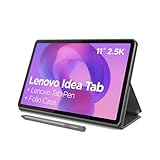
- POWER YOUR STUDY, FUEL YOUR PLAY – Discover smarter learning with the Lenovo Idea Tab. Stay campus-ready with all-day battery life, AI-powered apps to enhance your work, and sharp graphics for tv marathons with friends.
- SMOOTH, POWERFUL, IMMERSIVE – The MediaTek Dimensity 6300 processor is more powerful than ever, with the AI-enhanced multitasking you need to stay ahead.
- CIRCLE IT, SEARCH IT – Use your Lenovo Tab Pen or fingertip to circle items for instant search results or to translate other languages without switching apps. Circle to Search with Google ensures answers are only a circle away.
- SHARP VIEW, CLEAR SOUND – Experience sharp visuals and immersive sound for study sessions and streaming breaks. With 72% NTSC and quad Dolby Atmos-tuned speakers you can enjoy your study breaks with vivid videos and crystal-clear sound.
- LEVEL UP YOUR STUDY – Write, organize, sketch, and calculate with four learning apps built to match your flow. Lenovo AI Note, Squid, Nebo, and MyScript Calculator help you stay clear, focused, and ready for every study session.
When to consider a laptop or 2-in-1
Long-form typing, coding, specialist desktop applications, complex file handling, or frequent switching among demanding apps can be less comfortable or practical on a tablet. Before committing, try the student’s real workflow on the device—especially if it involves long papers, coding tools, or managing many files and windows. If required software is unavailable or the work feels cramped, compare a laptop or Windows 2-in-1 rather than assuming a tablet will replace one.
Oide Technology in Education’s August 2025 guidance does not generally recommend Android tablets in its own school context, describing Google education support there as Chromebook-focused. That is specific to the context of its guide, not a rule for every school or country. Read Oide Technology in Education’s guidance.
Rank #2

- LEVEL UP – Synergize your work and play with the Lenovo Idea Tab Pro. It’s lightweight, jam-packed with battery life, and has the AI-enhanced smarts to make studying a breeze. “Google and Gemini are trademarks Google LLC. Check responses. Compatibility and availability varies.
- NEXT-GEN PERFORMANCE – Perform at your best with the super-efficient MediaTek Dimensity 8300 processor. Supported by Wi-Fi-6E, get ready for smooth multitasking and lightning-quick downloads.
- IMMERSIVE VISUALS AND RICH SOUND – Whether you’re streaming lectures or decompressing after class, the glittering 12.7” 3K LCD display supported by quad JBL Dolby Atmos speakers makes your media crystal clear.
- GAME LIKE A PRO – Get ready to up your game; the Lenovo Idea Tab Pro is PUBG certified for FPS excellence. It’s kitted out with a super-responsive 360Hz touch sampling rate and lightning-fast 90fps so you’re always a step ahead of the action.
- CHARGE LESS TO EXPERIENCE MORE – Leave battery-anxiety back at the dorm with 11 hours of unplugged video streaming. For long days out, the 45W quick charge gets you back in the action fast.
Balance screen space with portability
A larger display can make reading, annotation, and working with documents easier, but the tablet also becomes larger and heavier to carry. Compare the actual screen and device weight together, and consider the student’s backpack and daily travel rather than choosing by screen size alone.
The New Zealand Ministry of Education recommends a screen of 10 inches or larger for a child’s school device and notes that older students may need a larger screen. Treat that as New Zealand guidance, not a universal minimum. Intel likewise notes the trade-off: larger screens improve visibility and interaction while adding size and weight. Intel’s guide to choosing a college laptop discusses screen-size trade-offs.
Crashes, No Sound, or Screen Glitches?
Random freezes, missing sound and display glitches usually trace back to one bad driver. Find and replace yours safely.Free scan · under a minutePC Slower Than It Used to Be?
A free scan shows the junk files, broken settings and background clutter dragging Windows down - then fixes them in one click.Free scan · Windows 10 & 11Rank #3

- DIVE INTO THIS DISPLAY: All of your fun content pops on the 10.9" screen. Catch up on plans for the day while you cook breakfast, scroll your social feed in the evening or read an article in bed. Vision Booster adjusts the brightness to your environment
- BATTERY FOR LONG-LASTING ENTERTAINMENT: Enjoy long-lasting fun. Finish your favorite series or book with a battery that can last up to 16 hours.¹ Need energy quick? Get a full charge in about two hours with Super Fast Charging.²
- WRITE, DRAW, DO IT ALL: S Pen is mightier than your average writing tool. The responsive design and intuitive integration with intelligent features make drawing, jotting down notes and even doing math easier than ever
- SPACE TO KEEP WHAT MATTERS MOST: More storage means deleting less apps, photos, videos and files. Galaxy Tab S10 Lite comes with up to 256GB³ of storage. And if you need even more, you can add up to 2TB with a microSD card.⁹
- THE POWER OF ENHANCED PERFORMANCE: Galaxy Tab S10 Lite boasts an Exynos 1380 processor that lets you stream, scroll, note, search and even multitask with ease
Choose battery, memory, and storage for the school day
Battery life
Estimate how long the student needs to work between charges, including lessons, commuting, and after-school use. Brightness, video calls, wireless activity, apps, and device configuration all affect runtime, so a stated battery figure is not a promise of a full school day in every situation. The New Zealand Ministry’s checklist recommends at least six hours of battery life; use that as local guidance and check performance against the student’s routine.
For context, Tom’s Guide lists battery results from its own tests in its 2026 student-tablet guide: Apple iPad 11, 11:25; Motorola MotoPad, 10:31; Microsoft Surface Pro 11, 12:10; and Apple iPad Air M4 11-inch, 9:44. These are publication test results, not guaranteed real-world runtimes. Review the guide’s test conditions before using the figures to compare devices. Tom’s Guide’s student-tablet guide.
Rank #4

- WHY IPAD — The 11-inch iPad is now more capable than ever with the superfast A16 chip, a stunning Liquid Retina display, advanced cameras, fast Wi-Fi, USB-C connector, and four gorgeous colors.* iPad delivers a powerful way to create, stay connected, and get things done.
- PERFORMANCE AND STORAGE — The superfast A16 chip delivers a boost in performance for your favorite activities. And with all-day battery life, iPad is perfect for playing immersive games and editing photos and videos.* Storage starts at 128GB and goes up to 512GB.*
- 11-INCH LIQUID RETINA DISPLAY — The gorgeous Liquid Retina display is an amazing way to watch movies or draw your next masterpiece.* True Tone adjusts the display to the color temperature of the room to make viewing comfortable in any light.
- IPADOS + APPS — iPadOS makes iPad more productive, intuitive, and versatile. With iPadOS, run multiple apps at once, use Apple Pencil to write in any text field with Scribble, and edit and share photos.* iPad comes with essential apps like Safari, Messages, and Keynote, with over a million more apps designed specifically for iPad available on the App Store.
- FAST WI-FI CONNECTIVITY — Wi-Fi 6 gives you fast access to your files, uploads, and downloads, and lets you seamlessly stream your favorite shows.
RAM and storage
RAM affects how comfortably a device handles apps and multitasking; storage holds apps and files, including material kept offline. The New Zealand Ministry recommends at least 4GB RAM and 64GB storage in its parent and caregiver guidance. Those recommendations are specific to that guidance, not universal technical standards.
For storage, Tom’s Guide’s 2026 editorial guidance says 64GB or 128GB may be adequate for basic note-taking, web work, and streaming. Students who keep many downloaded lectures and textbooks, creative projects, games, or videos locally may want 256GB or more. Make the choice based on the files the student will actually store offline, not just the number of installed apps.
Best Value
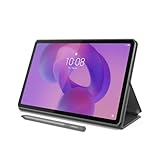
- POWER YOUR STUDY, FUEL YOUR PLAY – Discover smarter learning with the Lenovo Idea Tab. Stay campus-ready with all-day battery life, AI-powered apps to enhance your work, and sharp graphics for tv marathons with friends.
- SMOOTH, POWERFUL, IMMERSIVE – The MediaTek Dimensity 6300 processor is more powerful than ever, with the AI-enhanced multitasking you need to stay ahead.
- CIRCLE IT, SEARCH IT – Use your Lenovo Tab Pen or fingertip to circle items for instant search results or to translate other languages without switching apps. Circle to Search with Google ensures answers are only a circle away.
- SHARP VIEW, CLEAR SOUND – Experience sharp visuals and immersive sound for study sessions and streaming breaks. With 72% NTSC and quad Dolby Atmos-tuned speakers you can enjoy your study breaks with vivid videos and crystal-clear sound.
- LEVEL UP YOUR STUDY – Write, organize, sketch, and calculate with four learning apps built to match your flow. Lenovo AI Note, Squid, Nebo, and MyScript Calculator help you stay clear, focused, and ready for every study session.
Count the keyboard and stylus in the total cost
Accessories can change both the price and usefulness of a tablet setup. A compatible keyboard is valuable for sustained typing and document creation; a stylus is useful for handwriting, PDF annotation, diagrams, and sketching. Neither is essential for every student, so base the choice on the work they do.
- Check that the keyboard or stylus supports the exact tablet model and generation.
- Confirm whether it is included or sold separately.
- Try the keyboard layout and typing feel if the student will write frequently.
- Include a case and, if useful, a screen protector in the setup budget.
Tom’s Guide’s buying guidance also highlights accessories as part of a student setup. See its student-tablet guide.
Consider durability, repair, and software support
A school device is carried and used often, so consider what happens if it is damaged and how long it will remain supported. The New Zealand Ministry of Education advises checking whether repairs are practical and whether the operating system will receive updates for several years. Its guidance also suggests a screen protector and a case or bag that absorbs shock. Verify repair options and update commitments for the particular model before buying.
Quick Recap
A practical student-tablet buying checklist
- Ask the school: Confirm supported operating systems, required apps, browser extensions, testing tools, and BYOD configurations.
- List the student’s work: Separate reading, notes, calls, and light writing from long essays, coding, specialist software, or complex multitasking.
- Test the hard tasks: If the work involves lengthy papers, coding, complex file handling, or switching between apps, try it on the tablet before committing.
- Compare screen and carry weight: Consider readability, working space, device weight, and the student’s daily bag together.
- Check endurance and capacity: Assess battery needs for the actual school day, and size storage for offline books, lectures, projects, and apps.
- Verify lifespan and protection: Check update support and repair options; decide whether a protective case, bag, or screen protector is appropriate.
- Price the complete setup: Add the tablet, any compatible keyboard or stylus, and protection accessories the student will actually use.
Product prices and availability are accurate as of the date/time indicated and are subject to change. Any price and availability information displayed on Amazon at the time of purchase will apply.
Recommended Free Tools

