
Yes—official state school report cards are a strong starting point for comparing public schools, but they are not a universal ranking. Compare schools using the same years, grade spans, subjects, and student groups; read outcomes alongside participation and progress; and use class-size and support information to guide questions for each school.
Start with official report cards
Find each school’s report card through the U.S. Department of Education’s state report card locator or the relevant state education agency. These cards bring together public information about academic results and other school conditions. Depending on the state, they may cover graduation, attendance, suspensions, educator qualifications, school quality or student success, safety, and per-pupil spending.

Federal requirements establish a baseline, but states publish the cards and define many accountability details. The U.S. Department of Education’s report card checklist describes required categories and disaggregation expectations. Its checklist page was updated December 22, 2022, to align with ESEA and 2019 guidance, and was last reviewed January 14, 2025. Check the current reporting year and the state’s definitions on the card itself.
Make the comparison fair
Before weighing a number or rating, check what it actually describes. A comparison is more useful when schools serve similar grades and the figures refer to comparable years, subjects, and student groups.
Quick wins for a faster PC:
Repair Windows errors before they cause bigger problemsFix Now →Fix the driver behind crashes, sound loss and screen glitchesFind Drivers →Clear out junk files and repair common Windows errorsFree Scan →#1 Best Overall

- 2026 - 2027 Academic Planner: Come with 12 months (July 2026 - June 2027) of monthly and weekly pages, plus 3 additional monthly pages (Apr 2026 - Jun 2026), providing a fresh start for a school year! This agenda planner features a simplified layout for ease of use, offering spacious writing space to plan your schedule freely. The elegant design with attention-grabbing colors, adds a touch of sophistication to any setting!
- Upgraded Quality: Unlike other flimsy planners, our calendar planner features a sturdy hard cover with metal corner guards to prevent pages from creases or wrinkles. Monthly tabs for simplify navigation are laminated to resist tears. Thick, no-bleed paper for easy writing.
- Monthly Calendar & Weekly Planner: Each monthly spread with large date box helps you easily mark appointments, agenda, important dates, bills due, etc. Weekly two-page spreads provide generous lined writing space for more detailed planning, helping you keep track of top priorities and daily tasks.
- Additional Planner Features: This calendar planner starts with Yearly Goals page for goal setting. It also includes reference calendars, contact page, important dates page and holiday lists to keep on top of your special dates. Bonus extra notes pages to jot down your thoughts.
- Organize Your Day & Keep Focus: How tricky it can be when a thousand things buzzing around your head! This planner journal is definitely a life saver, helping you stay focused on your tasks throughout the week. Use this notebook to simplify your life and organize your day for maximum efficiency. Measuring 8.5" x 11", perfect size to fit in your tote or backpack and take anywhere!
- Record the data year and grade span. A school serving elementary grades is not directly comparable to a high school on every measure.
- Check assessment participation. Note how many students took the tests; achievement results without participation context can give an incomplete picture.
- Look at student groups. Review subgroup results where reported, and note which students each figure includes. Some groups or results may be suppressed or omitted under state reporting rules.
- Read progress as well as achievement. Where available, growth or progress measures can add context to proficiency levels.
- Understand the rating system. States choose their accountability indicators and how they are weighted. Read the state’s explanation of what the indicators measure instead of treating an overall label as self-explanatory.
For high schools, check graduation information and, where reported, postsecondary enrollment. Confirm the cohort or year and subgroup definitions before comparing rates.
Compare outcomes without reducing schools to one score
Review several relevant measures rather than choosing a school from a single test result or summary rating. Consider achievement by subject, participation, subgroup patterns, progress indicators, graduation information, and school-quality measures together. The right mix depends on the student and the grades each school serves.
Rank #2

- [STAY ORGANIZED ALL YEAR] July 2026 - June 2027 professional day planner with 12 months of monthly and weekly pages for easy academic planning and scheduling; 2 additional monthly pages (May 2026 - June 2026) are included
- [MONTHLY LAYOUTS] Monthly layouts contain previous and next month reference calendars for long-term planning, and a notes section for important projects; Major holidays listed, elapsed and remaining days noted
- [WEEKLY LAYOUTS] Weekly view pages offer ample lined writing space for more detailed planning, allowing you to keep track of your appointments, reminders, ideas and to-do lists every day of the week
- [YEARLY OVERVIEW] Yearly calendar planner includes a convenient list of holidays, reference calendars, contacts pages and extra notes pages to accommodate your scheduling needs
- [BUILT TO LAST] Designed with a flexible cover and premium pages that endure daily use while maintaining a sleek, professional look. Printed on quality FSC-certified paper with convenient laminated tabs that are durable enough to handle daily use throughout the school year
Small numerical differences do not by themselves establish that one school is better. School size, grade span, student population, and programs can all affect what a comparison means. North Carolina’s Department of Public Instruction makes this caution explicit for its own report cards: “Because schools can be structured quite differently from one another – in their sizes, the grades they teach, and the programs they offer – Report Cards are not a useful tool for ranking schools. It would be incorrect to determine that one school is better than another based on slight differences between data points.” This is North Carolina guidance, not a universal statement about every state’s report-card system.
Interpret class-size figures carefully
Some state report cards publish average class size, but the figure is useful only with its scope and definition. Check which grades or subjects it covers and whether the state describes how it calculates the average; no single nationwide class-size definition is established by the sources cited here.
Rank #3
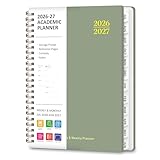
- STRATEGIC MONTHLY OVERVIEW: Gain a bird's-eye view of your schedule with our monthly calendar planner spreads; Each month features spacious ruled daily blocks, Julian dates, and highlighted holidays to ensure no deadline ever sneaks up on you; The reinforced, laminated monthly tabs are built to withstand daily wear and tear, letting you flip to your current projects in a heartbeat
- MAXIMIZE WEEKLY PRODUCTIVITY: Transform your chaotic to-do list into a structured agenda; The weekly view offers ample writing space for detailed daily planning, from class assignments to professional meetings; By breaking down your week into manageable sections, this calendar planner helps you maintain focus and achieve a perfect work-life balance without feeling overwhelmed
- PREMIUM NO-BLEED PAPER: Enjoy the tactile pleasure of writing on high-quality, 100gsm FSC-certified paper; This no-bleed paper is specially treated to resist ink ghosting and feathering, making it compatible with most gel pens and highlighters; Housed in a durable, sleek professional hard cover, your notes remain protected and pristine from the first page to the last
- PORTABLE & VERSATILITY: Perfectly sized at 6.3" x 8.3" (A5), this planner is a true life saver for those on the move, fitting effortlessly into any tote or backpack; It comes fully loaded with thoughtful extras: an elastic closure band for security, a convenient inner storage pocket, and dedicated pages for contacts and goals to keep your entire life organized in one stylish package
An average cannot tell you the likely experience in a particular classroom or program. Ask each school how classes are organized in the grade, subject, or program relevant to the student. North Carolina’s report-card FAQ confirms that its cards include average class size, but reporting details in that FAQ apply to North Carolina.
Independent reader supportYour contribution helps us test, update, and keep practical guides available for everyone.Use support and climate data as prompts for follow-up
Report cards may include indicators such as attendance, discipline, safety, educator qualifications, and broader school-quality or student-success measures. These can help identify topics to ask about, but a broad indicator or staffing count does not confirm that a particular service is available to a particular student or explain how it works day to day.
North Carolina’s FAQ says its report cards do not provide information about special programs or initiatives at a school or the unique qualifications of its staff. Other states’ report cards may present different details, so inspect the state’s own definitions and contact the school when a service detail is missing.
Make a short list of supports that matter to the student, then ask each school whether they are available, who is eligible, and how students access them. Focus on the actual service and delivery rather than inferring availability from a general school rating.
A practical comparison workflow
- Locate each official card. Use the Department of Education’s locator or the state education agency’s site.
- Make a like-for-like record. For every figure, note the year, grade span, subject, participation, student-group scope, and state definition.
- Review a set of indicators. Consider outcomes and progress alongside relevant attendance, safety, school-quality, and educator information.
- Check class-size scope. Compare averages only if the state defines them comparably, then ask about the student’s likely classroom or program.
- Confirm important supports directly. Ask about availability, eligibility, and how services work when the report card does not give those specifics.
- Make a student-centered judgment. Identify what is comparable, what is not, and which unanswered questions matter to the student rather than producing a universal ranking.
Use national data for context, not as a substitute
The National Center for Education Statistics’ Elementary and Secondary Information System (ELSI) draws on the Common Core of Data, an annual national database about public schools, districts, and state education agencies. Its tools can help check descriptive context such as school size, enrollment, and teachers. Use state report cards for the state-specific outcome and support measures, and verify that any national-data comparison describes the same schools and years.
The Department of Education also maintains a State and Local Report Card Resource Library with report-card resources.
Quick Recap
Product prices and availability are accurate as of the date/time indicated and are subject to change. Any price and availability information displayed on Amazon at the time of purchase will apply.

