
The Tool Desk
Outbyte Driver Updater FREEFix the driver behind crashes, sound loss and screen glitchesFind Drivers →Outbyte PC Repair FREEClear out junk files and repair common Windows errorsFree Scan →Not reliably in every case—and wording alone is not a dependable way to tell. AI-writing detectors estimate whether text looks machine-generated; phishing defenses look for signs of malicious intent, such as sender impersonation, suspicious links, attachments, and unusual requests. Those are different questions. Treat a polished message as potentially dangerous when its context warrants caution, and verify consequential requests through a separate trusted channel.
Why AI authorship is not a phishing verdict
A message can be AI-written and legitimate, or written by a person and malicious. AI authorship describes how text may have been produced; phishing describes an attempt to deceive someone into revealing information, sending money, or taking another harmful action. A detector that estimates authorship does not establish intent, and a phishing filter does not need to determine whether AI wrote the message.
Polished grammar is not evidence that an email is safe, and awkward wording is not proof that it is malicious. Generative tools can produce fluent text, while legitimate messages can be terse or error-prone. A tone-based judgment is therefore a weak substitute for checking the sender, request, and technical signals.
What the available evidence does—and does not—show
There is no directly applicable, validated statistic here for how reliably detectors identify AI-generated phishing in real-world inboxes. NIST’s 2025 report on its text-to-text pilot found substantial variation among systems evaluating AI-generated and human-written summaries: some generators deceived most discriminators, while some discriminators detected almost all generators. Those results warn against assuming detectors generalize, but the task was summary detection, not phishing-email detection. NIST’s report should not be read as a phishing accuracy benchmark.
Quick wins for a faster PC:
Scan for outdated or missing drivers - takes under a minuteDriver Scan →Clear out junk files and repair common Windows errorsFree Scan →#1 Best Overall
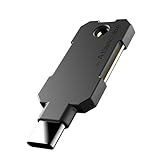
- PHISHING-RESISTANT 2FA: Cryptographically binds to real domains, making phishing attacks impossible unlike SMS codes or authenticator apps.
- 3-SIDE CAPACITIVE TOUCH: Tap the end, left, or right side to authenticate, so it works in any orientation or crowded USB port.
- MULTI-COLOR LED INDICATOR: Blue means ready, blinking blue means tap now, green means success, and red means error for instant status feedback.
- IP68 WATERPROOF & BATTERY-FREE: Crush-resistant one-piece construction survives daily carry on a keychain or in a bag for years without any batteries.
- UNIVERSAL COMPATIBILITY: Works with Google, Microsoft, Apple, GitHub, AWS, and any FIDO2 / U2F / WebAuthn service, storing up to 100 passkeys.
A 2024 arXiv preprint, Analysis and prevention of AI-based phishing email attacks, reports encouraging machine-learning results in its experiments and argues for including AI-generated examples in training. It is early research, not a validated field-wide detection rate or guarantee. Read the preprint.
CISA guidance addresses the risk of AI-enabled phishing and social engineering by recommending layered protections. It does not claim that those protections identify AI authorship. Its recommendations are about reducing the chance that an attack succeeds, whether or not a person or AI composed the message. CISA’s guidance is dated “As of January 18, 2024.”
Rank #2

- SECURITY KEY FOR ENTERPRISE ACCESS: Supports FIDO2 passkeys and U2F for secure authentication across enterprise IT systems.
- PHISHING-RESISTANT AUTHENTICATION: Enables passwordless login with secure on-device credential storage and PIN-based user verification.
- COMPATIBLE WITH ENTERPRISE SYSTEMS: Works with FIDO2, WebAuthn, and U2F across enterprise, cloud, and modern IT environments.
- DRIVERLESS FIDO2 AUTHENTICATION: FIDO2 works natively with modern browsers and platforms. No drivers required.
- USB AND NFC CONNECTIVITY: Supports authentication via USB-C and NFC. No batteries required.
How to assess a suspicious message
For an individual recipient, assess the message and its context rather than trying to guess its author. Take particular care if it asks for credentials, money, confidential information, or urgent action.
- Check the sender identity. Read the full email address and compare its domain with the organization’s known domain. A familiar display name alone does not establish who sent the message.
- Inspect the destination before following a link. Check the actual domain the link leads to, not just the visible link text. If the message asks you to sign in, go to the service using a bookmark or a known address instead.
- Be cautious with unexpected attachments. Do not open an attachment simply because the message is fluent, personalized, or appears to come from someone familiar.
- Confirm high-impact requests independently. Use a phone number or contact method you already trust—not contact details supplied in the message—to verify a payment, credential, or sensitive-data request.
- Report or flag suspicious mail. Use your organization’s reporting process or your email provider’s phishing-reporting feature so it can be reviewed.
NIST’s Phish Scale concerns how difficult simulated phishing messages may be for people to detect, taking message features and recipient context into account. It is not an AI-authorship detector.
Rank #3
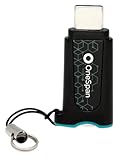
- Phishing-Resistant Security: Guard against cyber threats like phishing and credential theft with bank-grade security from OneSpan, trusted by over 60% of the world’s largest financial institutions.
- Effortless, Password-Free Authentication: Experience easy, one-touch security with this FIDO2-certified device. Say goodbye to passwords and hello to secure, passwordless access in seconds.
- Portable and User-Friendly: Compact and easy to use, DIGIPASS FX7 ensures secure access anytime. Simply plug into a USB-C port on a laptop, desktop, tablet, or phone, and tap to authenticate. For added security, a PIN entry option is also available.
- Broad Compatibility: This single security key grants access to over 1,000 FIDO2-enabled services, compatible with Microsoft 365, Google Workspace, AWS, Salesforce, Okta, OneLogin, Ping Identity, and more.
- Plug-and-Play Activation: With a zero-footprint design, DIGIPASS FX7 requires no software installation or complex configuration. Just plug it in, and it’s ready to go.
What organizations should look for in email defenses
Practical phishing protection evaluates more than the prose. CISA’s counter-phishing guidance describes secure email gateway capabilities that can screen headers and malicious content, check URLs against reputation feeds, and apply configurable rules. See CISA’s counter-phishing guidance.
A useful defense combines controls that cover different failure modes:
Rank #4

- HARDWARE 2FA AND MFA: FIDO Alliance Certified FIDO2 v2.1 with CTAP2 plus legacy U2F and CTAP1 for strong two-factor login and passwordless sign-in on services that support security keys
- BUILDING ACCESS ON ONE CARD: MIFARE DESFire EV2 4K applet with AES encryption adds office door and physical access control alongside digital authentication
- CERTIFIED SECURE ELEMENT: An NXP Common Criteria EAL6+ certified secure controller and Java Card platform protects your keys on a tamper-resistant chip
- DUAL INTERFACE SMART CARD: Contactless NFC ISO 14443 plus ISO 7816 contact reader support in an ISO 7810 ID-1 format that is passive and needs no battery
- SWISS ENGINEERED DESIGN: Built by Cryptnox as a single card for authentication and access control and backed by a 2 year warranty
- Message filtering and investigation: screen headers, content, links, and attachments; support user reporting and follow-up investigation.
- Impersonation and spoofing protections: check for lookalike senders and domains, use first-time-sender warnings where available, and configure SPF, DKIM, and DMARC as appropriate for the organization’s mail environment.
- Account protection: use phishing-resistant multifactor authentication. A FIDO-compatible security key is one possible implementation; it can help protect account access if credentials are stolen, but it does not detect AI-written messages.
- People and response processes: make it straightforward to report suspicious mail and verify unusual payment or information requests through established channels.
CISA’s AI-related guidance also recommends strong cybersecurity protocols, phishing-resistant MFA such as FIDO authentication, endpoint detection and response, and email authentication. A separate CISA Microsoft 365 configuration document lists impersonation protection, first-time-sender warnings, and AI-based phishing detection, but it is explicitly a draft baseline for Microsoft Exchange Online and should not be treated as universal configuration guidance. View the draft baseline.
Independent reader supportYour contribution helps us test, update, and keep practical guides available for everyone.How to evaluate a detection tool
Do not judge a product by whether it labels a message “AI-written.” Ask whether it detects the threats that matter to your organization and how its errors affect users and security teams.
Outdated Drivers Are Slowing You Down
One free scan finds every outdated or missing driver and matches the right update for your exact hardware.Free scan · exact hardware matchWindows Errors? Fix Them Before They Spread
Repair common Windows errors and clear accumulated junk for a smoother, more stable PC - no reinstall needed.Free scan · no reinstallBest Value

- ENTERPRISE ROLLOUT: 25 White PVC cards in one SKU sized for bulk procurement, one card per employee for both web authentication and building access
- HARDWARE 2FA AND MFA: FIDO Alliance Certified FIDO2 v2.1 with CTAP Level 1 for phishing-resistant login and passwordless sign-in where the service supports it
- BUILDING ACCESS: MIFARE DESFire EV2 applet with 4K AES storage adds door and facility access to the same card employees use for account security
- CERTIFIED SECURE ELEMENT: NXP JCOP 4 chip rated Common Criteria EAL 6+ augmented
- DUAL INTERFACE: Tap over NFC (ISO 14443) or use a contact reader (ISO 7816), backed by a 2-year warranty from Swiss company Cryptnox
- What does it detect? Distinguish malicious links and attachments, sender impersonation, spoofing, suspicious patterns, and likely AI authorship. These capabilities are not interchangeable.
- What evidence does it use? A text-only classifier has a narrower view than a system that also evaluates headers, sender and domain reputation, URLs, attachments, and message or account context.
- How are errors measured? Ask how testing accounts for missed malicious messages and false positives that disrupt legitimate mail. Require results on representative, current messages—not just a general AI-text benchmark.
- What happens after detection? Check whether the system supports your mail platform and your needs for quarantine, post-delivery review, user reporting, and investigation.
NIST’s text-to-text evaluation task describes measures such as AUC, equal error rate, true-positive rate at a specified false-positive rate, and Bayes risk. These measures only help when the test data and task are relevant: performance on summaries is not evidence of performance on phishing emails. NIST’s evaluation task provides details about the text-to-text evaluation.
Quick Recap
Product prices and availability are accurate as of the date/time indicated and are subject to change. Any price and availability information displayed on Amazon at the time of purchase will apply.

