
What’s actually slowing this PC down?
Pick the symptom - the matching free tool is one click away.
Evaluate legal document management software by testing whether your firm’s real confidentiality and matter-access policies work across the application, its cloud configuration, and every route users can take to documents. Ask vendors to demonstrate both allowed and denied access, show the evidence administrators can inspect, and provide current assurance material scoped to the service you would actually use. A security feature list alone does not establish that matter-specific controls work in practice.
Start with the firm’s access policies, not the vendor’s feature list
Before a demonstration, identify the people, matters, documents, and actions that need different treatment. Include ordinary users and privileged administrators. Record what each person should be able to view, edit, share, export, or administer—and what should be blocked.


Cloud access controls span both the service and the application, and the components managed by the customer and provider vary by service model. NIST Special Publication 800-210 addresses access control in cloud systems, including SaaS. Evaluate the product in the configuration your firm would deploy; general assurances do not show that its specific matter policies behave as intended.
Turn the policy into observable test cases. For each one, agree in advance on the expected allow or deny result and ask the vendor to demonstrate the result and the administrative evidence behind it.
| Scenario to test | What to verify | Evidence to request |
|---|---|---|
| A new team member joins a matter | Whether access is limited to the intended matter and permitted actions | The resulting access assignment and an allowed or denied attempt |
| A lawyer changes practice groups | Whether old access is reviewed and changed where necessary | The process for updating access and the resulting permissions |
| A contractor leaves | How access is revoked and what happens to active identities or sessions | The revocation workflow and records of the change |
| Co-counsel is invited | Whether external access is limited to the intended material and duration under firm policy | The invitation settings, resulting access, and available review or revocation controls |
| An administrator supports the service | What that administrator can access or change, and whether the action is recorded | The relevant privilege model and an administrative audit record |
| A user seeks a restricted document through search, a shared link, an API, or a mobile client | Whether the same policy is enforced across each available route | A demonstration of the allow or deny result for each applicable route |
These are practical evaluation scenarios derived from general access-control principles, not claims that any particular product supports a specific control. Adapt them to the firm’s actual workflows and the features in scope.
How does the system decide who can do what?
Ask how permissions are represented, inherited, and overridden. Determine whether restrictions can be set at matter, folder, document, and operation levels, and how exceptions are approved, reviewed, and removed. Establish whether a rule affects only viewing or also actions such as editing, sharing, or exporting.
Find out whether authorization uses roles or groups alone, or can also evaluate attributes and relationships. NIST Special Publication 800-205 describes attribute-based access control as evaluating attributes associated with the subject (the user or process), object (the document or other resource), requested operation, and sometimes the environment against policies or rules. That model can express context-sensitive decisions, but the important test is whether the product can represent the firm’s actual policies and apply them consistently.
- Ask the vendor to explain default permissions and inheritance, including what happens when a document is moved or shared.
- Test an exception to a normal rule and verify who can grant it, how it is recorded, and how it is withdrawn.
- Check that restrictions apply to every relevant access path, not only the primary document view.
Can the firm grant and remove only the access people need?
Least privilege means giving users and processes only the access needed for assigned tasks, reviewing that access, and changing or removing it when it is no longer needed. NIST Special Publication 800-171 Revision 3 includes requirements addressing necessary access and review of privileges.
Rank #2
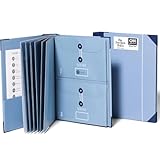
- Keep important documents safe: A document organizer designed to protect papers from getting lost. Store birth certificates, social security cards, wills, tax forms, insurance policies, titles & more in one secure place.
- Easy to organize and find: Folders with pockets and a table of contents help track where documents live, while 33 hand-illustrated labels show what to save. Acid-free materials protect your papers for years to come.
- Fits documents of various sizes: This document binder includes 3 vertical and 3 horizontal envelopes for 8.5 x 11 inch papers, plus 4 half-size envelopes for smaller keepsakes and important details.
- Practical and easy to use: An important document folder organizer with a front pouch that provides a quick landing space for papers before filing, making it easy to stay organized as documents come in.
- Premium quality, timeless style: Made with custom-dyed cloth, reinforced edges, and acid-free paper for long-term durability. An elegant file organizer designed to beautifully complement your office or living room décor.
Ask for the default role and privilege model, then identify who can create, modify, delegate, approve, and revoke access. Demonstrate onboarding, a transfer between teams, temporary access, emergency access, and termination. Confirm how the firm can identify stale or excessive access and how changes are applied.
Do not stop at whether an administrator can remove a permission. Check how quickly the change takes effect across the application’s relevant access paths, and what evidence is available to confirm it. The appropriate review cadence and retention of resulting records depend on the firm’s obligations and operating procedures; the cited guidance does not prescribe one universal schedule for legal document management.
Are powerful administrative duties separated and reviewable?
Map who administers identities, access policies, security settings, and audit information. Ask whether sensitive changes can require approval or independent review, and whether the people managing access can also alter or delete the records used to review that access.
NIST SP 800-171 Revision 3 discusses separation of duties and notes the value of keeping access-control administration separate from audit administration. Use that as an evaluation prompt: ask the vendor to show which duties can be separated and what controls or records remain if the service does not support the exact division the firm wants.
Rank #3
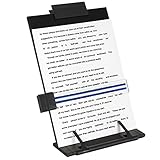
- Great for Body Health: The document holder is adjustable with 7 position at the backstand to adjust height and angle to make you easily reading without straining your back, shoulders or neck, then you can enjoy reading books while promoting a proper posture and even improve the spinal health.
- HIGH PRACTICAL: Design with Highlighting Line Guide makes you're easier to see where you left off and keep your track while typing, reading or transcribing. Comes with page holder clip to ensure documents do not slide. Help you work more efficiently.
- Really Sturdy & Stable: The bottom is designed with a page support clip to keep the book open on the page you need to read. The metal backplate, easily supports your documents. Very sturdy and can withstand multiple sizes of papers, recipes, books, magazines, textbooks and catalogs.
- Premium Material: The Book Stand is made of high-quality metal and ABS, with a polished and baked-on finish, it's durable, smooth, not easily broken, easy to clean and looks stylish, and has rounded corners to protect hands from injury or scratches.
- Foldable & Compact: 13.9" x 8.3" (35.5cm x 21cm). Fold quickly and store easily. Portable and lightweight, easy to carry to library, home, office and outdoor. Great gift for colleague, children, friend and family.
How are identities, SSO, and federation protected?
Ask which authentication and federation patterns the service supports, how it integrates with the firm’s identity provider, and how accounts and sessions are managed. Test what happens when a person’s identity or credentials are revoked, including any relevant active sessions or connected access routes.
Request current documentation on token and assertion protection, key management, verification, lifecycle controls, and monitoring. A NIST report published September 15, 2026 discusses protecting tokens and assertions in SSO, federation, and API access. Use it to frame questions about the service’s implementation; the right assurance level depends on the firm’s risk and obligations, and this guidance does not establish one level for every firm.
NIST Special Publication 800-63-4 provides digital identity guidance. It is a reference for evaluating identity controls, not a substitute for determining the firm’s applicable requirements.
What should a useful audit trail show?
Ask the vendor to demonstrate a representative audit trail for user access and administrative changes. Assess whether authorized staff can search and export records, whether the records are protected from alteration or deletion, who may access them, and how events are monitored and investigated.
The Tool Desk
Outbyte PC Repair FREEClear out junk files and repair common Windows errorsFree Scan →Outbyte Driver Updater FREEScan for outdated or missing drivers - takes under a minuteDriver Scan →- Can reviewers identify the user or administrator and the relevant action?
- Can the firm find records for the matters, users, and changes it needs to investigate?
- Are audit records protected by controls distinct from the duties being audited?
- Can the firm export records for its own investigation or retention process?
Set event, alert, access, and retention requirements from the firm’s obligations and incident process. The cited guidance supports protecting security-relevant and audit information but does not establish a universal event list or retention duration for legal document management systems.
How does the service preserve document authenticity and integrity?
Ask how documents are handled during ingestion, modification, export, backup, and transfer. Request an explanation of the storage and work-process controls and evidence that applies to the deployed service. Consider how the firm can detect or investigate an unexpected change.
ISO 19475:2021, “Document management — Minimum requirements for the storage of documents,” is a document-storage standard. Its public listing describes controls for work processes intended to maintain the authenticity and integrity of received documents. The listing does not establish that a particular vendor or product conforms to the standard; request product- and service-scoped evidence rather than treating a standard’s existence as proof.
Independent reader supportYour contribution helps us test, update, and keep practical guides available for everyone.What assurance evidence should the vendor provide?
Request current independent reports and certificates relevant to the exact service, product scope, operating locations, and features under consideration. Review the date, exceptions, scope boundaries, and any complementary responsibilities assigned to the customer. Confirm that the evidence covers the service configuration and functions the firm plans to use.
Do these 3 things before closing this tab:
1Fix the driver behind crashes, sound loss and screen glitches2Repair Windows errors before they cause bigger problems3Scan for outdated or missing drivers - takes under a minuteBest Value

- Double Layers Protection: Our newly designed file folder uses different materials than other folder.Double Layered design, high quality Black Non-itchy Liquid Silicone Coated Fireproof Fiberglass which can withstand temperatures as high as 1832℉,this bag is FIRE and WATER RESISTANT.Fireproof file folders can fully protect your important documents, paper,birth certificate, passport.
- Size: 16" x 10.6" x 0.8"(Legal size) ,Weight:450g/15.9ounce,13 individual pockets. Fireproof file folder makes it suitable for daily filing and storing of documents(with Color Labels).
- Wide Range of Applications: Fireproof zipper added security and safe transport.It's very durable.Not only can you put your file folder at home, office, car,it's also a good decision to put it in the safe box. You can be 100% assured that your important information is in a safe place.
- Perfect Gift:Beautiful design and creative folders can also be used as anniversaries or personal gifts for students, employees, colleagues, etc.
- Customer Service: ENGPOW provide friendly after-sale service and no risk refund for our customers. If you have any issue,please contact us and we will try out best to solve your issue!
NIST SP 800-63-4 recommends comparable standards such as ISO/IEC 27001 for non-federal organizations implementing its guidelines. That reference does not establish that a candidate vendor holds a certificate, that a certificate covers the product under review, or that a certification alone is sufficient for the firm’s needs.
Standards and technical guidance help structure diligence; they do not determine a firm’s professional or contractual duties in every jurisdiction. Map the evaluation to the firm’s own risk assessment, client and contractual terms, retention needs, and applicable law.
How should firms compare candidate systems?
Use the same scenarios and evidence requests for each candidate, then compare the results against the firm’s requirements. A simple internal rating can make gaps visible: for example, mark each requirement as demonstrated, partly demonstrated, or not demonstrated, and record the evidence and any unresolved question. This is an evaluation aid, not a certification or an industry-standard scoring scale.
| Comparison area | What to compare |
|---|---|
| Policy precision | Whether matter-, document-, role-, and attribute-based rules express the firm’s policies accurately |
| Least privilege | Default access and the effort required to review, change, and revoke it |
| Identity lifecycle | Identity-provider integration, SSO and federation support, and token lifecycle controls |
| Separation of duties | Whether access administration and audit duties can be separated or independently reviewed |
| Audit evidence | How accessible, protected, searchable, and exportable the relevant records are |
| Document integrity | Evidence about authenticity, integrity, and storage processes for the deployed service |
| Independent assurance | Whether current reports or certificates cover the actual product, service scope, and locations under consideration |
For each gap, record whether it is a blocker, a risk the firm can accept, or a responsibility the firm must address through configuration or process. Make the decision against the firm’s own requirements rather than a vendor’s general security language.
Quick Recap
Product prices and availability are accurate as of the date/time indicated and are subject to change. Any price and availability information displayed on Amazon at the time of purchase will apply.

