
Free tools Windows power users keep installed
One-click scans. No signup required.
Open-world games feel distinctive when their places, missions, and characters reinforce the same identity. Developers can give locations specific histories, build missions around those locations, and use recurring story elements to keep the narrative understandable even when players explore in different orders. These are design approaches illustrated by individual games—not a formula that guarantees success.
How do open-world games make places feel distinctive?
A memorable setting is more than a large map or a recognizable visual style. It can feel specific because each area has its own local logic: who uses it, what happened there, and what details reveal that history to the player.
| # | Preview | Product | Price | |
|---|---|---|---|---|
| 1 |

|
Open World: Video Games and Contemporary Art | $60.25 | Buy on Amazon |
| 2 |
|
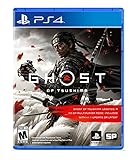
Ghost of Tsushima - PlayStation 4 | $22.99 | Buy on Amazon |
| 3 |

|
Mad Max - PlayStation Hits (PS4) | $19.45 | Buy on Amazon |
| 4 |
|
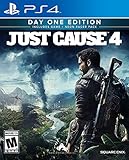
Just Cause 4 - PlayStation 4 | $11.80 | Buy on Amazon |
| 5 |

|
Elden Ring - PlayStation 4 | $33.83 | Buy on Amazon |
Give districts and buildings their own histories
In an account of making The Division 2, developers at Massive Entertainment described dividing Washington, D.C., into districts, assigning themes to streets, and building histories for mission locations and the people connected to them. For a building, the team considered what it was used for before the crisis, how it changed during the crisis, and what it had become by the time the player arrived. A world-logic guide, timeline, and smaller stories helped connect landmarks to residents’ experiences. Massive Entertainment’s account of environmental storytelling describes this process.
The result is a way to make setting legible through details rather than explanation alone. A location’s present-day appearance can suggest its former use and subsequent change, while the people and objects in it add more intimate history. The developers also described conveying Washington’s summer heat through heat haze, mirage-like effects on roads, sweating characters, and dialogue. These details work together to make climate part of the world’s identity rather than a backdrop.
Quick wins for a faster PC:
Clear out junk files and repair common Windows errorsFree Scan →Scan for outdated or missing drivers - takes under a minuteDriver Scan →#1 Best Overall
How can missions support exploration without losing purpose?
Open-world missions must accommodate player movement and choice while making their goals and stakes clear. One design challenge is balancing content that emerges from game systems with missions shaped around deliberate narrative and level-design choices.
Make a location serve both the story and the gameplay
Massive’s account says mission and side-mission locations needed a story for both the building and its residents. That approach ties a mission’s setting to what the player is doing there: the location is not interchangeable scenery, but a place with a past and people whose experiences give the objective context.
Rank #2
- Available Now - Ghost of Tsushima: Legends, a new cooperative multiplayer experience inspired by Japanese folk tales and mythology.
- Beyond war, ancient beauty endures: Uncover the hidden wonders of Tsushima in this open-world action adventure.
- The rise of the Ghost: Forge a new path and wage an unconventional war for the freedom of Tsushima.
Design for more than one order of events
Guerrilla’s GDC session on designing quests in Horizon Zero Dawn describes an effort to find a middle ground between systems-driven open-world RPG content and action-focused level design. A separate GDC session description says the game’s quest system was built with non-linearity at its base to support player choice and freedom as its story systems grew more complex. These descriptions summarize conference talks rather than providing full transcripts, so they establish the design problem and stated approach, not every implementation detail.
Ubisoft Toronto describes another way to support comprehension amid free exploration: use authored anchor moments, such as cinematics, recruitment missions, and storybook-like transitions, to hold the larger narrative together. The studio’s account also emphasizes matching the narrative approach and team structure to the game’s scale and scope. Ubisoft Toronto’s discussion of narrative design in open-world games gives examples from its work.
What’s actually slowing this PC down?
Pick the symptom - the matching free tool is one click away.
Rank #3
- Be Mad Max - Become the iconic post-apocalyptic warrior, crafting and upgrading Max's equipment and weapons to survive by combining melee combat, gunplay and tactical techniques. Gamers must form alliances as they work towards the goal of building their "Magnum opus."
- Immersive savage Wasteland - Explore the gritty, dynamic world while braving the treacherous landscapes, hostile weather patterns and deadly marauders.
- survive the open-world landscape - Staying alive isn't easy. Players clash with deadly factions and gangs through scores of dangerous side-missions and quests in the dynamic open-world full of exploration.
- intense vehicular combat - Engage in dynamic inter-vehicular combat, taking down enemy vehicles with a range of powerful weapons. Car combat is entirely physics-based, so no two battles are ever the Same.
- build the ultimate survival machine - Players design, customize and upgrade their ultimate vehicle-the Magnum Opus-choosing from different car chassis and a slew of upgrades including mounted weapons, armour and engines to survive another day
How do characters stay compelling when the playable cast can change?
A game with one fixed protagonist can rely on that character as a consistent point of view. A game that lets players recruit or switch characters has a different challenge: the playable identity may change, but the story still needs a throughline.
Use stable characters to connect a variable cast
For Watch Dogs: Legion, Ubisoft Toronto says players could recruit and play people from the game’s population, with different generated histories and attributes. The team used authored “anchor characters”—allies and villains who remained constant—to give the changing cast continuity. Its stated aim was for recruited characters to have opinions about those anchors and help move the story forward. The studio also advises developing characters in ways that depend less on a strictly linear plot arc when the gameplay itself is non-linear. The studio’s account describes this approach.
Rank #4
- Day One Edition includes Neon Racer Pack with these DLC items Neon Racer Supercar, Neon Racer Wingsuit, Neon Racer Parachute; see description for full details
- Bring The Thunder Soar through the skies with your wingsuit Skydive, Base Jump and Free Dive, as you fight your enemies harnessing extreme weather to your advantage
- Rico’s Ultimate Mission Spearhead the rebellion and defeat a hi tech private military organization; Face off against the most capable adversary yet; Uncover the mystery behind Rico’s Father’s past
- Huge South American World 100 square kilometers to explore from rainforest to desert, and across snowy mountain peaks as you explore the world of Solis from bustling cities to rural grasslands
- Creative destruction at its best Customize your new grapple hook with evolved and new capabilities; Experiment with military jets, helicopters, turbo fueled sports cars, and construction vehicles
The broader design question is what remains stable when the player-facing character or event order changes. Recurring people, shared regional themes, contextual cues, or story beats that work in multiple sequences can all provide continuity. The right choice depends on the game’s premise and structure.
How can a game protect important story moments from distractions?
Freedom to explore also means players may skip or interrupt content. A session description for GDC 2026’s Ghost of Yōtei talk says playtesters once skipped open-world content, creating onboarding, comprehension, and progression issues. The developers’ account illustrates a practical risk: when players can choose what to do next, some may miss information the game expects them to know. The GDC session page presents the developers’ account and intended talk takeaways, not independent player research.
The Tool Desk
Outbyte Driver Updater FREEFix the driver behind crashes, sound loss and screen glitchesFind Drivers →Outbyte PC Repair FREERepair Windows errors before they cause bigger problemsFix Now →Best Value
- ELDEN RING is a fantasy action-RPG adventure set within a world created by Hidetaka Miyazaki—creator of the influential DARK SOULS video game series; and George R.R. Martin—author of The New York Times best-selling fantasy series, A Song of Ice and Fire
- Danger and discovery lurk around every corner in FromSoftware’s largest game to-date
- HIDETAKA MIYAZAKI: President and Game Director of FromSoftware Inc. Known for directing critically-acclaimed games in beloved franchises including Armored Core and Dark Souls
- GEORGE R. R. MARTIN: the #1 The New York Times bestselling author of many novels, including the acclaimed series A Song of Ice and Fire—A Game of Thrones, A Clash of Kings, A Storm of Swords, A Feast For Crows, and A Dance with Dragons
In Game Developer’s report on Paweł Sasko’s GDC 2023 talk, Sasko discusses pacing emotional moments and reducing distractions when important information is delivered. The report frames this as separating narrative “signal” from concurrent activity or “noise”—a design idea, not a universal law proven for every game. Game Developer’s coverage of the talk includes Sasko’s statement, “We want the players to want the story.”
Independent reader supportYour contribution helps us test, update, and keep practical guides available for everyone.What trade-offs shape open-world storytelling?
These developer accounts point to recurring tensions rather than one best solution. The balance depends on the game’s scale, genre, narrative and degree of player freedom.
- Freedom versus guidance: Players may choose routes and event order, while the story still needs cues that preserve comprehension. GDC and Ubisoft accounts identify non-linearity as a design challenge.
- Authored missions versus systemic content: Designers must decide how much content is deliberately shaped around a particular narrative and level-design purpose versus generated or recombined from game systems. Guerrilla’s Horizon Zero Dawn session description frames this as a balance.
- World scale versus local specificity: A broad map can feel more coherent when regions have themes and individual places have histories. Massive’s The Division 2 account describes both district-level themes and personal stories.
- Cast variability versus continuity: When the playable character changes, authored people or other stable story structures can preserve a throughline. Ubisoft Toronto’s anchor characters in Watch Dogs: Legion are one example.
- Information versus distraction: Players may be navigating, fighting, or exploring while story-critical details appear. Sasko’s reported distinction between narrative signal and concurrent noise offers one way to think about that tension.
What makes an open-world game feel alive?
Distinctiveness comes from the connections among setting, activity, and story. A place can suggest its history; a mission can make that history relevant to what the player does; and recurring characters or carefully placed story moments can preserve meaning across different paths. The Division 2, Horizon Zero Dawn, Watch Dogs: Legion, and Ghost of Yōtei illustrate different parts of that design problem, not a single template for every open world.
Quick Recap
Product prices and availability are accurate as of the date/time indicated and are subject to change. Any price and availability information displayed on Amazon at the time of purchase will apply.

