
What’s actually slowing this PC down?
Pick the symptom - the matching free tool is one click away.
Choose a game engine by matching it to the game you intend to ship, the platforms you must support, your team’s skills, and your budget—not by picking the engine with the biggest name. First rule out options that cannot meet platform or licensing requirements. Then prototype the riskiest part of the game in each remaining candidate before you commit. There is no universal best engine or evidence-based general performance winner.
Start with your game’s requirements
Before comparing feature lists, write down what the finished game needs. A short requirements list makes it easier to reject an engine that is a poor fit, even if it is popular or familiar.


- Game shape: genre, camera, 2D or 3D scope, and visual target.
- Must-have technology: rendering, physics, multiplayer, save/load, input, and any middleware your design depends on.
- Platforms: desktop, web, mobile, VR or spatial platforms, and any consoles you plan to target.
- Team fit: current experience, preferred scripting language, debugging needs, and collaboration workflow.
- Production constraints: licensing budget, available learning resources, asset workflow, and schedule.
Platform access can be a hard constraint. Confirm support for the exact engine version and target, and check any platform-holder approval or SDK requirements before building your plan around a console release.
Compare the engines against the same criteria
| Decision area | What to check | Why it matters |
|---|---|---|
| Game and visual fit | Whether the engine’s 2D or 3D workflows, rendering, physics, and asset import suit your intended game. | A feature list does not prove that an engine is best for a particular genre. Test the visual and gameplay demands you actually have. |
| Target platforms | Export support for each required platform, the relevant engine version, access to platform SDKs, and approval rules. | A project that cannot reach a must-have platform under acceptable terms is not a viable choice. |
| Team and language | Familiarity with the scripting language, platform support, language features, debugging, and team workflow. | Choose based on the project’s real development workflow rather than a language’s reputation. Godot’s official FAQ discusses factors to weigh when choosing a language. |
| Learning and support | Official documentation and tutorials, community answers, and access to any specialist tools you need. | Documentation and learning resources can help you get started, but their existence does not establish that one engine is easier to learn or better supported in every situation. |
| Cost and licensing | Eligibility thresholds, subscriptions and seats, royalty triggers, platform costs, and the applicable revenue definitions. | Budget against the terms that apply to your team and product, and recheck them before purchase and release. |
| Prototype risk | How effectively your team can build the hardest mechanic, asset pipeline, save/load system, multiplayer feature, or performance target. | No comparable benchmark establishes a generally fastest engine. Your own representative prototype is more useful than a broad speed claim. |
Understand each engine’s licensing and platform constraints
Godot: open-source and MIT-licensed
Godot’s license page identifies the engine as free and open-source under the MIT license. Its official FAQ says it may be used for personal, non-profit, and commercial projects. If you redistribute copies, follow the MIT license conditions. Godot’s documentation covers export workflows; verify support for your particular target and version, especially if consoles or third-party routes are involved.
Quick wins for a faster PC:
Fix the driver behind crashes, sound loss and screen glitchesFind Drivers →Repair Windows errors before they cause bigger problemsFix Now →#1 Best Overall
Unity: check Personal eligibility and console terms
Unity Personal is listed as free for eligible users below $200,000 in revenue and funding. Unity’s published 2026 pricing lists Pro at $2,310 per seat per year when prepaid, or $210 per seat per month. Unity announced a 5% price increase for Pro and Enterprise effective January 12, 2026. Unity says Pro is required for businesses over $200,000 in revenue or funding; confirm eligibility, current terms, and regional costs directly on its pricing updates page.
Closed-console builds require an active Unity Pro subscription or a platform-holder Preferred Platform license key, as well as platform-holder approval. Check the Unity plan and platform requirements for the applicable details before treating console support as available to your project.
Unreal Engine: assess the applicable royalty terms
Epic describes a 5% royalty on qualifying lifetime gross revenue above $1 million directly attributable to the Unreal product. The exact application, exceptions, and product categories depend on the applicable license, so review Epic’s licensing terms before estimating what your game will owe. Epic also says console development requires platform-holder approval to access platform SDKs. Its indie games page describes Unreal’s positioning for indie production, but that positioning is not proof that it is the right fit for every indie project.
Use popularity as context, not as a verdict
The Game Developers Conference’s 2025 State of the Game Industry report found Unity and Unreal tied at 32% each as the most-used engines among survey respondents. That is a survey finding, not a measurement of all released games or indie-only adoption, and it does not establish engine quality, ease of use, or suitability for your project. Treat it as context—not a ranking.
Rank #3
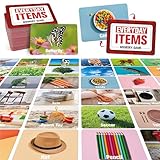
- Attractive Matching Game: This daily item-themed card set features a variety of everyday objects, turning learning into a fun activity. It's designed to spark curiosity and boost children's memory and concentration. Playing in a group also helps develop valuable social and verbal expression skills.
- 80pcs Daily Item Cards: This set includes 80 cards, featuring 40 delightful pairs to help kids become familiar with various daily items. From cars and umbrellas to pencils, apples, books, and lamps, each match allows children to learn about different objects and expand their knowledge of the world around them.
- Matching Game & Memory Challenging: This game combines the joy of matching with the thrill of memory challenges! Children will flip over cards to find pairs, sharpening their memory and focus as they play. The game encourages logical thinking and pattern recognition while boosting their confidence with every correct match.
- Safety and High Quality: The cards are made from durable materials, safe for everyday handling by young learners. Each card has a smooth surface, rounded corners, and smooth edges that help prevent peeling or accidental scratches. Each card measures 2.9” x 4.1”.
- Ideal Gifts: This matching game makes a thoughtful and educational gift for preschoolers ages 3+, perfect for birthdays, holidays, classroom rewards, and learning centers. It’s an excellent resource for parents, teachers, and therapists to support cognitive development, language skills, and interactive play.
Prototype before you commit
Once you have eliminated candidates that fail a platform or licensing requirement, build the same small representative slice in each serious contender. Keep the scope narrow, but include the feature most likely to derail production and the workflow your team will repeat often.
- Choose the risky feature. Examples include a demanding mechanic, a particular asset-import pipeline, multiplayer, save/load, or a visual effect central to the game.
- Use representative assets and constraints. Include the kind of content, target platform, and team workflow you expect in production.
- Record practical results. Note implementation friction, iteration speed for your team, debugging, output quality, and any licensing or platform obstacle you uncover.
- Compare against your requirements. Prefer the candidate that meets the must-haves with the least unacceptable risk—not the one that wins a generic feature comparison.
Do not treat a tiny prototype as a universal benchmark. It answers a narrower and more useful question: can your team build the game’s critical slice with this engine and its relevant tools?
Make the final choice
Choose the engine that satisfies the required platforms and acceptable licensing terms, supports the game’s core mechanics and art direction, and lets your team make reliable progress. If two options remain close, use the prototype results and the team’s existing skills to break the tie. Revisit the decision if your target platforms, project scope, or applicable engine terms change.
Quick Recap
Product prices and availability are accurate as of the date/time indicated and are subject to change. Any price and availability information displayed on Amazon at the time of purchase will apply.

