
What’s actually slowing this PC down?
Pick the symptom - the matching free tool is one click away.
Possibly, but the available evidence does not establish a winner—or even a passenger-service launch date for either country. China’s clearest milestone is a 2025 conceptual aircraft study affiliated with COMAC. In the United States, NASA is developing a research aircraft, Boom has reported a demonstrator flight, and the FAA is proposing changes to its noise rules. These are different stages of work, not competing airliners on a confirmed launch schedule.
What “beat” means matters: a first test flight, aircraft certification, permission to fly over land, and the first ticketed passenger service are separate milestones. The cited sources document research, demonstration and proposed regulation, but not which country will reach passenger service first.
What would count as reintroducing supersonic commercial flight?
A supersonic passenger flight travels faster than the speed of sound. But being able to design or test an aircraft is not the same as being able to sell tickets and operate a route. A credible claim of a first would need to identify the milestone and show that an aircraft and its operators had cleared the requirements for it.
- First test flight: an aircraft flies, but it may be an experimental or research vehicle.
- Type certification: aviation authorities approve an aircraft design for specified operations; this alone does not establish that a commercial service has begun.
- Legal operation: the aircraft can fly the intended routes under applicable noise and operating rules.
- Passenger service: an operator actually carries paying passengers. This is the clearest measure of a commercial return.
The evidence available for this comparison does not show a Chinese or U.S. passenger aircraft at that final stage.
Recommended Free Tools
#1 Best Overall

- Experience the legendary F-14 Tomcat through a highly detailed model designed for aviation collectors and hobby enthusiasts. The finished model becomes a striking desktop or showcase centerpiece.
- This 3D puzzle is designed for beginner-level assembly enthusiasts, offering an immersive hands-on building experience that helps cultivate patience, concentration, and mechanical problem-solving skills.
- This product is manufactured using high-quality, environmentally friendly plastic and employs an ultra-fine etching process to ensure durability, structural precision, and realistic aircraft details.
- Encourages understanding of aircraft engineering concepts while improving hand-eye coordination and spatial thinking through engaging mechanical assembly.
- Ideal gift for childs, engineers, collectors, model builders, and puzzle lovers for birthdays, Children’s Day, Christmas, or special hobby occasions.
What has China demonstrated so far?
A conceptual low-boom aircraft study, not a service-ready airliner
A 2025 paper in Acta Aeronautica et Astronautica Sinica, whose authors are affiliated with COMAC’s Shanghai Aircraft Design and Research Institute, describes a conceptual long-range supersonic passenger aircraft. It evaluates a low-boom configuration using shaping features that include an S-shaped mid-fuselage, a quiet spike and a quiet bump. The study is evidence of design research; it does not establish that COMAC has an approved production aircraft, a flight-test program or a service-entry schedule.
The paper’s design table sets the following requirements for the concept. They are targets for a design exercise, not results from an operational aircraft:
Rank #2

- IFF antenna array in front of the cockpit distinguishes this CCIP-equipped model from other F-16s.
- Curved form of the F-16 accurately reproduced with trademark Tamiya precision.
- Moveable horizontal stabilizers. "Flaperons" can be modelled in the up or down positions.
- Full ordnance load including AGM-88 HARM, AIM-120C AMRAAM, AIM-9M/X Sidewinder, ECM pod, and fuel tanks included.
- Centerline and inner wing pylons as well as tail assembly feature polycaps to allow easy detachment for storage.
| Conceptual design requirement | Value in the 2025 paper | What it means |
|---|---|---|
| Standard seating | 28 | Target cabin capacity in the concept |
| Maximum seating | 48 | Maximum target capacity in the concept |
| Standard range | Greater than 11,000 km | Design requirement, not demonstrated route capability |
| Low-boom cruise | Mach 1.6 | Conceptual cruise target for the low-boom mode |
| Economic cruise | Mach 1.7 | Conceptual target for the economic-cruise mode |
The design still faces engineering questions
The paper’s aerodynamic assessment also reports strong longitudinal nonlinearity, reduced directional static stability at high angles of attack and significant intake distortion at high sideslip angles. A separate 2025 review by Chinese aerospace researchers describes broader challenges for operational supersonic aircraft: integrating the airframe and propulsion system, designing cockpit systems that provide adequate external vision, reducing cruise drag, suppressing sonic booms and conducting wind-tunnel testing. Those topics indicate the breadth of engineering work; the review does not supply a schedule for this COMAC-affiliated concept.
What is the United States doing?
NASA’s X-59 is a research aircraft
NASA’s Quesst mission is intended to investigate technology that could make a sonic boom quieter and to gather information about how communities respond to the sound. NASA says that evidence could inform future noise thresholds and help enable commercial cargo or passenger markets. The X-59 is a research aircraft, not a passenger airliner, and its mission does not by itself authorize commercial supersonic service.
Rank #3
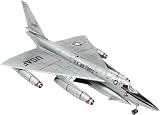
- 1/91
- 1957
- Atlantis Modelive ()
Boom’s XB-1 is a demonstrator, not a passenger service
In a July 2026 blog, the FAA said Boom’s XB-1 demonstrated its “Boomless Cruise” technique during a January 2025 supersonic test flight over the Mojave Desert. That reported demonstration is a separate kind of milestone from NASA’s community-response research and from certifying a passenger aircraft. It does not establish that the technique has broad regulatory acceptance or that a commercial airliner is ready to carry passengers.
Can supersonic passenger aircraft fly over land in the U.S.?
Under the FAA’s described current framework, civil aircraft may not operate above Mach 1 over land except with specific authorization. The FAA’s special-flight-authorization process says that civil supersonic testing over land requires an operation-specific authorization and environmental review. A test authorization is not a general operating rule for passenger airlines.
Rank #4
The FAA announced on June 30, 2026, that it had proposed a noise-based operational certification standard. The agency described the proposal as a path to replacing the longstanding general overland prohibition with a noise-based standard. It also said it planned a separate proposal on takeoff and landing noise later in 2026. The FAA overview set a target of finalizing the rules by mid-2027. These are proposals and agency targets, not final rules or operating approvals; the cited material does not establish whether the rulemaking has since changed status.
How do the China and U.S. efforts compare?
| Question | China evidence | U.S. evidence | What can be concluded |
|---|---|---|---|
| What aircraft work is documented? | A 2025 COMAC-affiliated conceptual-design paper | NASA’s X-59 research mission and the FAA-reported XB-1 demonstrator flight | The sources describe different kinds of work, not equivalent airliner programs. |
| What is established about overland noise? | The concept uses low-boom shaping; the paper does not establish acceptable community impact or legal operating approval. | NASA is gathering community-response information, while the FAA has proposed a noise-based operational standard. | A design goal, research data and a proposed rule are not interchangeable evidence of permission to operate. |
| Is passenger readiness established? | No production, flight-test, certification or service date is established by the cited paper. | The cited U.S. sources describe research, a demonstrator and proposed rules, not passenger service. | Neither side is shown to have a certified passenger aircraft ready for service. |
| Is there a reliable launch-date comparison? | No verified passenger-service date is established in the cited primary evidence. | The FAA has stated rulemaking targets, but the cited sources do not establish a U.S. passenger-service date. | There is no evidence-based basis here to name a first passenger-service winner. |
Could China still get there first?
It could, but the concept paper alone cannot support that prediction. A country could publish a design before another country flies a research aircraft and still reach passenger service later: design maturity, flight testing, certification, operating permission and commercial launch do not happen in one step. Conversely, a regulatory change can create a path for future operations without ensuring that an aircraft is ready to use it.
Best Value

- U.S. Air Force's supersonic strategic bomber with vaaiable-sweep wing
- Muti-Colored Parts(MCP), no painting needed
- Main wings can be build at minimum sweep or maxium sweep
- Landing gears and bomb bays can be built open or closed
- Cartograf decal included
The comparison also has a geographic limit. The FAA material describes U.S. rules and proposals; it is not a global authorization for supersonic passenger flights. The cited evidence does not establish the regulatory position across other countries or the route approvals a worldwide service would need. “First in the world” therefore cannot be inferred from one country’s rulemaking or one aircraft concept.
Quick Recap
What should readers watch next?
- For China: verifiable movement from conceptual research to a funded, identified aircraft program, followed by flight testing and certification activity. A design target or unverified service-year claim is not the same as those milestones.
- For the United States: the FAA’s final rulemaking status and the scope of any adopted noise standards, alongside evidence that a passenger aircraft—not just a research plane or demonstrator—is progressing through certification.
- For either country: demonstrated aircraft performance, permission for the intended routes, and an actual passenger-service launch. Each answers a different part of the “who is first?” question.
Product prices and availability are accurate as of the date/time indicated and are subject to change. Any price and availability information displayed on Amazon at the time of purchase will apply.

