
Do these 3 things before closing this tab:
1Clear out junk files and repair common Windows errors2Fix the driver behind crashes, sound loss and screen glitches3Repair Windows errors before they cause bigger problemsBot detection combines request, browser, session, and behavior signals to estimate whether traffic is automated; no single signal proves that a visitor is malicious. To test your own site safely, map the risks by endpoint, exercise legitimate and controlled abusive flows, inspect logs before blocking, and tune controls while watching for false positives.
How does bot detection work?
A bot-detection system evaluates evidence that a request came from automation. Some traffic is easy to identify from known patterns; more sophisticated systems combine signals from the request, browser, session, and behavior. The result is an estimate used to choose an action—not proof of intent.

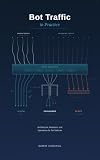


Cloudflare provides one example of a layered implementation: its documentation describes a heuristic engine that checks requests against patterns and fingerprints, optional JavaScript detections that can identify headless browsers and other fingerprints, and a machine-learning engine that evaluates request features such as headers, session characteristics, and browser signals. Other providers and self-managed systems may work differently. Cloudflare’s bot-detection engines
Cloudflare Bot Management documents a score range of 1–99 and says scores below 30 are commonly associated with bot traffic. That is Cloudflare product guidance, not a universal threshold or a guarantee that a particular request is a bot. Cloudflare’s bot score documentation
PC Slower Than It Used to Be?
A free scan shows the junk files, broken settings and background clutter dragging Windows down - then fixes them in one click.Free scan · Windows 10 & 11Crashes, No Sound, or Screen Glitches?
Random freezes, missing sound and display glitches usually trace back to one bad driver. Find and replace yours safely.Free scan · under a minute#1 Best Overall
Detection is not the same as deciding what to do
After estimating whether traffic is automated, a site must decide whether to allow it, log it, rate-limit it, challenge it, or block it. A legitimate search crawler and an abusive credential-stuffing script are both automated; their value and risk differ. OWASP frames the goal as raising the cost of abusive automation while preserving legitimate users and bots, rather than blocking all automation. OWASP Bot Management and Anti-Automation Cheat Sheet
Which traffic should your site protect against?
Start with the route and its business risk, not a site-wide assumption that every bot is harmful. OWASP highlights that different endpoints have different threat profiles. Use this map to shape your test cases:
| Endpoint or flow | Abuse to consider | Useful control to evaluate |
|---|---|---|
| Login | Credential stuffing | Rate limits across IP, identity, and endpoint; suitable verification when risk warrants it |
| Signup | Fake-account creation | Velocity limits and verification |
| Search or catalog | Scraping | Per-identity limits and monitoring of request patterns |
| Checkout | Scalping or card testing | Purchase limits, queues for scarce inventory, and relevant rate limits |
| Public API | Abusive usage or probing | Endpoint- and identity-aware limits and request logging |
Also identify automation you want to preserve: search crawlers, monitoring services, accessibility tools, API clients, mobile apps, and user-directed agents may all make automated requests. Cloudflare’s verified-bot guidance, for example, describes verified bots in terms of honest, deterministic self-identification and non-abusive behavior. Cloudflare verified bots
How to test bot detection on your website
Run tests only on systems and flows you own or are authorized to assess. Build a route-specific test matrix and change controls incrementally; this workflow is a practical tuning process, not a penetration test or a benchmark of any vendor.
- Threat-model each endpoint. List the abuse you expect at login, signup, search, checkout, and API routes, along with legitimate automated traffic that must continue working.
- Exercise relevant flows. Test ordinary human use, legitimate automation such as your monitoring checks and API clients, and controlled simulations of the abuse patterns relevant to that route. Avoid sending high-volume traffic to production; use a staging environment or tightly limited tests where appropriate.
- Observe before broadly blocking. Review request logs and any available bot analytics. For each event, inspect the route, request pattern, action taken, score or signal if available, and whether it maps to a known legitimate service. Cloudflare recommends using analytics and logs to analyze patterns and tune rules. Cloudflare bot protection solutions
- Apply proportionate controls. Layer defenses at the edge, application, and business-logic levels. Consider rate limits by IP, identity, and endpoint; use velocity limits and verification at signup, per-identity limits for scraping, and purchase limits or queues for scarce inventory. Log the decision and the signals that informed it. OWASP’s control guidance
- Check user impact and false positives. Re-run the legitimate cases in your matrix, especially API and mobile traffic, accessibility flows, monitoring, and crawlers. Cloudflare warns that domain-wide Bot Fight Mode may challenge API or mobile-app traffic; its troubleshooting guidance also notes that testing and monitoring tools with bot-like User-Agent strings may be flagged. Offer accessible alternatives to user-facing challenges. Cloudflare Bot Fight Mode guidance Cloudflare false-positive troubleshooting
- Tune and repeat. Compare false positives, abuse that still succeeds, and friction for legitimate users after each change. Avoid hard-blocking on one weak signal. Keep decision logs and anomaly dashboards, and retain signals with privacy in mind; OWASP cautions against hidden anti-bot rules without logging. OWASP logging and tuning guidance
What to record in the test matrix
- Route and business purpose.
- Expected human action and expected legitimate automation.
- Controlled test case and the signal or control it is meant to exercise.
- Observed decision, relevant logs or score, and whether the request should have been allowed.
- Effect on completion, latency, or accessibility for legitimate users.
- Rule change and the result of the next test run.
How can I tell whether a request claiming to be Googlebot is real?
A User-Agent string is self-asserted and can be copied, so it is not sufficient verification. For a request claiming to be from Google, Google advises verifying it with reverse DNS or by checking the source IP against its published crawler and fetcher IP ranges. First identify the request category: Google distinguishes common crawlers, special-case crawlers, and user-triggered fetchers, whose policies may differ. Google’s guidance for verifying Googlebot and other Google crawlers
Cloudflare’s verified-bot guidance lists IP validation and Web Bot Auth among verification methods. Web Bot Auth is still an emerging option: Google describes its implementation as experimental and the underlying IETF specification as a draft. Google also says not all its user agents use it and it does not sign every request, so it advises operators to continue relying on IP addresses, reverse DNS, and User-Agent strings during rollout. Do not treat a missing signature as proof that a request is illegitimate. Google on Web Bot Auth
Choosing where and how to apply controls
Bot controls range from broad, domain-level defenses to rules specific to an endpoint or business action. Cloudflare documents baseline Bot Fight Mode, more granular Super Bot Fight Mode, and Enterprise Bot Management; OWASP’s guidance describes endpoint-specific defensive patterns. These are examples, not the only available approaches. Cloudflare bot protection options Cloudflare Bot Management
Before choosing a service or implementing controls yourself, compare:
Quick wins for a faster PC:
Clear out junk files and repair common Windows errorsFree Scan →Fix the driver behind crashes, sound loss and screen glitchesFind Drivers →- Detection and visibility: What signals or scores can you inspect, and can your team understand why traffic was flagged?
- Scope: Can rules target selected routes and actions, or do they apply across the whole domain?
- Responses: Can you allow, log, rate-limit, challenge, or block—and choose different actions by route and risk?
- Tuning support: Are logs and analytics available to identify false positives and adjust rules?
- Compatibility: What happens to APIs, mobile clients, monitoring, crawlers, and people who need accessible alternatives to challenges?
- Privacy and operations: Which signals are retained, for how long, and how much work is needed to manage rules and review outcomes?
- Eligibility: Which controls are available for the plan and deployment you intend to use?
Or skip the browser setup
If you need a screenshot while checking a page’s rendering or behavior, ScreenshotNeo can return a screenshot or PDF through one GET request. For example, with an API key set in place of YOUR_API_KEY:
curl -G "https://api.screenshotneo.com/v1/shot" -d access_key=YOUR_API_KEY --data-urlencode url=https://example.com -o shot.webpSee the ScreenshotNeo API documentation for request options. Cookie banners are accepted and removed before the shot, along with supported newsletter popups and chat widgets; bot checks, blank pages, failed loads, timeouts, and cache hits are not billed. Its MCP server lets AI agents take screenshots, and the free plan includes 1,000 screenshots a month with no card; paid plans start at $5 for 3,000. Sign up for ScreenshotNeo’s free plan.
Independent reader supportYour contribution helps us test, update, and keep practical guides available for everyone.Troubleshooting common bot-detection problems
A legitimate API or mobile client is being challenged
A broad, domain-wide control may affect non-browser traffic. Reproduce the request, inspect the relevant logs and rule scope, then adjust the endpoint policy or add a narrowly defined exception for known legitimate traffic. Re-test both the client and the abuse scenario the rule was intended to reduce.
A monitoring or test request is flagged
Some test tools send User-Agent strings that look bot-like. Check the logged request and the tool’s configured headers before treating the result as a real attacker. Where possible, use a stable, identifiable monitoring setup and scope any exception to that traffic rather than disabling protection for a whole route.
What’s actually slowing this PC down?
Pick the symptom - the matching free tool is one click away.
A request says Googlebot but fails verification
Do not trust the User-Agent alone. Check reverse DNS or compare the source IP with Google’s published crawler and fetcher ranges, and establish which Google request category is involved before changing access rules.
Legitimate users are blocked, or abusive traffic still gets through
Review the action and its supporting signals for the affected endpoint. A single weak signal should not trigger a blanket block. Adjust the relevant rate limit, challenge, or business-logic control, then repeat the legitimate and controlled abuse cases and compare the outcomes in logs.
A challenge creates an accessibility barrier
Include accessibility needs in the test matrix and provide an accessible alternative where a user-facing challenge is necessary. A control that blocks abusive automation but prevents legitimate users from completing the task needs a different response or scope.
Frequently Asked Questions
Does a bot score prove a request is automated?
No. A score is an estimate produced by a particular system, not proof of intent or a universal measure.
Should I block every automated request?
No. Identify the legitimate crawlers, monitoring, API clients, accessibility tools, and other automation your site needs, then distinguish them from endpoint-specific abuse.
Quick Recap
Product prices and availability are accurate as of the date/time indicated and are subject to change. Any price and availability information displayed on Amazon at the time of purchase will apply.

