
The Supreme Court has already heard a plea challenging the legal basis for a reported merchant discount rate (MDR) on some UPI merchant payments above ₹2,000. On September 28, 2026, the Court reportedly declined to pause the planned October 15 rollout, issued notices to the Centre, the Reserve Bank of India (RBI) and the National Payments Corporation of India (NPCI), and sought responses within four weeks. That is an interim procedural outcome—not a final ruling on whether the framework is lawful.
What the Supreme Court did
The plea was filed by advocate Anjan Datta and challenges the legal basis and notifications associated with the reported MDR framework. Hindustan Times reported that Chief Justice of India Surya Kant described the issue as: “This is less of a legal and more of a technical issue.” The Court reportedly sought clarity on the charge’s legal and technical basis and who bears it. Hindustan Times’ report on the hearing
As of October 4, 2026, the reported position is that the Court did not grant an interim stay, issued notices and allowed four weeks for responses. It has not yet decided the challenge on its merits. Bar & Bench’s contemporaneous coverage
What the reported MDR would apply to
News reports describe a 0.4% MDR for specified person-to-merchant (P2M) UPI payments above ₹2,000, with implementation scheduled for October 15, 2026. They also report a flat ₹5 rate for transactions above the threshold in certain sectors, including railways, telecom, insurance, fuel and agricultural inputs. These are reported framework terms, not a verified reading of the primary September 2026 notification; exact eligible categories, thresholds, caps and calculation should therefore be confirmed against the official instruments. Mint’s report on the rates and planned start
What’s actually slowing this PC down?
Pick the symptom - the matching free tool is one click away.
#1 Best Overall

- Use the, easy-to-use, and customizable POS to get started.
- Accept contactless payments, chip cards, Apple Pay, and Google Pay from anywhere, with improved connectivity, extended battery life, and enhanced security. Pay one low rate for every tap or dip.
- No long-term commitments or contracts, no monthly fees- and with offline payments, keep taking payments for up to 24 hours.
- Safely and securely accepts payments anywhere. Plus, get data security, 24/7 fraud prevention, and payment-dispute management at no extra cost.
- Use the, easy-to-use, and customizable POS to get started.
The distinction between payment types matters. P2M means a customer pays a business; person-to-person (P2P) transfers are payments between individuals. The reports concern specified merchant payments, not a blanket charge on every UPI transfer.
Who would pay—and will UPI remain free for consumers?
MDR is described in the reporting as a merchant-side charge, rather than a general fee charged to consumers for using UPI. The available reports do not establish whether, or how, individual merchants might reflect their costs in prices. They also do not establish that every business, payment above ₹2,000 or UPI user falls within the reported framework.
Rank #2

- Pay one transparent rate per swipe for Visa, Mastercard, Discover and American Express.
- Works in conjunction with most downloadable Square point-of-sale apps on your device. Customers can pay, tip and sign directly on your device. Track payments in cash, gift cards and more. Also lets you send receipts via e-mail or text message, makes it easy to apply discounts, keeps a data and sales history log and more.
- Accepts magstripe credit card payments, including those from Visa, Mastercard, Discover and American Express (fees apply).
- App sends deposits to your bank account within 1 to 2 business days, or enjoy instant deposits (fees apply).
For consumers, the practical answer from the reported terms is that this is not a general fee on UPI use: the described charge concerns specified P2M transactions and is assigned to merchants. Whether the framework proceeds as scheduled, and its exact scope, remain subject to the primary notifications and the pending court challenge.
How this differs from earlier zero-MDR policy
In March 2025, the government described an incentive scheme that maintained zero MDR while varying incentives by merchant size and transaction value. Under that earlier scheme, small merchants had zero MDR up to ₹2,000 with a 0.15% incentive, and zero MDR without an incentive above ₹2,000; large merchants had zero MDR regardless of amount and no incentive. Those arrangements explain the prior policy context, but do not establish the terms of the reported 2026 framework or decide the legal challenge. Press Information Bureau, March 2025
Do these 3 things before closing this tab:
1Repair Windows errors before they cause bigger problems2Fix the driver behind crashes, sound loss and screen glitches3Clear out junk files and repair common Windows errorsRank #3

- Accept all major credit and debit cards and pay one low rate
- No hidden fees and no long-term contracts
- Mobile card reader that accepts payments anywhere & anytime
- Use the free SumUp App on your smartphone or tablet to start accepting transactions
- Simply pay 2.6% +10 per in-person transaction
A separate issue is GST. The GST Council’s April 2025 newsletter said claims that the government was considering GST on UPI transactions above ₹2,000 were false, and noted the January 2020 removal of MDR on P2M UPI. A possible GST treatment of an MDR charge is not the same as a tax on the underlying UPI transaction. GST Council newsletter, April 2025
Independent reader supportYour contribution helps us test, update, and keep practical guides available for everyone.What remains unresolved
- The September 2026 notifications’ exact wording and the precise merchant, sector, threshold and cap rules.
- The legal and technical basis for applying the reported charge.
- The outcome of the Supreme Court challenge after the respondents submit their replies.
Those points matter more than broad claims that UPI is becoming paid: the reported proposal is limited to specified merchant payments, and the Court has not yet issued a final merits judgment.
Quick Recap
Best Value

- An intuitive interface to easily accept payments and manage your sales.
- Strong, reliable Wi-Fi connection. Free SIM card and mobile data so you can process payments anywhere.
- Great battery capability with an additional charging station.
- A truly portable device. Stay in control of your business, wherever you go.
- Support when you need it. Get in touch with our US-based support through phone, email and chat.
Rank #4
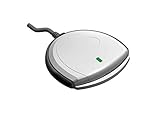
- Fully Compliant - Complies With All Major Industry Standards, Including Iso/Iec 7816, Usb Ccid, Pc/Sc, And Microsoft Whql. As Well As, Emv 2011 Ver 4.3 Level 1 And Gsa Fips 201.
- Seamless Integration - With Identiv-Specific Smartos You’Ll Get Easy, Complete Support Of All Major Contact Smart Card Ics And Technologies In One Simple Reader.
- Universal Compatibility - Works With Virtually All Contact Chip Cards And Pc Operating Systems, Including Windows, Macos, Linux And Android.
- Fast And Convenient- Shorten Your Transaction Time With A Reader That’S Optimized For Speed. It’S Ultra-Compact And Robust Design Is Streamlined For Mobile Operation, Making This Reader The Best Choice For Convenience, Security And Reliability.
- Ergonomic and cost efficient design
Product prices and availability are accurate as of the date/time indicated and are subject to change. Any price and availability information displayed on Amazon at the time of purchase will apply.

