
You can save a screenshot from an individual Visualping change by opening its alert and clicking the image, or preserve a set of changes by exporting a report. These are different from Export job settings data, which exports monitor configuration—not screenshot history.
Choose the right export for what you need
| Need | Use | What you get |
|---|---|---|
| Save one visual capture | Open the relevant alert or change and click its screenshot | An individual screenshot that opens in a new tab or downloads |
| Save or share multiple checks and their context | Generate or open a report, then use its download control | CSV, Excel, HTML (shown as WEB in scheduled email links), or PDF from the web report |
| Export monitor configuration | Use “Export job settings data” | Selected monitor attributes such as URLs and frequencies in CSV or Excel—not images or screenshot history |
| Send change data into your own system | Configure a webhook | A structured change payload with screenshot and HTML snapshot links, timestamp, and monitor context |
Visualping’s documentation describes individual screenshot downloads and report exports. It does not establish a built-in bulk download of every original image from a monitor’s lifetime or a universal screenshot-retention period. If either is essential, confirm availability and retention for your account with Visualping support before relying on it. Navigating Alerts · Navigating Reports · Creating Visualping Reports


Download a screenshot from one change
- Open Visualping and find the relevant alert or change.
- Open its visual comparison. The view shows the current and previous states.
- Click the screenshot to open it in a new tab or download it.
- Save the file with a useful name and keep a local copy if it is important evidence.
The image action is for an individual change; it is not documented as an all-history image export. Visualping’s alert guidance describes the screenshot view and download behavior. Its editorial guidance also recommends retaining local copies of important documentation: Website Monitoring for Journalists: Why the Audit Trail Matters More Than the Alert.
Export a report for selected monitors or dates
- Open Visualping’s report-generation workflow and select the monitors and period you need.
- Apply relevant filters. Documented filters include monitor labels, page status, frequency, schedule type, and which checks to include.
- Choose report contents, such as current and previous snapshots or markup. Depending on the report, you can include important changes, all changes, all checks, or errors.
- Generate or open the report, then click its download control and choose an available format.
Visualping documents CSV, Excel, and HTML exports; scheduled email links identify HTML as WEB. PDF is available from the web report. The report workflow is intended to preserve and share a set of checks and context; it should not be treated as proof that every original screenshot is included as a separate downloadable image. Navigating Reports · Creating Visualping Reports
Free tools Windows power users keep installed
One-click scans. No signup required.
#1 Best Overall

- Used Book in Good Condition
Find a report you already created
Open the History tab and search by report name or date. Visualping’s documentation says earlier reports can be found there and re-exported. Scheduled report emails also include download links. Navigating Reports · Creating Visualping Reports
Keep job-settings export separate from screenshot export
The “Export job settings data” action exports selected monitor attributes, including descriptions, URLs, comparison types, and frequencies, to CSV or Excel. Visualping documents this feature as available to Business users. It exports metadata, not the screenshots captured by those monitors. The documented Business restriction applies to job-settings export; it should not be assumed to apply to individual screenshot downloads or report exports. How do I export my job data?
Rank #2
Automate capture records with webhooks
If you need to feed changes into your own archive or workflow, Visualping webhooks can deliver structured change payloads with links to original and current screenshots and HTML snapshots, plus a timestamp and monitor context. You need an endpoint or integration to receive and store the data. A webhook is a custom automation path, not a built-in button for bulk-downloading all historical images. How do I use Webhooks?
Troubleshoot common export problems
- You see monitor settings instead of images: You likely selected “Export job settings data.” That export contains monitor metadata. Open a change for a single screenshot, or use the report workflow for a date range or group of checks.
- You cannot find the download action: Open the individual change’s visual view for a screenshot, or open the generated report for its download control. Report downloads can also be revisited from the History tab.
- You need a PDF: Open the web report and download it there; the documentation specifies PDF availability from the web report.
- You need the whole monitor lifetime as separate images: The documented paths do not establish a universal bulk-original-image export. Ask Visualping support what is available for your account and how long captures are retained before designing an archive around them.
- You need automated storage: Configure a webhook receiver to process change payloads and store the linked files or records. It requires your own endpoint or integration.
Or skip the browser setup
If your goal is to capture a clean screenshot of a page rather than export existing Visualping history, ScreenshotNeo is a website screenshot API and MCP server. A single GET request returns an image or PDF; it does not retrieve Visualping’s past captures.
Rank #3
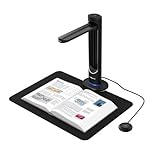
- [48MP Ultra-High Resolution] The K48 is a professional-grade book scanner equipped with a true 48MP Sony CMOS sensor, capable of capturing exceptional detail at 600 DPI — even on A3-sized materials. Used for digitizing books, magazines, documents, and archival materials with stunning clarity.
- [AI-Assisted Page Smoothing] Curved book pages are automatically flattened using intelligent software technology. This causes the removal of finger shadows, background interference, and page curvature — delivering flat, clean scans without any manual post-processing. Double pages are split automatically.
- [Laser Positioning & Auto-Scan] The built-in laser positioning system ensures precise alignment every time. Page turning detection causes the scanner to start capturing automatically as soon as a page is turned — ideal for high-volume digitization where speed matters.
- [Multi-Format OCR & Text-to-Speech] Used for creating searchable PDFs, editable Word/Excel files, or MP3 audio for voice playback. The K48 is capable of recognizing text in multiple languages and converting documents into accessible formats — perfect for education, accessibility compliance, and digital archives.
- [4K Live View & USB 3.0] Stream 4K@30fps video for live presentations, online classes, or real-time document review. USB 3.0 Type-C ensures fast data transfer and stable connection. Used for immediate setup in classrooms, offices, and libraries — plug and play, no drivers needed.
For API parameters and response details, see the ScreenshotNeo documentation.
Quick Recap
curl -G "https://api.screenshotneo.com/v1/shot" -d access_key=YOUR_API_KEY --data-urlencode url=https://stripe.com -o shot.webpScreenshotNeo removes cookie banners, newsletter popups, and chat widgets before the shot; bot checks, blank pages, and failed loads are never billed. Its MCP server lets AI agents take screenshots. The free plan includes 1,000 screenshots a month with no card, and paid plans start at $5 for 3,000.
Sign up for ScreenshotNeo’s free plan.
Product prices and availability are accurate as of the date/time indicated and are subject to change. Any price and availability information displayed on Amazon at the time of purchase will apply.

