
You can run a nature sounds livestream by feeding licensed video and audio files to FFmpeg, looping and encoding them, and sending the output to a YouTube Live Control Room ingest URL and stream key. Docker keeps FFmpeg packaged and can restart its container after an exit—but that alone does not confirm YouTube is still receiving a healthy stream. This guide shows the setup and its limits, including YouTube’s warning that streams longer than 12 hours may not be archived.
What you need before you start
This approach broadcasts prepared media, not a live camera. FFmpeg reads your files, creates a continuous encoded output, and sends it to YouTube. Docker runs that process in a container and can restart it after certain failures.

- A YouTube channel with live streaming enabled, plus a scheduled or created live event.
- A computer or server that can stay on and maintain sufficient upload capacity—or a rented server.
- FFmpeg and Docker installed on the host.
- Video and nature audio files you are authorized to use in the live broadcast, any replay, and any commercial use you plan.
- A plan for monitoring the stream and, if needed, retaining a local recording.
A public Docker project demonstrates one file-based streaming implementation, but it is an example rather than proof of indefinite reliability; its sample media does not grant you rights to broadcast it. The commands below illustrate the workflow, not a tested configuration. Check option compatibility against your installed FFmpeg version and chosen destination before relying on it.
Clear rights for the live stream and replay
Confirm the license or obtain permission for both the visuals and audio. A recording that is free to download is not necessarily cleared for a live broadcast, replay, or commercial use. Keep a record of licenses and permissions. Copyright compliance warnings in a sample project are not a substitute for checking each file’s actual terms.
Quick wins for a faster PC:
Scan for outdated or missing drivers - takes under a minuteDriver Scan →Repair Windows errors before they cause bigger problemsFix Now →Fix the driver behind crashes, sound loss and screen glitchesFind Drivers →#1 Best Overall

- TRANQUIL NATURE SOUNDS: Experience the soothing embrace of Tim Janis' nature sounds CD. Let the calming melodies transport you to serene landscapes, offering a natural remedy for relaxation.
- MEDITATIVE ESCAPE: Elevate your meditation journey with this guided meditation CD. Immerse yourself in the harmonious tunes that create an ambiance of calm, enhancing your mindfulness practice.
- RESTFUL SLEEP AID: Drift into deep slumber with sleep music designed for restful sleep. Let the gentle melodies lull you into tranquility, promoting a peaceful and rejuvenating night's rest.
- CALMING SPA AMBIANCE: Transform your space into a spa-like haven with calming music that melts away stress and anxiety. Create your own oasis of relaxation and serenity, whether you're unwinding after a long day or practicing yoga.
- STRESS RELIEF THROUGH MUSIC: Embrace the power of music as a calming force in your life. This relaxation CD offers a collection of relaxing melodies that provide relief from the pressures of the day, fostering a sense of inner peace and well-being.
Create a YouTube live event and protect its key
- In YouTube Studio, create or schedule a live broadcast and open its Live Control Room.
- Copy the stream URL and stream key shown for the event into your encoder configuration. YouTube recommends RTMPS; when supported, the RTMPS URL is available from the lock icon by the stream URL.
- Store the key in a private environment file or secret manager, not in source control, public screenshots, or logs. Treat it like a password. If it is exposed, replace or reset it in YouTube Studio before streaming again.
- If this is the first time the channel has enabled live streaming, activation may take up to 24 hours. Allow for that delay before planning a broadcast.
Use the current YouTube encoder recommendations for your selected resolution and frame rate. For H.264 at 720p/30 fps, YouTube’s guidance accessed October 3, 2026 lists an 8 Mbps recommended ingestion bitrate, a 2-second keyframe frequency (not over 4 seconds), and CBR mode. Its advanced recommendations list AAC or MP3 audio, with stereo at 128 Kbps and 44.1 kHz. These are encoder recommendations, not a guarantee that your host or internet connection can sustain the stream.
YouTube advises testing with representative movement and audio, checking upload capacity with a speed test, and monitoring stream health. Leave upload headroom beyond the stream bitrate for normal network variation and other traffic; a speed test result is a snapshot, not a promise of uninterrupted delivery.
Organize media and loop it with FFmpeg
Put media in a persistent directory on the host and mount that directory into the container. Keep a manifest or playlist if you intend to rotate several recordings, and verify every file’s duration, format, and playback before going live.
Rank #2
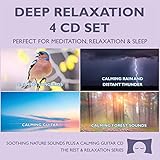
- Relaxation and Sleep Support: Relax your body and calm your mind with these relaxation and sleep CDs designed to promote restful sleep and stress relief
- Authentic Nature Recordings: Includes the sounds of rain and thunder, calming forest sounds, singing songbirds, and soothing guitar with ocean waves with tracks that are continuous recordings and are not looped
- Music Therapist Developed: Developed by a music therapist who gives a percentage of profits to help kids with cancer
- Premium Quality Manufacturing: High quality CDs NOT made in China - Unlike cheaper CDs like CD-Rs, this CD will work in all players
- Thoughtful Gift Packaging: Gift quality packaging makes a thoughtful gift for those with stress, anxiety or insomnia
For a single video file with audio already mixed in, FFmpeg documents -stream_loop -1 for infinite input looping. A schematic command looks like this:
Crashes, No Sound, or Screen Glitches?
Random freezes, missing sound and display glitches usually trace back to one bad driver. Find and replace yours safely.Free scan · under a minuteWindows Errors? Fix Them Before They Spread
Repair common Windows errors and clear accumulated junk for a smoother, more stable PC - no reinstall needed.Free scan · no reinstallffmpeg -stream_loop -1 -re -i /media/nature.mp4
-c:v libx264 -preset veryfast -b:v 8M -maxrate 8M -bufsize 16M
-pix_fmt yuv420p -r 30 -g 60 -keyint_min 60 -sc_threshold 0
-c:a aac -b:a 128k -ar 44100 -ac 2
-f flv "$YOUTUBE_INGEST_URL/$YOUTUBE_STREAM_KEY"This example targets the cited 720p/30 fps H.264 recommendations, but it does not force the input to 1280×720. Match output resolution and frame rate deliberately to the source and the event, and use the current YouTube table for that target. A two-second GOP at 30 fps is represented by 60 frames. Confirm your FFmpeg build supports the chosen encoder and that the output protocol accepts the supplied ingest URL.
Options in FFmpeg generally apply to the next input or output, so position -stream_loop -1 before the -i input it should loop. If video and audio are separate inputs, map the intended streams and decide how to handle their different durations and formats; do not assume two independent loops will remain synchronized. Validate looping and synchronization using representative files before the public event.
Rank #3

- Relaxation and Sleep Support: Relax your body and calm your mind with these relaxation and sleep CDs designed to promote restful sleep and stress relief
- Authentic Nature Recordings: Includes the sounds of calming ocean waves, a peaceful stream, relaxing rain and soothing guitar, with tracks that are continuous recordings and are not looped
- Created by Music Therapist: Developed by a music therapist who gives a percentage of profits to help kids with cancer
- Premium Quality Manufacturing: High-quality CDs made in the USA - Unlike cheaper CDs like CD-Rs, this CD will work in all players
- Thoughtful Gift Packaging: Gift quality packaging makes a thoughtful gift for those with stress, anxiety or insomnia
Run FFmpeg in Docker with a restart policy
Keep FFmpeg as the container’s foreground process so Docker can observe when it exits. Mount media persistently, and inject the YouTube URL and key through a protected configuration mechanism. For example, a Compose service can express the structure below; replace paths, image, and command with values validated for your environment.
services:
  nature-stream:
    image: your-ffmpeg-image
    restart: unless-stopped
    volumes:
      - ./media:/media:ro
    env_file:
      - .env
    command: >-
      ffmpeg -stream_loop -1 -re -i /media/nature.mp4
      -c:v libx264 -preset veryfast -b:v 8M -maxrate 8M -bufsize 16M
      -pix_fmt yuv420p -r 30 -g 60 -keyint_min 60 -sc_threshold 0
      -c:a aac -b:a 128k -ar 44100 -ac 2
      -f flv ${YOUTUBE_INGEST_URL}/${YOUTUBE_STREAM_KEY}
Compose interpolation and container environment handling vary with the Compose version and shell. Avoid placing secrets directly in a committed YAML file; verify that environment expansion works as intended without printing the key into logs. A stricter setup can provide secrets through your deployment platform instead.
Choose restart behavior intentionally
Docker’s always policy restarts a container after it exits and also restarts it when the Docker daemon starts. unless-stopped also restarts after exits and daemon restarts, except when you have explicitly stopped the container. Choose based on whether an intentional manual stop should persist after a daemon restart. Docker cautions against layering a separate host process manager on top of its restart policies.
Rank #4
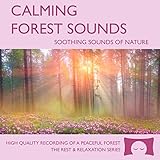
- Helps you relax and find peace with over 1 hour of calming forest sounds with songbirds and a gentle stream in the background.
- Creates white noise to drown out household sounds.
- No annoying loops, jarring sounds, or cheesy music. Just the pure sounds of nature.
- Gift quality packaging. Makes an elegant and thoughtful gift. Helps anxiety and stress.
- This CD is a professional, high quality CD made in the USA and will work in all players.
A restart policy reacts to container and daemon lifecycle events. It cannot establish that YouTube is receiving, decoding, or publishing packets correctly. If a silent stall would matter, add an external health check or monitoring path that verifies the destination stream, not just that the container is running.
Test and monitor before relying on a 24/7 broadcast
- Start with a private or unlisted test event and representative media, including the loudest expected audio and the most visually active footage.
- Check FFmpeg logs for input errors, encoder failures, reconnect attempts, and sustained output. Do not expose the stream key while collecting logs.
- Confirm YouTube Live Control Room shows an incoming stream and healthy status, and check the received picture and sound.
- Watch the stream through a separate viewer connection. Confirm the loop boundary does not create an unwanted pause, silence, jump, or desynchronization.
- Test recovery deliberately during a maintenance window: stop or interrupt the container, verify Docker restarts it as intended, then confirm YouTube receives the output again.
- Monitor host disk, CPU, memory, and network capacity over time. A container can be running while the stream is stalled or the host is overloaded.
Plan separately for YouTube archives
YouTube says streams under 12 hours can be automatically archived; streams longer than 12 hours may not be captured at all. A continuous 24/7 broadcast therefore should not be expected to produce one complete YouTube replay. YouTube recommends keeping a local archive backup.
If preserving the full recording matters, record locally with enough storage for the intended duration, or schedule broadcasts that fit within YouTube’s archive limit and verify the event’s behavior. Estimate storage from your output bitrate and recording time: at 8 Mbps, video alone uses roughly 3.6 GB per hour before audio and container overhead. This estimate follows the bitrate arithmetic; actual file size varies. A local disk is optional for a remote VPS, which may use separately provisioned storage.
Do these 3 things before closing this tab:
1Fix the driver behind crashes, sound loss and screen glitches2Repair Windows errors before they cause bigger problems3Scan for outdated or missing drivers - takes under a minuteBest Value
Choose where the stream runs
| Approach | Recurring cost | Network and storage | Operations and recovery | Control and key security |
|---|---|---|---|---|
| Self-host on an existing computer or server | Depends on your existing equipment, power, and connection; no neutral cost figure is established here. | Requires continuous power and reliable upload capacity; use persistent local media storage. | You manage updates, Docker, monitoring, and recovery. Restart policies address container exits, not end-to-end stream health. | Offers direct FFmpeg control; protect the key and host credentials yourself. |
| Rent a VPS or cloud compute | Depends on provider, instance, storage, and network terms; no neutral price or performance comparison is established here. | Check sustained outbound bandwidth and provision persistent storage for media or recordings. | You still manage the container, updates, monitoring, and recovery unless the provider offers relevant services. | Offers substantial command control; secure the key and server access. |
| Managed cloud looping service | Depends on the service and plan; compare its stated terms with your needs. | Check media storage, supported quality, platform destination, and any stream limits. | The vendor may handle some hosting and recovery tasks; confirm what is actually included. | Less control over the underlying FFmpeg process may be traded for simpler operation. Review how credentials and media are handled. |
StreamNeo as a managed YouTube option
StreamNeo is a cloud service for keeping a YouTube channel live from uploaded videos: upload a recording or build a playlist, add your YouTube stream key once, and go live. The vendor says it loops from the cloud, so your computer and home connection do not need to stay on. Each slot includes one always-on stream, 10 GB storage per slot pooled across active slots, playlists, automatic recovery if YouTube drops the stream, and support. The service says uploaded media streams as made up to 4K 60 fps, with no re-encode and one flat price per slot rather than quality tiers. It streams to YouTube, not to other platforms.
The same product is on every plan; only billing duration changes. The first day is free with no card, one free day per account. Billing options are:
- Daily: $0.99 per day
- Weekly: $2.99 per week
- Monthly: $9.99 per month
- 6 months: $49.99 for 6 months
- Yearly: $89.99 a year
Plans can be cancelled any time. UPI and cards are available in India; card checkout is available worldwide. For five or more slots, contact support. These are vendor-stated product details, not an independent performance comparison.
Troubleshoot common failures
YouTube shows no incoming stream
- Likely causes: incorrect or stale stream key, wrong ingest URL, unsupported protocol, or an output command that exited.
- What to check: compare the event’s URL and key in Live Control Room, confirm the intended RTMPS/RTMP endpoint, and inspect FFmpeg’s exit status and logs without exposing credentials.
- Recovery: correct the secret or endpoint, restart the container, and verify incoming video in Live Control Room.
The container restarts repeatedly
- Likely causes: missing media mount, unreadable file, invalid option, missing encoder in the FFmpeg build, or invalid output configuration.
- What to check: container logs, mounted path and permissions, and a local FFmpeg test using the same image and media.
- Recovery: fix the failing input or command before restarting; repeated restarts cannot repair a bad configuration.
The stream drops or becomes unhealthy
- Likely causes: network interruption, inadequate upload capacity, host resource pressure, or a stalled process that has not exited.
- What to check: YouTube stream health, host metrics, and whether FFmpeg is still producing output. A running container alone is insufficient evidence of a healthy destination stream.
- Recovery: restore network capacity or host resources, then reconnect and confirm the event recovers. Add destination-aware monitoring if silent failures are costly.
Audio or video does not loop cleanly
- Likely causes: loop option placed after the relevant input, incompatible or variable source formats, or separate audio and video inputs with mismatched durations.
- What to check: verify
-stream_loop -1precedes the input it governs and inspect the loop boundary in a test stream. - Recovery: normalize or deliberately map inputs and define how their timelines should align; do not expect independent looping sources to synchronize automatically.
YouTube does not retain the full replay
A broadcast exceeding 12 hours may not be captured at all. Keep a local recording or divide the schedule into archive-compatible events if a complete replay is required.
Or let it run in the cloud
With StreamNeo, upload your nature video or build a playlist, add your YouTube stream key, and go live. Nothing has to stay on at home; uploaded video streams at any quality up to 4K 60 fps for one price per slot; and the service says it automatically recovers if YouTube drops the stream. The first day is free with no card, and the monthly option is $9.99 per month. See StreamNeo, or start the free day.
Keep monetization expectations realistic
YouTube’s channel monetization policy applies to livestreams and expects monetized content to be original and authentic rather than mass-produced, generic, repetitive, or manipulative. The policy page records a July 15, 2025 clarification that renamed “repetitious content” to “inauthentic content.” That does not establish that all long ambience streams are ineligible, nor does running a stream continuously guarantee monetization. Build original, viewer-valued programming and make the rights to all media clear.
Quick Recap
Product prices and availability are accurate as of the date/time indicated and are subject to change. Any price and availability information displayed on Amazon at the time of purchase will apply.

