
Quick wins for a faster PC:
Clear out junk files and repair common Windows errorsFree Scan →Fix the driver behind crashes, sound loss and screen glitchesFind Drivers →To add background music to a continuous prerecorded YouTube stream, use a streaming encoder such as OBS Studio: place the video and a separate music file in the same scene, set the sources to loop as needed, mix and test the audio, then send the scene to YouTube Live with your stream URL and key. Before streaming, make sure the music license covers the live broadcast and archive; YouTube can interrupt a stream for a third-party match even when you have permission.
What you need before you start
- A prerecorded video file and a separate music file.
- OBS Studio on a computer that can stay on and connected for the full stream.
- A YouTube channel enabled for live streaming, plus access to YouTube Studio’s Live Control Room.
- Music rights that cover your intended live use, archive, monetization, and territories.
OBS Media Sources supports MP3, AAC, OGG, and WAV audio files, and provides looping controls for sources. See the OBS Media Sources guide.
Add the video and music in OBS
- Open OBS Studio and select or create the scene you will use for the continuous stream.
- In the Sources panel, add the prerecorded video as a Media Source. Browse to the file and configure playback. Enable Loop if the video should repeat after it ends.
- Add another Media Source and choose the music file. Enable Loop if it is shorter than the stream or should repeat when playback ends.
- Check the scene preview. Confirm the video is visible and that both sources are active. If the video has its own audio, decide whether to retain it or mute its source so it does not compete with the background track.
Looping a source repeats that file; it does not create a seamless musical transition. Listen at the point where playback restarts, since a file with silence or a sharp ending can leave a gap or audible jump.
Set and check the music level
- Play the scene and watch the OBS Audio Mixer while adjusting the music source’s fader.
- Keep background music in the green area of the meter. OBS’s Audio Mixer Guide identifies green as the appropriate zone for background music and alert sounds.
- Use the source’s audio monitoring to listen through OBS, then make a short test recording and play it back. Check that the music is audible without overpowering narration or the video’s original sound, and listen for clipping, gaps, or abrupt loop points.
A meter is not a substitute for listening: the level can look acceptable while the mix sounds unbalanced on playback. OBS describes per-source faders, meters, monitoring, and test recording in its mixer guidance.
What’s actually slowing this PC down?
Pick the symptom - the matching free tool is one click away.
#1 Best Overall

- Includes Raspberry Pi 4 4GB Model B with 1.5GHz 64-bit quad-core CPU (4GB RAM)
- Includes Pre-Loaded 32GB EVO+ Micro SD Card (Class 10), USB MicroSD Card Reader
- CanaKit Premium High-Gloss Raspberry Pi 4 Case with Integrated Fan Mount, CanaKit Low Noise Bearing System Fan
- CanaKit 3.5A USB-C Raspberry Pi 4 Power Supply (US Plug) with Noise Filter, Set of Heat Sinks, Display Cable - 6 foot (Supports up to 4K60p)
- CanaKit USB-C PiSwitch (On/Off Power Switch for Raspberry Pi 4)
Connect OBS to YouTube Live
- In YouTube Studio, open Live Control Room and create or schedule the stream. Follow YouTube’s encoder setup instructions.
- Copy the stream URL and stream key shown for that event into OBS’s streaming settings. Treat the key as a password: do not share it or include it in a recording or screenshot.
- Start streaming from OBS. For a scheduled-stream workflow, wait for the encoder feed to appear in YouTube’s preview and confirm it before starting the event.
- Check the picture, sound, and YouTube stream health. Keep OBS and the computer running for the full broadcast when using this local-encoder method.
For RTMP/RTMPS, YouTube lists AAC or MP3 audio and recommends 44.1 kHz stereo at 128 Kbps. YouTube recommends RTMPS. Check its current encoder settings guidance when configuring the output.
Protect the stream from music copyright interruptions
Having a license does not by itself guarantee uninterrupted playback. YouTube scans live streams for third-party content; it may warn, interrupt, or terminate a stream when it detects a match. YouTube says a licensed track can still lead to interruption unless the rights holder has allowlisted your channel through Content ID. See YouTube’s live copyright guidance.
Rank #2
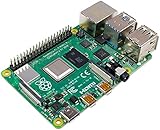
- Broadcom BCM2711, quad-core Cortex-A72 (ARM v8) 64-bit SoC @ 1. 5GHz
- 2. 4 GHz and 5. 0 GHz IEEE 802. 11b/g/n/ac wireless LAN, Bluetooth 5. 0, BLE
- 2 × USB 3. 0 ports, 2 x USB 2. 0 Ports
- 2 × micro HDMI ports supproting up to 4Kp60 video resolution
- Micro SD card slot for loading operating system and data storage
- Check that the license explicitly permits continuous YouTube live streaming, any archived copy, monetization if applicable, and the territories where viewers may watch.
- If the track is copyright-protected, coordinate with the label or distributor. YouTube for Artists recommends this coordination for music channels: Going live for music channels.
- For third-party music, arrange Content ID allowlisting with the rights holder before the event and keep documentation of the permission.
- Review the archived stream after it ends. YouTube says an archive may receive a Content ID claim after the live broadcast.
YouTube also says live streams under 12 hours are automatically archived; its encoder help page describes archive behavior and continuous-stream options at Create a YouTube live stream with an encoder.
Test and monitor a continuous broadcast
Test the complete scene before the event, with audio and video motion similar to what you intend to stream. YouTube’s encoder guidance specifically recommends tests that include comparable audio and movement. During the broadcast, keep an eye on YouTube’s stream health and OBS’s audio meters, and check for copyright warnings.
Rank #3
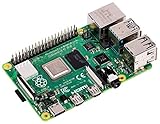
- Broadcom BCM2711, Quad core Cortex-A72 (ARM v8) 64-bit SoC @ 1.5GHz
- 1GB, 2GB, 4GB or 8GB LPDDR4-3200 SDRAM (depending on model)
- 2.4 GHz and 5.0 GHz IEEE 802.11ac wireless, Bluetooth 5.0, BLE Gigabit Ethernet
- 2 USB 3.0 ports; 2 USB 2.0 ports.
- Raspberry Pi standard 40 pin GPIO header (fully backwards compatible with previous boards)
- Test video playback, music playback, and their loop points together.
- Confirm the correct YouTube event and stream key are being used.
- Listen to a test recording rather than judging only from the OBS preview.
- Check that the encoder’s audio format and output settings match YouTube’s published recommendations.
- Keep the source files and license records accessible in case you need to verify a track or rebuild the scene.
Other ways to keep prerecorded video live
OBS is a direct file-source and mixer workflow when you can keep the computer running. YouTube’s verified encoder list also describes cloud-based prerecorded streaming options and hardware with scheduled-media capabilities; check each provider or device’s current features, reliability, supported formats, and price before choosing it. A separate music mix still needs to be tested and monitored whichever workflow you choose.
Independent reader supportYour contribution helps us test, update, and keep practical guides available for everyone.Or let it run in the cloud
With StreamNeo, upload the prerecorded video, add your YouTube stream key once, and go live; it loops the uploaded video from the cloud, so your computer and home connection do not have to stay on. StreamNeo is for YouTube streams of uploaded videos, not camera broadcasts.
Rank #4

- Vilros Complete Starter Kit for Pi 4 Includes Raspberry Pi 4 Model B Board and all the accessories you need to get started.
- 9-PART KIT WILL HAVE YOU READY TO GET UP AND RUNNING: Kit Includes 1. Raspberry Pi 4 Model B Board 2. Case With Easy to connect Built-in fan 3. 64GB Micro SD card Preloaded with RP OS 4. Vilros Pi 4 Compatible Power Supply with Inline on/off switch (power supply color may vary white/black) 5. Micro HDMI to Standard HDMI cable (5ft) 6. Micro SD to USB adapter to reflash card if desired 7. Neoprene Storage Bag to store all parts when not in use 8. Set of 4 Heatsinks 9. Vilros QuickStart Guide instruction booklet for Pi 4
- PASSIVE & ACTIVE COOLING: The included case is well-vented and the kit also includes a set of heatsinks with thermal stickers for easy application and a pre-installed fan to keep the board cool in any use.
- CONVENIENT ACCESSORIES: The power supply features an inline on/off switch neoprene bag that holds and protects all the parts when not in use and the QuickStart guide is updated and written for Raspberry Pi 4.
- IMPORTANT: Kit does NOT include Keyboard, Mouse or Monitor
- Nothing has to stay on at home.
- Any uploaded quality up to 4K 60fps streams as made, at one flat price per slot.
- Automatic recovery if YouTube drops the stream.
- The first day is free with no card.
The monthly option is $9.99 per month. Review StreamNeo and its plans, then start the free day. The prerecorded video must still use music you are authorized to stream, and third-party tracks may still require channel allowlisting.
Quick Recap
Best Value

- Includes Raspberry Pi 4 4GB Model B with 1.5GHz 64-bit quad-core CPU (4GB RAM)
- CanaKit 3.5A USB-C Power Supply with Noise Filter (UL Listed) specially designed for the Raspberry Pi 4 (5-foot cable)
- CanaKit USB-C PiSwitch (On/Off Power Switch)
- Set of 3 Aluminum Heat Sinks for the Raspberry Pi 4
Product prices and availability are accurate as of the date/time indicated and are subject to change. Any price and availability information displayed on Amazon at the time of purchase will apply.

