
Free tools Windows power users keep installed
One-click scans. No signup required.
If OBS shows “Encoding overloaded!” or encoding lag, first reduce the work your PC must do: test a lower output resolution, switch from 60 fps to 30 fps, simplify the scene, and free CPU or GPU resources. An encoder overload is a local processing problem, not proof that your internet is slow. If OBS’s output looks healthy but YouTube reports interruptions or network problems, investigate upload capacity separately.
The steps below work for OBS users in India and elsewhere. The YouTube bitrate figures are platform ingest recommendations, not guarantees that a particular PC can encode smoothly or that a particular internet connection can upload reliably.
First identify which kind of lag OBS is reporting
Do not diagnose from the word “lag” alone. Open OBS’s Stats dock while reproducing the problem and note whether the issue is encoding, rendering, or network-related. OBS Project’s Encoding Performance Troubleshooting guide (dated June 12, 2021) explains that an overload means OBS cannot keep up with the requested work; GPU overload and bottlenecks between the GPU and the rest of the system can also be involved.
- Encoding lag or “Encoding overloaded!”: the encoder is not processing frames quickly enough for the selected output. Reduce the workload or address the CPU/GPU bottleneck.
- Rendering lag: OBS is struggling to compose the scene. Simplify sources and reduce competing GPU work.
- Network dropped frames or YouTube network warnings: the local output may be fine, but the connection may not be delivering it reliably. Measure outbound upload capacity.
These can overlap. Check the specific OBS statistic and YouTube’s stream health rather than treating every interruption as an encoder problem.
What’s actually slowing this PC down?
Pick the symptom - the matching free tool is one click away.
#1 Best Overall

- [INTEL POWERED CONTENT] - Built with a 8th Generation Hexa-Core Intel i5 and 32GB of DDR4 RAM; Modern, Windows 11 ready, with 4K support, Executive multitasking, media streaming and smooth, multi-tab web browsing; Perfect as an all-purpose multimedia computer; built for content creators; Plenty of RAM and Mass storage for photo and video editing powered by Intel HD 630
- [LATEST WIRELESS TECH] - This Dell Desktop Computer easily connects to the internet through the Built In WiFi / Bluetooth
- [SOLID STATE STORAGE] - This Dell Computer setup comes with an ultra-fast 1TB Solid State Drive (SSD); Setup as the primary boot device; Boot and load programs with lightning speed ; Additional expansion available
- [BUY & OWN WITH CONFIDENCE] - From the world's largest Microsoft Authorized Refurbisher; Quality Guarantee and Free Tech Support; Award-winning Customer Service; | Support Sustainable Business
- [MODERN HI-SPEED PORTS] - USB 3.0 (x4) | USB 2.0 (x4) | DisplayPort (x1) | HDMI Port (x1) | Audio Combo Jack (x1) | Audio Out (x1) | RJ-45 Ethernet (x1) | Internal SATA (x3)
Fix overload in this order, testing after each change
Make one change at a time, then test the same demanding scene for long enough to see whether the Stats dock improves. Changing several settings at once can hide which one helped.
1. Try OBS as administrator on Windows
If you are using Windows and OBS is reporting GPU overload, OBS’s official guide suggests trying administrator mode. Close OBS, right-click its shortcut, and choose Run as administrator. Re-test the same scene. This is a troubleshooting step, not a guaranteed fix; if the warning remains, continue below.
2. Lower output resolution, then frame rate
- In OBS, open Settings → Video.
- Lower Output (Scaled) Resolution first. If you are streaming at 1920×1080, test 1280×720.
- If the stream is at 60 fps, change the frame rate to 30 fps and test again.
- Watch the Stats dock during the same demanding scene. If overload continues, reduce the workload further or simplify the scene.
A useful starting profile to test on an entry-level PC is 1280×720 at 30 fps. It is not a promise that every computer will handle it: the game, scenes, filters, drivers, and other running software all affect the result. If 720p30 still overloads, try a lower output resolution or further reduce scene and game demands.
Leave the canvas resolution unchanged at first. OBS cautions that changing the canvas can complicate source positioning and scene management; adjust it only if the machine remains constrained after testing output changes.
Windows Errors? Fix Them Before They Spread
Repair common Windows errors and clear accumulated junk for a smoother, more stable PC - no reinstall needed.Free scan · no reinstallCrashes, No Sound, or Screen Glitches?
Random freezes, missing sound and display glitches usually trace back to one bad driver. Find and replace yours safely.Free scan · under a minuteRank #2

- Model: Dell OptiPlex 7050 Small Form Factor (SFF)
- Processor: Intel Core i7-7700 3.60 GHz
- Memory: 32GB DDR4 Ram
- Storage: 1TB Solid State Drive (SSD) Fast Boot + Storage
- Operating System: Windows 11 Pro (64-bit)
Reducing 60 fps to 30 fps means OBS must process fewer frames each second. Lowering output resolution reduces the amount of image data it must produce. Those are direct ways to reduce local workload; lowering bitrate alone is not an encoder-performance fix.
3. Free CPU and GPU capacity
- Close unnecessary applications that use substantial CPU or GPU resources, including other games, GPU workloads, overlays, and capture applications you do not need.
- If streaming gameplay, lower the game’s graphics settings or cap its frame rate. An uncapped game can occupy GPU capacity OBS needs to render and encode the stream.
- Simplify the active OBS scene: remove duplicate captures and unnecessary sources, filters, or animated and browser elements. Keep only what the stream requires.
Re-test after each change. If encoding improves when you cap the game or remove scene elements, the issue is local resource competition rather than a need for more upload bandwidth.
4. Choose an encoder that fits the diagnosed bottleneck
If OBS is using x264 and CPU saturation is the problem, check the encoder options available on your actual PC. A supported NVIDIA, AMD, or Intel hardware encoder may use a dedicated encoding component and reduce CPU load. Availability depends on the hardware and driver; there is no universal encoder choice for every low-end PC.
Hardware encoding is not automatically faster overall. The GPU still has to render the game and OBS scene, so a GPU that is already saturated may continue to cause trouble. OBS also notes that earlier-generation hardware encoders can have a quality trade-off at the same bitrate. If a hardware encoder is selected and overload persists, reduce game graphics demand, cap game FPS, or lower OBS output workload before considering an upgrade.
Rank #3

- IMMERSIVE 24 INCH DISPLAY: Experience stunning clarity on a Full HD IPS screen with ultra-thin bezels, offering a 90% screen-to-body ratio that makes everything from spreadsheets to streaming come alive with vibrant colors and crisp details.
- POWERFUL INTEL PROCESSING: Tackle demanding tasks with ease thanks to the Intel processor and 16GB of high-speed memory, delivering smooth performance whether you're multitasking between applications or running productivity software.
- GENEROUS STORAGE: Store all your important files, photos, and programs with blazing-fast solid state drive technology that ensures quick boot times, rapid file access, and plenty of space for your digital life.
- ENHANCED PRIVACY AND COLLABORATION: Work confidently with the pop-up privacy camera that tucks away when not in use, plus dual microphones with noise reduction for crystal-clear video calls that keep you connected professionally.
- ECO-CONSCIOUS DESIGN: Feel good about your purchase with an EPEAT Gold registered and ENERGY STAR certified computer that combines premium performance with responsible environmental manufacturing practices.
Do not buy a GPU just because OBS displayed one warning. First identify whether x264 CPU load or GPU rendering/encoding is actually the limiting factor, and check what your system supports.
Use YouTube-compatible live settings
YouTube Help’s current live encoder settings page lists RTMP/RTMPS ingest; video codecs H.264, H.265 (HEVC), and AV1; up to 60 fps; CBR; and a recommended two-second keyframe interval that must not exceed four seconds. For RTMP/RTMPS, YouTube lists AAC or MP3 audio and recommends RTMPS for secure delivery. Use settings supported by your encoder and available connection. H.264 is a practical option to test on a constrained PC because YouTube publishes an H.264 bitrate table and compatible encoder choices are broadly available.
YouTube’s H.264 live ingest bitrate recommendations
| Output | Minimum bitrate | Recommended bitrate |
|---|---|---|
| 480p at 30 fps | 0.4 Mbps | 4 Mbps |
| 720p at 30 fps | 3 Mbps | 8 Mbps |
| 720p at 60 fps | 3 Mbps | 8 Mbps |
| 1080p at 30 fps | 5 Mbps | 14 Mbps |
| 1080p at 60 fps | 6 Mbps | 17 Mbps |
These are YouTube’s recommended H.264 ingest bitrates, not PC performance benchmarks. Match the row to the chosen live resolution and frame rate; do not treat an upload-video bitrate as a live-stream setting. At 720p, the recommended bitrate is the same for 30 and 60 fps, but 30 fps still asks the PC to process fewer frames each second.
Separate encoding trouble from upload trouble
If OBS’s local output looks healthy but viewers see interruptions or YouTube reports network problems, test the outbound connection. YouTube Help advises checking CPU load, inspecting the encoder output, and testing the internet connection. Measure upload speed, not download speed, and compare the stream’s total bitrate with the available outbound capacity. YouTube recommends leaving 20% headroom above the total stream bitrate.
The Tool Desk
Outbyte PC Repair FREERepair Windows errors before they cause bigger problemsFix Now →Outbyte Driver Updater FREEFix the driver behind crashes, sound loss and screen glitchesFind Drivers →Rank #4
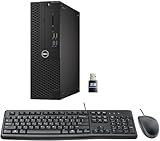
- This Certified Refurbished product is tested and certified to look and work like new. The refurbishing process includes functionality testing, basic cleaning, inspection, and repackaging. The product ships with all relevant accessories, a minimum 90-day warranty, and may arrive in a generic box. Only select sellers who maintain a high-performance bar may offer Certified Refurbished products on Amazon.com.
- Dell Optiplex 3050 SFF Desktop computer PC, Intel Quad Core i5-6500 up to 3.6GHz, 16GB DDR4, 256GB SSD
- Includes: USB Keyboard & Mouse, USB WiFi adapter, Microsoft office 30 days free trail.
- Port: Front: USB 3.0(2), USB 2.0(2); Rear: DP, HDMI, USB 3.0(2), USB 2.0(2), RJ-45.
- Support 4K (3840x2160) Dual display, makes it easy to connect two monitors at the same time, and you can expand working Windows, mirror content, or expand a single window across multiple monitors.
For example, a stream configured at 8 Mbps needs more than 8 Mbps of dependable upload capacity; YouTube’s recommended 20% margin means allowing additional capacity rather than running the connection at its limit. A speed-test result is not a guarantee of sustained performance, so monitor stream health during a representative test with the same connection and setup you plan to use live.
- If OBS reports encoding or rendering trouble, prioritize resolution, frame rate, encoder choice, scene complexity, and competing CPU/GPU use.
- If the encoder output is healthy and the problem is network-related, investigate measured upload capacity and connection stability. Lowering bitrate can help a connection that cannot upload reliably, but it does not make an overloaded encoder process frames faster.
Common problems and what to try next
The warning appears only when a game is running
The game may be consuming GPU capacity OBS needs. Cap the game’s frame rate, reduce its graphics settings, and re-test before changing the internet plan.
The warning continues at 720p30
That profile is only a test target. Close resource-heavy applications, simplify the scene, check which OBS statistic is rising, and reduce output workload further. If x264 coincides with CPU saturation, check whether a supported hardware encoder is available.
Changing bitrate did not stop “Encoding overloaded!”
Bitrate primarily affects the amount of data sent to YouTube. For an encoder that cannot keep up locally, test output resolution, frame rate, encoder choice, and CPU/GPU competition instead.
Recommended Free Tools
Best Value

- Connectivity: Includes WiFi, Bluetooth, and LAN for wireless and wired connections
- Memory: Features 16GB DDR4 RAM for smooth multitasking and performance
- Storage: Combines 500GB SSD and 1TB HDD for ample storage space
- Graphics: Integrated Intel UHD Graphics 630 for crisp visuals and video playback
- Design: Sleek desktop tower with black color and slim profile for modern look
OBS looks fine, but YouTube viewers still report interruptions
Check YouTube’s stream health and measure outbound upload capacity. Allow YouTube’s recommended 20% headroom above total stream bitrate; do not infer upload quality from download speed.
Hardware encoding is selected, but overload remains
The GPU may be busy rendering the game or scene as well as encoding. Cap game FPS, lower graphics demand, remove unnecessary scene elements, and reduce output resolution or frame rate.
Before going live
- Run a private or otherwise low-risk test using representative motion and audio, rather than judging from a static scene.
- Watch OBS Stats and YouTube stream health during the test; verify whether any remaining issue is encoding, rendering, or network-related.
- Use a stable output profile the PC and connection can sustain, even if that means choosing 720p30 or lower instead of targeting 1080p60.
- Check that the material you stream is yours or that you have the necessary rights. YouTube’s copyright and reused-content rules are separate from encoder performance; changing OBS settings does not grant permission to broadcast music or video.
Or let it run in the cloud
If your goal is to keep prerecorded video playing as a 24/7 YouTube stream, rather than stream live gameplay, a camera, or another live OBS scene, StreamNeo is a cloud option: upload a recording or build a playlist, add your YouTube stream key, and go live. It loops uploaded videos from the cloud, so nothing has to stay on at home. It does not broadcast a camera or fix an OBS session that you need to run live.
Quick Recap
- Nothing has to stay on at home; StreamNeo runs the uploaded-video stream in the cloud.
- Each slot streams the uploaded quality up to 4K 60fps at one flat price per slot, without re-encoding or quality tiers.
- It can automatically recover if YouTube drops the stream.
- The first day is free, with no card required; one free day is available per account.
- Monthly: $9.99 per month.
- UPI and cards are supported in India; card checkout is available worldwide.
Try StreamNeo’s free day by creating an account.
Product prices and availability are accurate as of the date/time indicated and are subject to change. Any price and availability information displayed on Amazon at the time of purchase will apply.
Quick wins for a faster PC:
Repair Windows errors before they cause bigger problemsFix Now →Fix the driver behind crashes, sound loss and screen glitchesFind Drivers →Clear out junk files and repair common Windows errorsFree Scan →
