
Do these 3 things before closing this tab:
1Clear out junk files and repair common Windows errors2Scan for outdated or missing drivers - takes under a minute3Repair Windows errors before they cause bigger problemsThere is no single best video recording app for every small business. Choose Loom for quick recordings and share links, OBS Studio for configurable local capture and streaming, Riverside for remote interviews and multitrack content, and Camtasia or ScreenFlow as candidates for edited tutorials. These recommendations reflect vendor documentation and a dated editorial comparison, not hands-on testing for this guide. Start with the work your team needs to do, then check capture, editing, sharing, team controls, device requirements, and cost.
Choose software by the job you need it to do
A short screen message, a polished training video, and a remote interview have different requirements. Before comparing plans, decide what the finished recording should look like and how your team will use it.
- Quick async update or product demo: prioritize simple screen or screen-and-camera capture, automatic upload, and an easy share link.
- Software tutorial or training asset: check editing tools such as annotations, zooms, transitions, captions, and the ability to export a finished file.
- Remote interview, podcast, or customer call: look for guest recording and separate tracks so you can adjust participant audio, video, and screen content independently.
- Live-stream production or configurable local capture: look for flexible sources, audio controls, scenes, and output settings; account for setup time and computer workload.
Also decide whether recordings should live in a vendor-hosted workspace or be exported to a destination your business controls. For a team, confirm who can access the library, how seats and permissions work, and what happens to files when a staff member leaves. The sources reviewed here do not establish security or retention terms for these services, so verify those terms directly before recording sensitive customer or employee information.
Compare the main options
| Tool | Best-fit workflow | What the cited sources establish | Check before choosing |
|---|---|---|---|
| Loom | Fast async recordings and link sharing | Its recorder guidance describes screen-only or screen-plus-camera capture, microphone selection, automatic upload, and a share link. It distinguishes some Chrome extension features from desktop-app features. | Current plan limits, which recorder features are available on the chosen plan, and billing channel. Loom documents differences between purchases through Loom.com and Atlassian.com. |
| OBS Studio | Configurable local recording and live streaming | The OBS Project describes real-time video and audio capture and mixing, scenes, webcams, capture cards, and per-source audio filters. Its help portal says OBS is free and open source, distributed under GPLv2, with no watermark or usage restrictions and commercial use permitted. | Setup effort, encoder and output configuration, available storage, and whether the actual computer can handle the chosen resolution, frame rate, and scene complexity. |
| Riverside | Remote interviews, podcasts, webinars, and multitrack business content | Its business page lists internal knowledge sharing, tutorials, demos, webinars, recorded meetings, testimonials, onboarding, and remote user calls. It lists Free, Pro ($24/month), Live ($34/month), Webinar ($79/month), and Business (custom pricing). Its comparison describes separate participant audio, video, and screen-share tracks. | Verify current plan price, billing cadence, regional checkout details, and whether the plan includes the capabilities your workflow needs. Riverside’s published system recommendations are not universal minimums. |
| Camtasia | Edited tutorials and training videos | The cited comparisons describe editing, annotations, transitions, and webcam use, and identify it as a tutorial and training candidate. | Current official editions, supported operating systems, pricing, and feature availability; these details were not established in the current vendor documentation reviewed for this guide. |
| ScreenFlow | Edited screen tutorials on Mac | The cited comparisons describe it as Mac-only, with cropping, pan and zoom, annotations, and webcam capture. | Current official editions, supported macOS versions, pricing, and feature availability; verify these directly before buying. |
The Riverside prices above are the amounts displayed on its business page in the source material current to October 3, 2026. The page’s billing cadence and regional checkout details should be confirmed at purchase; do not assume those displayed amounts are the final price in every region.
Recommended Free Tools
#1 Best Overall

- Compatible with Nintendo Switch 2’s new GameChat mode
- Auto-Light Balance: RightLight boosts brightness by up to 50%, reducing shadows so you look your best—compared to previous-generation Logitech webcams (1)
- Privacy with a Slide: The integrated webcam cover makes it easy to get total, reliable privacy when you're not on a video call
- Built-In Mic: The built-in microphone lets others hear you clearly during video calls
- Easy Plug-And-Play: The Brio 101 works with most video calling platforms, including Microsoft Teams, Zoom and Google Meet—no hassle; it just works
When Loom is the right fit
Loom is a practical candidate when the goal is to record a quick explanation and let colleagues or customers watch it from a link, rather than to build a heavily edited video. Its documented workflow includes choosing screen-only or screen-plus-camera capture, selecting a microphone, recording, and letting the file upload for sharing. That reduces file handoffs, but a business should still check the current tier limits and decide whether the browser extension or desktop app is appropriate.
For narration, a built-in laptop microphone may be enough. A connected USB microphone is optional if clearer spoken audio matters and the existing mic is inadequate; a webcam is only useful if you want the presenter visible alongside the screen. Neither is required for screen-only recordings. Loom’s pricing page reports that 67% of users do not edit the auto-generated title, 73% said its AI suite was extremely or very valuable to their workflows, and 18% more viewer engagement. These are Loom-published claims; the cited page does not state the year, and the engagement figure’s methodology is not established there.
When OBS Studio is the right fit
OBS Studio is the strongest fit among these options when someone on the team wants control over capture sources and output, and is comfortable configuring the recording. The OBS Project describes it as “Free and open source software for video recording and live streaming.” Its help portal says it is distributed under the GPLv2 license. The project also says the software has no watermark or usage restrictions and can be used commercially.
Rank #2
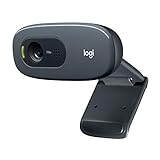
- Compatible with Nintendo Switch 2’s new GameChat mode
- Crisp HD 720p/30 fps video calls with diagonal 55° field of view and auto light correction. Compatible with popular platforms including Skype and Zoom.
- The built-in noise-reducing mic makes sure your voice comes across clearly up to 1.5 meters away, even if you’re in busy surroundings.
- C270’s RightLight 2 feature adjusts to lighting conditions, producing brighter, contrasted images to help you look good in all your conference calls.
- The adjustable universal clip lets you attach the camera securely to your screen or laptop, or fold the clip and set the webcam on a shelf. You’re always ready for your next video call.
That flexibility shifts work onto the operator: create scenes, select devices, set the output, check the recording destination, and test the result. The OBS quick-start guidance covers display or window capture, webcam sources, microphone and desktop audio, and recommends testing settings before the actual session. OBS’s stated requirements vary by encoder, resolution, frame rate, and scene complexity, so a feature list cannot guarantee that a given computer will record smoothly. Try the intended sources and settings on the machine that will be used.
What’s actually slowing this PC down?
Pick the symptom - the matching free tool is one click away.
Download OBS through its official website, as directed by the OBS help portal; that portal warns readers about third-party sites that charge for the software.
When Riverside is the right fit
Riverside is a candidate when the work involves remote participants and editing their contributions separately, or when a business regularly records webinars, interviews, testimonials, onboarding, or customer calls. Its business page lists five tiers: Free, Pro at $24/month, Live at $34/month, Webinar at $79/month, and Business at custom pricing. Confirm the current terms and checkout details rather than treating those displayed amounts as a universal quote.
Rank #3

- Compatible with Nintendo Switch 2’s new GameChat mode
- HD lighting adjustment and autofocus: The Logitech webcam automatically fine-tunes the lighting, producing bright, razor-sharp images even in low-light settings. This makes it a great webcam for streaming and an ideal web camera for laptop use
- Advanced capture software: Easily create and share video content with this Logitech camera that is suitable for use as a desktop computer camera or a monitor webcam
- Stereo audio with dual mics: Capture natural sound during calls and recorded videos with this 1080p webcam, great as a video conference camera or a computer webcam
- Full HD 1080p video calling and recording at 30 fps. You'll make a strong impression with this PC webcam that features crisp, clearly detailed, and vibrantly colored video
Riverside’s business page recommends at least 8 physical processing cores for video recording and 4 for audio, a 10 Mbps/5 Mbps connection, compatible operating systems and browser, and storage headroom. These are Riverside’s published recommendations, not universal minimum requirements for all recording apps or every recording scenario.
A Riverside comparison last updated September 18, 2026 says its author recorded the same session across nine tools on an M3 MacBook Pro and a Windows PC, then checked output resolution, file size, separate tracks, and time to a usable file. It recommends Riverside for remote video and podcasts. That is a vendor-published comparison and its author’s test process and judgment; it is not an independent benchmark or a test performed for this article.
Outdated Drivers Are Slowing You Down
One free scan finds every outdated or missing driver and matches the right update for your exact hardware.Free scan · exact hardware matchPC Slower Than It Used to Be?
A free scan shows the junk files, broken settings and background clutter dragging Windows down - then fixes them in one click.Free scan · Windows 10 & 11When to consider Camtasia or ScreenFlow
If a recording needs cuts, annotations, transitions, or zooms before it is ready for training or customer use, an editor-oriented product may suit the job better than a quick recorder. A cited TechRadar comparison describes those kinds of Camtasia and ScreenFlow editing features, while the Riverside comparison identifies Camtasia for tutorials and training and ScreenFlow as a Mac screen recorder. TechRadar’s comparison is titled for 2025, so use it for broad distinctions rather than current specifications. The current supported OS versions, editions, plan terms, and prices for these products were not established in the sources used here. Confirm them with the vendors before committing.
Rank #4

- 1080P Webcam with Cover for Video Calls - EMEET computer webcam provides design and Optimization for professional video streaming. Realistic 1920 x 1080p video, 5-layer anti-glare lens, providing smooth video. C960 computer camera delivers 1920x1080 video with fixed focus (11.8–118.1 inches), so as to provide a clearer image. C960 USB webcam has a cover and can be removed automatically to meet your needs for privacy. For optimal image performance, use the webcam in a well-lit environment.
- Built-in 2 Omnidirectional Mics - EMEET webcam with microphone for desktop features 2 built-in omnidirectional microphones, picking up your voice to create clear audio for communication. When installing the webcam, select EMEET C960 as the default microphone input device in your computer and video applications and select C960 as the default device in Zoom/Teams and ensure microphone permissions are enabled for proper use. Please note that C960 does not include built-in speakers.
- Automatic Light Adjustment - Automatic exposure adjustment is applied in EMEET HD webcam 1080p so that the streaming webcam can deliver stable image performance. EMEET C960 camera for computer also features color adjustment and exposure optimization to help you look your best. For optimal video quality, it is recommended to use the webcam in normal or well-lit environments and select suitable video settings in your application. Proper lighting helps achieve a clearer and more balanced image.
- Plug-and-Play & Upgraded USB Connectivity - New C960 webcam features both USB Type-A & A-to-C adapter connections for wider compatibility. For stable performance, connect the webcam directly to the computer's main USB port and ensure the device is recognized correctly. If a hub or docking station is used, please ensure it provides sufficient power and stable data transmission, as limited ports may affect performance. 90° wide-angle lens captures more participants without frequent adjustments.
- High Compatibility & Multi Application - C960 webcam for laptop is compatible with Windows 10/11, macOS 10.14+, and Android TV 7.0+. Not supported: Windows Hello, TVs, tablets, or game consoles. It works with Zoom, Teams, Facetime, Google Meet, YouTube and more. Please select C960 webcam as the default camera and microphone device in your application and ensure camera/microphone permissions are enabled, especially on macOS. (Tips: Incompatible with Windows Hello)
Make a short test before an important recording
- Choose the actual deliverable. Decide whether you need a screen-only clip, presenter-in-frame explanation, edited tutorial, remote conversation, or live production.
- Select the capture sources. Check that the app can record the needed screen or window, microphone, system audio, camera, guests, or capture card. Do not pay for camera features if your recordings are screen-only.
- Confirm editing and sharing. Determine whether basic trims are enough or you need annotations, captions, separate tracks, or clip creation. Choose between a hosted share link and exporting files to a business-controlled destination.
- Check team and account details. Verify workspace access, seats, permissions, billing frequency, and who owns the recordings. For Loom, check whether purchasing through Loom.com or Atlassian.com changes administration or billing for your account.
- Test on the intended hardware. Record a short sample with the same resolution, frame rate, sources, browser, and network conditions planned for the real session. Watch it back, listen for missing audio, and verify the saved file or share link before an important meeting.
- Check storage and consent practices. Make sure there is storage headroom for local or multitrack files. Tell participants when they are being recorded and check the applicable consent and privacy rules for your locations; the sources here do not establish jurisdiction-specific legal requirements.
Costs and trade-offs beyond the subscription
A free license or free plan does not make every workflow cost-free. OBS has no software license fee according to its project and help pages, but it requires setup, capable hardware, and local storage. Hosted tools can save time on upload and sharing, but plan limits, seats, billing channel, storage, and editing features affect their practical cost. For tools whose current terms were not established above, verify pricing and free-plan limits directly before purchase.
Equipment is conditional, not a prerequisite. A USB microphone can help when narration is important and the built-in mic is inadequate; a USB webcam matters only for presenter-in-frame video. For teams keeping large local or multitrack recordings, an external SSD may be worth considering because recordings need storage headroom, but no specific drive model or blanket requirement is established here.
If you mean a 24/7 YouTube stream, not recording software
StreamNeo is a separate cloud service, not a video recorder: it loops uploaded videos or playlists on a YouTube channel, rather than recording a camera feed. For that different job, upload a recording, add your YouTube stream key, and go live. It runs from the cloud so your computer and home connection do not have to stay on; it automatically recovers if YouTube drops the stream. Each slot streams the uploaded file as made, up to 4K 60fps, at one flat price per slot, with 10 GB storage per slot pooled across active slots, 24/7 looping and playlists, and support from the StreamNeo team. The first day is free with no card, once per account. The monthly price is $9.99 per month. Same product on every plan; daily, weekly, monthly, 6-month, and yearly billing are available and can be canceled any time; UPI and cards work in India, with card checkout worldwide. Details are at StreamNeo. Start the free first day.
Quick wins for a faster PC:
Clear out junk files and repair common Windows errorsFree Scan →Fix the driver behind crashes, sound loss and screen glitchesFind Drivers →Quick Recap
Product prices and availability are accurate as of the date/time indicated and are subject to change. Any price and availability information displayed on Amazon at the time of purchase will apply.

