
Recommended Free Tools
Track AI hardware supply-chain changes by following official investor-relations pages and regulatory filings, then recording each claim with its publisher, date, source type, named companies, product generation, and stated status. This lets you distinguish a planned partnership from a production ramp, shipment, or disclosed supply constraint. Company announcements are primary evidence of what that company says; they do not independently verify production volume, delivery dates, or customer deployment.
To answer the related question, which companies make the parts behind AI hardware? Follow the layers: chip and platform designers, foundries, memory suppliers, packaging providers, equipment makers, and companies that assemble, test, or build systems. Add a company to your map when a primary source identifies its role or relationship.
Which companies make the parts behind AI hardware?
AI hardware is a multi-company supply chain, not just a chip designer and a finished server brand. NVIDIA’s fiscal 2025 Form 10-K, for example, describes foundry, memory, packaging, and contract-manufacturing relationships. Use those categories as a starting framework, not as an exhaustive or permanent supplier list.
- Platform and chip designers: companies that define accelerators, CPUs, interconnects, or complete computing platforms.
- Foundries: companies that manufacture chips designed by other firms.
- Memory suppliers: providers of the memory used in accelerator and server systems.
- Packaging providers: companies and technologies that combine or package components for advanced chips.
- Equipment makers: suppliers of tools used in semiconductor manufacturing and related processes.
- Assembly, testing, and system makers: contractors and manufacturers that assemble or test components and build complete systems.
Do not infer a supplier relationship merely because two firms operate in the same industry. Record counterparties only when a source names them, and preserve the source’s wording about each party’s role.
#1 Best Overall
![Arduino® UNO™ Q 4GB [ABX00173]- Hybrid Board, Qualcomm Dragonwing QRB2210 microprocessor (MPU) & STM32U585 Microcontroller(MCU), AI Vision, Voice, IoT, Robotics, Linux Debian OS, Wi-Fi 5, USB-C](https://m.media-amazon.com/images/I/51cl4xygwGL._SL160_.jpg)
- Dual-Brain Hybrid Power: Combines the Qualcomm Dragonwing QRB2210 MPU (Quad-core Arm Cortex-A53 @ 2.0 GHz CPU, Adreno GPU, AI acceleration) and the real-time, low-power STM32U585 MCU for advanced applications like object recognition, voice commands, and motion detection.
- AI & Linux Capabilities: Unlocks AI-powered vision and sound solutions; runs Linux Debian OS for coding in Python and supports the Arduino ecosystem with libraries and Sketches; quick start with Arduino App Lab.
- Advanced Features: Equipped with 4 GB LPDDR4 RAM, 32 GB eMMC built-in storage, ideal for single-board computer (SBC) mode, running multiple simultaneous high-level processes, more complex AI or ML models, extensive logs. Dual-band Wi-Fi 5 (2.4/5 GHz), Bluetooth 5.1, and high-speed headers for vision, audio, and display peripherals.
- Seamless Expansion & Connectivity: Features the classic UNO form factor for shields compatibility, an 8x13 LED matrix, and a Qwiic connector for easy expansion with Modulino nodes; power and connect via the USB-C connector.
- Intended Use & Development: The perfect platform for prototyping robotics or IoT projects, empowering innovators with a unified development experience to mix Arduino Sketches, Python scripts, and containerized AI models in a single interface.
Build a watchlist from official company sources
Start with a manageable list organized by supply-chain layer. For each company, use its investor-relations site as an index to dated press releases, quarterly results, annual reports, event materials, and document repositories. Add a new company when a primary source names it as a supplier, manufacturing partner, system builder, or other participant.
Use investor-relations pages as entry points
TSMC’s investor-relations site links to investor resources, its document center, financial events, and a supplier portal. ASML’s investor-relations resources provide annual reports, quarterly results, and financial-event information, while its press-release index provides dated company announcements. These are useful indexes; follow through to the original dated document rather than relying on an index page alone.
Add filings for U.S.-listed companies
For U.S.-listed companies, compare company announcements with filings available through the SEC’s EDGAR system. Filings can describe supply dependencies, risk factors, capacity commitments, constraints, and changes to the business outlook. NVIDIA’s fiscal 2025 Form 10-K names foundry, memory, packaging, and manufacturing relationships; its quarterly filing for the quarter ended July 26, 2026 discusses production shipments, supply constraints, commitments, and infrastructure customers need to deploy systems. A filing is still the company’s own disclosure, but it is a different source type from a product announcement and often gives a broader view of risks and dependencies.
Record every update in a dated change log
Use one row per source item, not one row per company. A single release can contain several claims with different statuses; split them when necessary so a plan is not accidentally treated as a shipment. Capture the following fields:
Free tools Windows power users keep installed
One-click scans. No signup required.
- Company or publisher and the publication date.
- Exact source URL, source type (company release, regulatory filing, or other), and access date for pages that may change.
- Named counterparties and the supply-chain role the source assigns to each.
- Product generation and geography, but only when stated.
- Status verbatim—for example, planned, collaborating, ramping, producing, or shipping.
- Excerpt or accurate paraphrase tied to the particular claim.
- What the source does not establish, such as volume, delivery timing, or broad customer availability.
Keep exact status language in a dedicated field. “Ramping into full production,” “shipping,” and “available to customers” are not interchangeable. Avoid upgrading a source’s claim through your paraphrase.
Rank #2
- Dual-Brain Hybrid Power: Combines the Qualcomm Dragonwing QRB2210 MPU (Quad-core Arm Cortex-A53 @ 2.0 GHz CPU, Adreno GPU, AI acceleration) and the real-time, low-power STM32U585 MCU for advanced applications like object recognition, voice commands, and motion detection.
- AI & Linux Capabilities: Unlocks AI-powered vision and sound solutions; runs Linux Debian OS for coding in Python and supports the Arduino ecosystem with libraries and Sketches; quick start with Arduino App Lab.
- Advanced Features: Equipped with 2 GB LPDDR4 RAM, 16 GB eMMC built-in storage, ideal to develop in PC-connected mode, running the OS, Python scripts, and basic network services (SSH) without a demanding GUI or heavy multitasking; great for lightweight AI and memory-optimized TinyML applications, needing local storage for basic OS and core libraries. Dual-band Wi-Fi 5 (2.4/5 GHz), Bluetooth 5.1, and high-speed headers for vision, audio, and display peripherals.
- Seamless Expansion & Connectivity: Features the classic UNO form factor for shields compatibility, an 8x13 LED matrix, and a Qwiic connector for easy expansion with Modulino nodes; power and connect via the USB-C connector.
- Intended Use & Development: The perfect platform for prototyping robotics or IoT projects, empowering innovators with a unified development experience to mix Arduino Sketches, Python scripts, and containerized AI models in a single interface.
Compare updates without conflating plans, ramps, and shipments
When comparing companies or updates over time, apply the same axes to each item: supply-chain role, named counterparties, product generation, stated geography, publication date and reporting period, disclosed status, and source type. Separate concrete disclosed dependencies from broad forward-looking statements. A new announcement may update a roadmap without showing that downstream systems are broadly available.
Example: NVIDIA’s Vera Rubin updates
In its May 31, 2026 Vera Rubin announcement, NVIDIA named Dell Technologies, HPE, Lenovo, Supermicro, and other ecosystem participants, and described the platform as ramping into full production. Attribute that status to NVIDIA: the release is evidence of NVIDIA’s statement, not independent confirmation of production volume or delivery to end customers. The same release reported 150 supply-chain ecosystem partners in Taiwan and more than 350 factories across 30 countries. Those figures describe NVIDIA’s reported Vera Rubin ramp, not the AI hardware industry as a whole.
NVIDIA also reported 10x agent throughput at scale compared with its previous-generation Grace Blackwell platform. Treat this as a company-reported comparison, not an independently validated benchmark. In a change log, place the figure beside its publisher, release date, platform generation, and source type, rather than reusing it as a general performance fact.
Example: commitments and constraints in a filing
NVIDIA’s quarterly filing for the quarter ended July 26, 2026 reported $279 billion in supply and capacity commitments as of that date, up from $119 billion the prior quarter. These are company-reported figures in a filing, with the stated as-of date and comparison period; they are not a measure of industry-wide commitments or proof that every commitment will become delivered hardware. Read them alongside the filing’s discussion of shipments, constraints, and deployment infrastructure.
Example: a supplier relationship over time
NVIDIA’s June 1, 2026 announcement described its work with TSMC and included statements from both companies’ leaders about their long-standing partnership. TSMC’s shareholder letter reported 35.9% year-over-year revenue growth in U.S. dollar terms for 2025. Record the revenue figure as TSMC’s company-reported result for that period; it does not by itself quantify how much of that growth came from a specific AI hardware product or customer relationship.
Rank #3
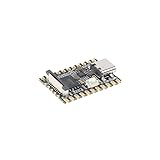
- Single core ARM Cortex-A7 32-bit core, integrated with NEON and FPU
- Built in Micro's self-developed 4th generation NPU, with high computational accuracy and support for mixed quantization of int4, int8, and int16. Among them, int8 has a computing power of 0.5 TOPS and int4 has a computing power of up to 1.0 TOPS
- Built in self-developed 3rd generation ISP3.2, supports 4 million pixels, and supports various image enhancement and correction algorithms such as HDR, WDR, and multi-level denoisin
- It has powerful encoding performance, supports intelligent encoding, adapts to save bit rates according to the scene, and saves more than 50% of the bit rate compared to conventional CBR mode, making the captured images high-definition, smaller in size, and doubling the storage space
- The design with built-in RISC-V MCU supports low-power fast startup, 250ms fast capture, and simultaneous loading of AI model library, enabling facial recognition to be completed within 1 second
Recheck on earnings and product-announcement dates
Supply maps and production status change. Revisit the relevant investor-relations pages around earnings releases and major product announcements, then compare new statements against earlier entries rather than overwriting them. Preserve the publication date and reporting period of each document, plus an access date for dynamic pages, because links and page contents can change. A useful history shows not just the latest claim but what changed, when it changed, and which source made the claim.
Capture and archive the source pages
For a small watchlist, save the original URLs and dated documents in your change log. For a repeatable archive, a browser-based capture can preserve the page appearance alongside the source URL and date. ScreenshotNeo is a website screenshot API and MCP server; it can return screenshots or PDFs and offers options including full-page capture, waiting for a selector or network idle, custom headers and cookies, and async jobs. See ScreenshotNeo for the service overview.
Windows Errors? Fix Them Before They Spread
Repair common Windows errors and clear accumulated junk for a smoother, more stable PC - no reinstall needed.Free scan · no reinstallOutdated Drivers Are Slowing You Down
One free scan finds every outdated or missing driver and matches the right update for your exact hardware.Free scan · exact hardware matchFor a one-off manual capture, open the dated company release or filing in a browser and save or print it as a PDF, keeping the original URL and date with your record. Browser screenshots are useful evidence of what a page displayed, but they do not replace the underlying filing or verify that a corporate claim is true.
Or skip the browser setup
ScreenshotNeo can capture a source page with one GET request and return an image or PDF. Its API accepts a URL, and its documentation describes the available parameters and response behavior.
ScreenshotNeo API documentation
curl -G "https://api.screenshotneo.com/v1/shot" -d access_key=YOUR_API_KEY --data-urlencode url=https://stripe.com -o shot.webpReplace the example URL with the company release or filing you want to archive. ScreenshotNeo accepts cookie or consent banners like a visitor and removes more than 60 known consent platforms, newsletter popups, and chat widgets before capture; each of those steps can be turned off. Bot checks or CAPTCHAs, blank pages, timeouts, failed loads, and cache hits cost nothing, and the response indicates the page verdict and billing status. Its MCP server gives AI agents tools named take_screenshot, get_page_info, and capture_pdf. The Free plan includes 1,000 screenshots per month with no card; paid plans start at $5 for 3,000 screenshots. Sign up for ScreenshotNeo’s free plan.
Troubleshoot gaps and misleading signals
A page has changed or a link no longer works
Use the original publisher’s investor-relations page or document index to locate the dated item again. Keep the original URL in the log and add a note if the publisher redirects or replaces it; do not silently substitute an undated summary page.
Do these 3 things before closing this tab:
1Clear out junk files and repair common Windows errors2Fix the driver behind crashes, sound loss and screen glitches3Repair Windows errors before they cause bigger problemsRank #4

- 【POWERFUL ESP32‑S3 CONTROLLER】Built‑in Xtensa 32‑bit LX7 dual‑core processor, 512KB SRAM, 8MB PSRAM, 16MB Flash for stable AI voice computing and multitask processing.
- 【Preloaded Dual AI Platforms】Comespre-installed with complete Deepseek and OpenAI voice dialogue projects.Experience intelligent voice interaction instantly. (Note: OpenAI functionality requires your own API key.)
- 【STABLE WIRELESS & CLEAR AUDIO】Integrated 2.4GHz Wi‑Fi + Bluetooth 5 (LE); dedicated audio decoding module for natural, responsive voice interaction.
- 【USER‑FRIENDLY VISUAL & PLUG‑AND‑PLAY】2” TFT‑SPI color screen shows real‑time chat; modular design, no extra wiring, ready to use after setup.
- 【FULL LEARNING SUPPORT】45 programmable GPIOs, rich interfaces, online web tutorials, free technical support for beginners & developers.
A release names partners but gives no delivery detail
Record the named companies and the status exactly as stated. Mark delivery dates, production volume, and end-customer deployment as unestablished unless the source explicitly provides them. Check later filings and announcements for a more concrete update.
A headline says “production” but the document says “ramping”
Use the body of the dated source as the evidence and quote or carefully paraphrase its status. Preserve differences among ramping, producing, and shipping; a headline or partner list does not prove broad availability.
A number is easy to misread as an industry statistic
Attach the company, product or reporting period, and as-of date to each figure. NVIDIA’s ecosystem counts apply to its reported Vera Rubin ramp, and its commitment totals are tied to the quarter and date stated in its filing. Do not extrapolate either into a cross-company market measure.
Different sources appear to conflict
Check whether they describe different reporting periods, product generations, geographies, or stages of the supply chain. Keep both dated claims in the log and explain the distinction rather than choosing one without evidence. Filings and releases may use different scopes, so compare the underlying wording and context.
FAQ
Do company websites independently verify that hardware has shipped?
No. They are primary sources for what the company reports. A release or filing can disclose a shipment or production status, but it does not by itself provide independent verification of volume or end-customer deployment.
How often should I update a supply-chain map?
Recheck it around earnings and major product announcements, and keep the date and reporting period attached to each source. There is no established cross-company measure for how frequently these websites change.
Quick Recap
Product prices and availability are accurate as of the date/time indicated and are subject to change. Any price and availability information displayed on Amazon at the time of purchase will apply.

