
Free tools Windows power users keep installed
One-click scans. No signup required.
You can stream a playlist continuously to YouTube Live by running FFmpeg on a DigitalOcean Droplet, but the Droplet does not create or start the viewer-facing YouTube broadcast for you. You must prepare compatible media, configure FFmpeg to send it to YouTube’s ingest endpoint and stream key, create or select a broadcast in YouTube, and supervise the process so it can recover from an FFmpeg exit.
The exact FFmpeg command depends on your playlist format, whether its files have compatible codecs and timestamps, and which ingest protocol you choose. The procedure below makes those decisions explicit rather than presenting one command as universal.



How the continuous stream works
YouTube treats the incoming feed and the public-facing event as separate objects. A liveStream represents the incoming audio/video feed and its delivery settings; a liveBroadcast is the watchable event. You bind a broadcast to a stream, then send media to that stream’s ingest address. Creating a Droplet or running FFmpeg alone does not publish an event. YouTube documents that a stream can be reused across broadcasts, including a separate interview broadcast alongside a 24/7 feed: Understanding Broadcasts and Streams.
The setup has four parts: make a stable media source, set up the YouTube stream and broadcast, run FFmpeg continuously on the Droplet, and monitor both FFmpeg and YouTube. A process supervisor can restart FFmpeg after it exits, but it cannot repair a bad source file, revoked stream key, unreachable ingest endpoint, or a broadcast that requires action in YouTube.
What’s actually slowing this PC down?
Pick the symptom - the matching free tool is one click away.
#1 Best Overall
Check YouTube Live and prepare the event
- Confirm the channel can use YouTube Live. Sign in to the intended channel and open YouTube Studio’s live control room. Availability and any account-specific restrictions are determined by YouTube, not by the VPS.
- Create or select a live stream and broadcast. In the live control room, create the viewer-facing broadcast and associate it with the incoming stream. Use the current YouTube interface for the exact controls; labels can change.
- Copy the ingest details securely. Get the ingest URL and stream key from YouTube’s live control interface. Treat the key as a password: do not publish it in a tutorial command, paste it into source control, include it in screenshots, or leave it in a world-readable service file. YouTube’s HLS documentation explicitly describes the key as secret and its example URL as an incomplete template, not a universal URL recipe: YouTube HLS ingestion.
- Choose whether you need an ongoing event or recurring events. The feed can be reused for another broadcast, but that does not mean YouTube automatically creates or starts every future event for you.
Prepare and validate the playlist
Do not assume that an arbitrary M3U playlist, a directory that changes while streaming, or a mix of unrelated video files will play seamlessly. FFmpeg offers distinct concat methods, each with constraints. Its official FAQ explains when to use them: FFmpeg FAQ: concatenating media files.
Choose the right concat method
- Concat demuxer: suitable for compatible inputs that can be joined without re-encoding. It reads a text file listing the media files; this is not a promise that arbitrary files will transition correctly.
- Concat filter: use when inputs need normalization or re-encoding. It can handle differing input parameters by converting them to a consistent output, but it uses more CPU and must be tested at real-time speed on the Droplet.
- Concat protocol: a separate file-level method, only appropriate for formats that support direct concatenation. It is not a general playlist solution.
Inspect transitions before going live
Check representative files at the beginning, middle, and end of the playlist. Compare video codec, dimensions, frame rate, pixel format, audio codec and track presence, and timestamps. Confirm the audio does not end before the video. If files differ, create a normalized set or use a filter and re-encode to a stable output profile. Test the exact playlist and FFmpeg build you intend to use; no single command can be guaranteed for every source format or build.
A concat-demuxer list has a specific text syntax, commonly one file entry per path, for example:
file '/srv/media/part-001.mp4'
file '/srv/media/part-002.mp4'
Use this only if the inputs meet the demuxer’s compatibility requirements. A test run that reads the whole playlist locally can reveal parse errors, timestamp discontinuities, and missing files before you add YouTube to the chain.
Do these 3 things before closing this tab:
1Repair Windows errors before they cause bigger problems2Fix the driver behind crashes, sound loss and screen glitches3Clear out junk files and repair common Windows errorsChoose the YouTube ingest protocol
For a straightforward FFmpeg workflow, use the ingest method supported by your FFmpeg build and configured in YouTube’s current live control interface. Do not copy an HLS URL template into a generic RTMP command: HLS is a distinct segment-upload contract, not another spelling of RTMP. Check YouTube’s current encoder guidance and verify the resulting feed in the live control room.
RTMP or RTMPS-style output
With an RTMP-family output, FFmpeg sends the encoded feed to the YouTube ingest address using the selected protocol and stream key. The precise output URL syntax and encoder settings depend on the chosen endpoint and FFmpeg build. Keep the key out of shell history and logs; inject it through a protected environment/configuration mechanism or another secret store with access limited to the service account.
Rank #3
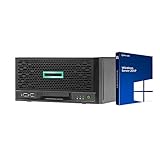
- HP MicroServer Gen10 Plus Tower Server for Business with Microsoft Windows Server 2019 OS!
- Intel Xeon E-2224 Quad-Core 3.4GHz 8MB CPU, Up To 4.6GHz Turbo
- 32GB (2 x 16GB) DDR4 PC4-21300 2666MHz Unbuffered Memory
- 16TB (4 x 4TB) 7.2K 6Gb/s SATA 3.5" HDDs in RAID
- Hard drives and memory upgrades included separately NOT installed, installation required.
HLS output
YouTube HLS ingestion requires an encoder to upload a media playlist and media segments over HTTPS using HTTP PUT or POST. It requires a media playlist, not a master playlist; one encoded stream with muxed audio and video; H.264 or HEVC video; a single AAC audio track; a closed GOP; and a frame rate no higher than 60 fps. Each segment must be no longer than five seconds; YouTube recommends one-to-four-second segments. The playlist sequence starts at zero and increases monotonically, the playlist must be updated for each segment, and no more than five segments should be outstanding. YouTube says shorter segments can lower latency but may increase rebuffering and reduce encoding efficiency; HLS ingest generally has higher latency than RTMP/WebRTC. These requirements apply specifically to HLS, not automatically to RTMP output. See the full HLS ingestion requirements.
Provision the DigitalOcean Droplet
A Droplet is a Linux virtual machine. Choose a plan based on what it must do, not just the video resolution: relaying already encoded media has different CPU needs from transcoding. Evaluate sustained CPU capacity for any re-encode, memory and disk for the operating system and media, outbound transfer allowance, network throughput, and the total recurring cost. See DigitalOcean Droplet limits for current ceilings and transfer details.
DigitalOcean states that non-GPU Droplets have a maximum network throughput of 2 Gbps and premium CPU Droplets 10 Gbps; these are network ceilings, not recommendations or proof a particular plan can encode your files in real time. Outbound traffic counts against the plan’s monthly transfer allowance. Plan allowances and prices vary, so check the current plan details before committing.
Rank #4
Estimate outbound transfer
Estimate from the actual encoded bitrate and intended runtime, then add protocol/container overhead and operating margin. As a first-order conversion, bitrate in bits/second × seconds streamed ÷ 8 gives bytes before overhead. For example, a 4,000,000-bit/s output running for 24 hours sends about 43.2 billion bytes before overhead (roughly 40.2 GiB). This is arithmetic, not a YouTube recommendation or a measured Droplet result. Compare the estimate with the plan’s included transfer and account for any other outbound traffic.
If the Droplet transcodes, benchmark the actual media and encoder settings at sustained real-time speed. A plan’s network ceiling says nothing by itself about whether its CPU can encode the target stream without falling behind.
Install FFmpeg and test the output
- Install FFmpeg using the package source appropriate to your Linux distribution. Check the installed version and available protocols/muxers with
ffmpeg -versionand the relevant FFmpeg help output. Build differences can affect supported inputs and outputs. - Place media and configuration in restricted paths. Give the service account access only to the needed files. Keep the stream key in a protected configuration or secret-injection mechanism, not a public script or checked-in unit file.
- Test the playlist locally first. Run FFmpeg against the playlist without a network output, inspect errors and transitions, then test the chosen ingest method with YouTube’s control room. Do not consider it ready merely because the process starts.
- Check the live output. Watch FFmpeg’s logs for input, timestamp, encoder, and output failures. In YouTube’s live control room, verify the feed is received and inspect stream health before relying on it as a continuous broadcast.
There is no single safe copy-and-run FFmpeg command for this title: playlist format, codecs, timestamps, output protocol, FFmpeg build, and whether you re-encode all change the necessary arguments. Use FFmpeg’s documentation for the selected demuxer/filter and output muxer, and use YouTube’s current encoder guidance for endpoint-specific settings rather than inserting a real stream key into a public example.
Best Value
Run FFmpeg continuously with a service manager
Do not rely on an SSH session or a foreground shell to keep the stream alive. Configure a service manager such as systemd to start the process at boot, run it as a restricted user, capture logs, and restart it after an unexpected exit. Store secrets in a root-readable environment/configuration file or a supported secret-injection method, and limit permissions. Avoid embedding the key in a command line that may appear in process listings or history.
Configure restart behavior with a delay and monitor repeated failures: an automatic restart loop can otherwise hide a persistent bad input or invalid key. After enabling the service, confirm it starts on boot, inspect its logs, and verify the feed again in YouTube. A process supervisor only handles process exits; it does not resolve YouTube account or broadcast state, a revoked key, media incompatibility, or network reachability.
Monitor health and troubleshoot interruptions
Use both FFmpeg logs and YouTube’s stream-health indicators. YouTube’s health statuses can flag low bitrate, frame-rate mismatch, GOP/keyframe mismatch, or keyframes sent too infrequently. One documented YouTube health message recommends a keyframe frequency of four seconds or less; apply that guidance to the relevant output profile and protocol rather than treating it as a universal command-line setting.
- FFmpeg exits immediately: inspect the first error in the service log. Check playlist paths and permissions, concat syntax, missing codecs, and whether the selected output is supported by the installed build.
- YouTube receives no feed: confirm the broadcast is associated with the intended incoming stream, the endpoint and protocol match, the key is current, and outbound connections are allowed. Never paste the key into a public diagnostic.
- Stream health reports low bitrate or dropped frames: check actual output bitrate and Droplet CPU/network use. If transcoding, test a less demanding profile or a more capable plan; if relaying, inspect source bitrate and network path.
- Frame-rate or GOP/keyframe warnings: make the output profile consistent with the chosen YouTube ingest guidance and validate the encoded output. YouTube’s health guidance says keyframes should be no more than four seconds apart.
- Audio or video breaks at playlist boundaries: inspect the files’ codecs, stream layout, dimensions, frame rate, and timestamps. Normalize incompatible inputs with a concat filter/re-encode and retest transitions.
- FFmpeg restarts but the feed remains down: determine whether the underlying cause is a bad file, expired/revoked key, unavailable endpoint, or broadcast state that needs operator attention. Restarting the same failing command will not fix those conditions.
Or let it run in the cloud
If maintaining a VPS and FFmpeg service is more work than you want, StreamNeo is a cloud service for keeping an uploaded-video YouTube channel live 24/7. Upload a recording or build a playlist, add your YouTube stream key once, and go live; StreamNeo loops it from the cloud, so your computer and home connection do not have to stay on. It is for uploaded videos, not a camera feed, and streams to YouTube.
Recommended Free Tools
Quick Recap
- One flat price per slot for any uploaded quality up to 4K 60fps, with no re-encode or quality tiers.
- Automatic recovery if YouTube drops the stream.
- The first day is free with no card (one free day per account).
- Monthly: $9.99 per month.
Start your free StreamNeo day.
Product prices and availability are accurate as of the date/time indicated and are subject to change. Any price and availability information displayed on Amazon at the time of purchase will apply.

