
What’s actually slowing this PC down?
Pick the symptom - the matching free tool is one click away.
For a creator interview that feels like a conversation, prepare questions around one story or insight you want the episode to uncover, tailor them to the guest’s work, and leave room to follow an unexpected answer. Use the questions below as a flexible outline—not a checklist you have to finish.
Start with the story the episode should uncover
Before writing individual prompts, decide what you want listeners to understand by the end of the conversation. That might be how a project began, why a creator made a difficult choice, or what changed after an attempt failed. A clear focus gives you a way to choose useful questions and avoid a string of unrelated biography prompts.
Then research the guest’s actual work. Look for a particular project, decision, example, turning point, or claim you can ask about. Questions tied to something the guest has done are more likely to invite a specific answer than generic prompts that could be asked of anyone.
A flexible question arc for a creator interview
This arc is a practical template, not a proven formula. Adapt the wording to the guest and the premise of your show, and leave out any step that does not serve the episode.
Recommended Free Tools
#1 Best Overall

- WHAT'S IN THE BOX: Meet the ultimate job interview prep system: a premium communication card deck featuring 54 interview flashcards, each pairing a key question or scenario with a high-impact answer, 100+ fill-in-the-blanks for authentic responses, and bonus access to 4.5 hours of video tutorials.
- EXPERT CRAFTED CARDS: Developed by Gorick Ng—Harvard career advisor, Wall Street Journal bestselling author, and career strategist—these 54 scenario-based interview flash cards teach you the proven response and storytelling frameworks for high-stakes interviews.
- BONUS VIDEO COACHING: Have Gorick Ng personally walk you through every card scenario and script. Simply use the included secret password to create an account and get instant access.
- MASTER LANDMINE QUESTIONS: Learn what to say—and what not to say—when facing the toughest questions that trip up 99% of candidates and turn high-stakes pressure into a job offer.
- COMPREHENSIVE INTERVIEW PREP: Covers both formal job interviews and informational coffee chats. Like a job hunter’s workbook meets flashcards, just draw a card, practice the framework, and walk in fully prepared.
- Context: “What were you trying to make or change when this work began?”
- Origin: “Can you take us back to the moment this idea first became real for you?”
- Specific story: “What happened the first time you tried that approach?”
- Decision or turning point: “What changed your mind, and what did you do next?”
- Process: “How do you make that work in practice, step by step?”
- Reflection: “What do you understand now that you did not understand at the beginning?”
- Useful close: “What is one question you wish people would ask you about this work?”
The arc moves from context toward concrete experience, then reflection. You can reorder it: if the guest opens with a compelling story, follow that thread rather than steering them back to your outline.
Question ideas to tailor to the guest
Use these as starting points. Replace broad phrases such as “this project” or “your work” with the specific project, decision, or example you researched.
Rank #2
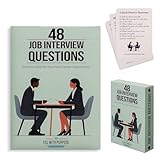
- Essential Phrases: Carefully selected flashcards feature common questions and advice to enhance your preparation and answers.
- Targeted Content: Curated by a career pathways and ESL instructor to help advanced language learners, as well as recent graduates and job seekers.
- Strategic Practice: Organized into 4 categories of relationship, knowledge, character, and leadership, allowing you to delve deep into each question and refine your responses.
- Insightful Guidance: The 8 tip cards such as the STAR method, along with what to ask the interviewer and more thoughtful ideas.
- Hiring Managers: Compact and portable, it provides a convenient resource to identify and draw out meaningful and honest responses.
For a project or creative practice
- “What problem or possibility were you responding to when you started this project?”
- “Can you walk me through one example of how you made that work?”
- “Which part of the process took a different direction than you expected?”
- “What does a typical working session look like when you are making this?”
For a turning point or difficult decision
- “What options were you weighing at that point?”
- “What information or experience helped you choose what to do next?”
- “What happened after you made that choice?”
- “Looking back, what do you think you misread about the situation?”
For lessons listeners can use
- “What would someone need to know before trying this for themselves?”
- “What is a common assumption about this work that your experience has complicated?”
- “What would you do differently if you were starting again with what you know now?”
These prompts work best when you can follow them with a detail from the guest’s answer. If a creator describes a failed launch, for example, ask what they tried first or what changed afterward instead of jumping to a separate prepared topic.
Make questions open without leading the guest
An open question gives the guest room to explain what happened in their own terms. A leading question supplies an interpretation—especially a feeling or conclusion—and asks the guest to confirm it. Spotify for Creators’ guide attributes this distinction to Hannah Berner, host of Berning in Hell: Berner described replacing an assumption about how a guest felt with an open question about that feeling.
Outdated Drivers Are Slowing You Down
One free scan finds every outdated or missing driver and matches the right update for your exact hardware.Free scan · exact hardware matchPC Slower Than It Used to Be?
A free scan shows the junk files, broken settings and background clutter dragging Windows down - then fixes them in one click.Free scan · Windows 10 & 11Rank #3
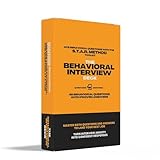
- 48 Essential Behavioral Questions: Curated by recruiters and hiring experts, each flashcard provides real-world behavioral questions covering Leadership, Teamwork, Communication, Problem-Solving, Initiative, and more—exactly what top employers ask.
- STAR Framework Only (No Confusion!): Every example answer is crafted exclusively using the proven Situation-Task-Action-Result framework, the #1 structure hiring managers recommend for clear, persuasive storytelling.
- Front Card Structure (Question-Focused): Each card’s front includes: a behavioral interview question you’ll likely encounter, core competencies clearly listed (e.g., "Leadership, Adaptability"), 2-3 alternate versions of the main question to help you confidently adapt on the spot.
- Back Card Structure (STAR Example): Each card’s back is carefully designed to guide you: Full STAR-formatted example answer, expertly written to model top-tier responses, “Make it Yours” tips: Actionable, concise guidance to personalize each answer authentically, "Avoid" section: Highlights common pitfalls clearly so you’ll steer clear of interview-damaging mistakes.
- Comprehensive Preparation Guide Included: An insightful, compact Z-fold leaflet explains the STAR method, outlines how to use the cards effectively, and provides quick-reference success tips—perfect for last-minute prep or deeper practice sessions.
Try the same edit when a draft question contains your answer:
- Leading: “That launch must have been terrifying, right?”
More open: “What was going through your mind as the launch approached?” - Leading: “You always knew you wanted to be a creator, didn’t you?”
More open: “When did making this kind of work first become a serious possibility for you?” - Leading: “That setback taught you to trust your instincts, didn’t it?”
More open: “What did you take away from that setback?”
Questions beginning with “what,” “how,” or “why” often create more room for explanation than questions that can be answered with yes or no. The wording alone does not guarantee a rich answer; the question still needs to be clear, relevant, and grounded in the guest’s experience.
Rank #4

- Comprehensive Preparation Made EASY: a smart system to get you mentally prepared for every interview question possible. Cards are categorized by evaluation criteria, topic, and difficulty levels by age group (teens, young adults, graduate students).
- Get INSIDE the Interviewer's Head: clever cards guide you through the secrets of answering questions confidently. Know the types of questions asked by interviewers from elite private high schools, universities, and graduate schools.
- Coaching Videos to Help You Brand Yourself to STAND OUT: includes expert advice providing examples of poor, okay, good, great, and memorable candidate responses.
- Build CONFIDENCE and COMMUNICATION SKILLS. It's not just about getting into your dream school or job. The card deck is designed to help you build the essential human skills to succeed in an AI-powered world.
- Perfect for conducting and practicing mock interviews anytime and anywhere while playing a card game. For students, parents, counselors, coaches, career services office, and recruitment professionals
Prepare an outline, not a script
Write down the episode’s central question, a handful of specific prompts, and follow-ups you might use if a topic needs more detail. You do not need to read every question word for word, ask them in order, or cover all of them. Riverside’s host guidance recommends treating prepared questions flexibly: follow a useful answer and skip a prompt the guest has already answered.
During the interview, listen for details that open a worthwhile next question:
Do these 3 things before closing this tab:
1Repair Windows errors before they cause bigger problems2Fix the driver behind crashes, sound loss and screen glitches3Clear out junk files and repair common Windows errorsBest Value

- Emotional Intelligence Interview Cards: Comprehensive assessment tool designed to evaluate candidates' understanding and management of emotions in workplace settings
- Four Core Categories: Organized into self-awareness, emotional management, emotional connection, and personal leadership to provide structured evaluation framework
- Eleven EI Competencies Covered: Includes emotional self-awareness, optimism, resiliency, self-regard, self-assessment, adaptability, impulse control, personal drive, authenticity, coaching, empathy, and communication
- Targeted Question Format: Each card provides specific questions designed to measure candidates' emotional intelligence skills and elicit detailed, example-based responses
- Comprehensive Evaluation Approach: Enables assessment through verbal responses, body language observation, and demonstration of personal insights, problem-solving abilities, and awareness of how actions impact others
- A specific moment: “You mentioned the first prototype—what happened when you showed it to someone?”
- A choice: “What made that the option you chose?”
- An unclear term: “When you say ‘community-led,’ what did that look like in practice?”
- A surprising result: “You expected one outcome and got another. What do you think explains the difference?”
Keep a note of questions you want to return to, but do not let note-taking distract you from the answer. If the guest has already addressed a planned prompt, cross it off rather than asking it again.
How many questions should you prepare?
There is no universal question count established for a podcast interview. The American Psychological Association describes podcast interviews as usually longer than television and radio interviews, often lasting half an hour to an hour; that is a qualitative description, not a required duration or measured industry average. Longer interviews can allow room for depth, but they do not mean you need to fill time with more questions.
Prepare enough prompts to give the conversation direction, then let the guest’s answers determine how far you get. A short list of specific questions with useful follow-ups can serve a focused episode better than a long list you rush through.
Before you record: a short preparation check
- Can you state the episode’s central story or insight in one sentence?
- Have you tied your main prompts to the guest’s actual work or experience?
- Do your questions invite explanation rather than confirmation?
- Have you left space to ask follow-ups and change order?
- Can you skip a prompt if the guest answers it naturally beforehand?
If your creator workflow includes a 24/7 YouTube video stream
Interview preparation and always-on video streaming are separate tasks. If you also want uploaded videos to loop as a live YouTube stream, StreamNeo runs that stream from the cloud, so your computer does not have to stay on. Upload a recording or build a playlist, add your YouTube stream key, and go live. It streams uploaded video, not a live camera feed.
The first day is free with no card, and the service automatically recovers if YouTube drops the stream. To try it, start with StreamNeo.
Quick Recap
Product prices and availability are accurate as of the date/time indicated and are subject to change. Any price and availability information displayed on Amazon at the time of purchase will apply.

